By Christopher Rufo. | America’s Cultural Revolution
The Soviet dictator Joseph Stalin raised his glass to a group of artists assembled at the home of famed writer Maxim Gorky in 1932. “The ‘production’ of souls is more important than the production of tanks,” he said, explaining that the communists desired not only to remake the world of politics and economics, but to reshape human nature according to the dictates of left-wing ideology. “And so,” he continued, “I raise my glass to you, writers, the engineers of the human soul.”
This concept—the ruthless application of politics to the most intimate recesses of the human spirit—would drive the communist regimes for the middle part of the twentieth century. The Soviets had their artists. The Chinese had their propagandists. The Third World armies had their pedagogists. All were committed to the creation of the New Man…
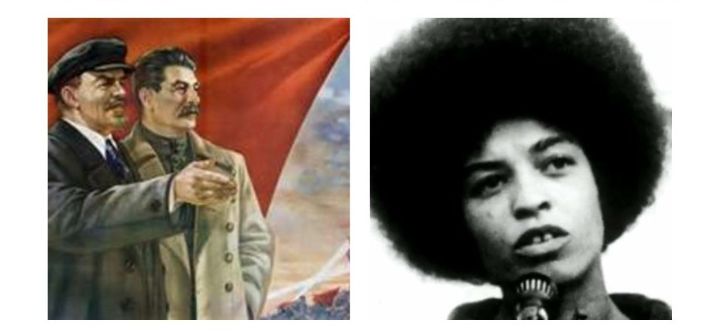
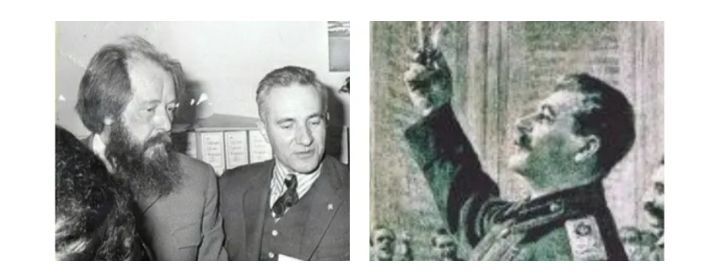
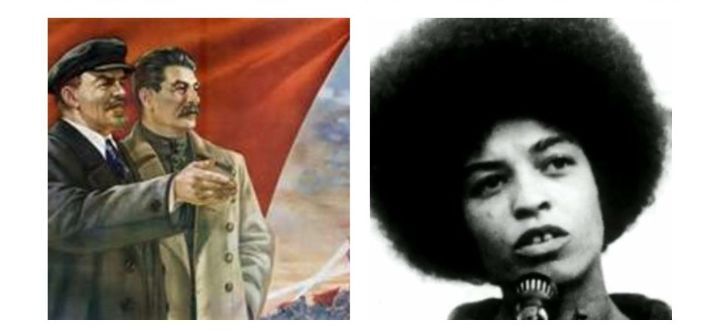
In 1975, the Soviet dissident Aleksandr Solzhenitsyn spoke to a coalition of labor leaders in New York City and denounced the American radical Angela Davis, who had become a symbol of international communism and violent revolution against the West. During this period, the Soviet government had churned out propaganda celebrating Davis as a world-historical figure and instructed millions of schoolchildren to send her cards and paper flowers. “In our country, literally for one whole year, we heard of nothing at all except Angela Davis,” Solzhenitsyn said.
But this campaign was based on a lie. The Soviets had created a global slave state, with a network of gulags, dungeons, and prison camps extending from Vladivostok to Havana; Solzhenitsyn himself had spent eight years enduring imprisonment, torture, and forced labor. Davis, however, followed the propaganda line. During a publicity tour of the Soviet Union in 1972, she praised her hosts for their treatment of minorities and denounced the United States for its oppression of “political prisoners.” But during an unscripted encounter, Solzhenitsyn said, a group of Czech dissidents approached Davis with a plea:

“Comrade Davis, you were in prison. You know how unpleasant it is to sit in prison, especially when you consider yourself innocent. You have such great authority now. Could you help our Czech prisoners? Could you stand up for those people in Czechoslovakia who are being persecuted by the state?” Davis responded with ice: “They deserve what they get. Let them remain in prison.”
For Solzhenitsyn, this moment revealed everything. Davis embodied the spirit of left-wing revolution: sacrificing the human being in service of ideology. Her commitment to the great abstractions—liberation, freedom, humanity—was a ruse. “That is the face of Communism,” he said. “That is the heart of Communism for you.”
The Soviet Union eventually collapsed and many Americans considered the question of left-wing revolution settled. It had proven disastrous everywhere it had been tried—Asia, Africa, Latin America. The world had learned its lesson, they believed, and moved beyond the promises of Marx, Lenin, and Mao. But they were wrong. Although the left-wing cultural revolution had self-destructed in the Third World, over time it found a new home: in America.
This new revolution patiently built itself in the shadows and then, after the death of George Floyd in the spring of 2020, exploded onto the American scene. All of a sudden, the old Angela Davis narrative appeared everywhere: America was an irredeemably racist nation; whites constituted a permanent oppressor class; the country could be saved only through the performance of elaborate guilt rituals and the wholesale overturning of its founding principles.
All of the formative institutions—universities, schools, corporations, government agencies—repeated the revolution’s vocabulary like a mantra: “systemic racism,” “white privilege,” “diversity, equity, and inclusion.” Meanwhile, in the streets, mobs of left-wing rioters expressed the ideology in physical form, toppling statues of Washington, Jefferson, and Lincoln and burning entire city blocks to the ground. The question of left-wing revolution was suddenly reopened. How did this happen?
Where did these ideas come from? Who was responsible for the chaos? In order to answer these questions and understand the dizzying cultural changes that have swept across the United States—the capture of America’s institutions, the Black Lives Matter street revolution, the spread of racialist ideology in public education, and the rise of the “diversity, equity, and inclusion” bureaucracy—one must return to their origins.
The story of America’s cultural revolution begins in 1968, as America endured a long season of student uprisings, urban riots, and revolutionary violence that has provided the template for everything that followed. During this period, left-wing intellectuals developed a new theory of revolution in the West and their most dedicated disciples printed pamphlets, detonated homemade bombs, and dreamed of overthrowing the state. The ambition of this book is to reveal the inner history of America’s cultural revolution, tracing the arc of its development from its origin point to the present day.
The book is divided into four parts: revolution, race, education, and power. Each part begins with a biographical portrait of the four prophets of the revolution: Herbert Marcuse, Angela Davis, Paulo Freire, and Derrick Bell. These figures established the disciplines of critical theory, critical praxis, critical pedagogy, and critical race theory, which, in the subsequent half century, multiplied into a hundred subdisciplines and devoured the university, the street, the school, and the bureaucracy.
Together they represent the intellectual genesis of the revolution. Their ideas, concepts, language, and tactics shaped and now suffuse the politics of the present. Herbert Marcuse was the preeminent philosopher of the so-called New Left, which sought to mobilize the white intelligentsia and the black ghetto into a new proletariat.
Angela Davis was one of Marcuse’s graduate students and, after pledging to violently overthrow the state, became the face of racial revolt in the West. Paulo Freire was a Brazilian Marxist whose work on turning schools into instruments of revolution became the gospel of left-wing education in America. Derrick Bell was a Harvard law professor who set the foundation for critical race theory and recruited a cadre of students who would capture elite institutions with their new racialist ideology.
During the 1970s, the most violent elements of the New Left coalition—the Weather Underground, the Black Panther Party, and Black Liberation Army—fell apart, but the spirit of their revolution carried on in a subtler but equally dangerous form. As Solzhenitsyn revealed the bankruptcy of the communist movements in the West, the most sophisticated activists and intellectuals of the New Left initiated a new strategy, the “long march through the institutions,” which brought their movement out of the streets and into the universities, schools, newsrooms, and bureaucracies.
They developed intricate theories along the lines of culture, race, and identity, and silently rooted them into the entire range of America’s knowledge-making institutions.
… In the summer of 1967, an elderly philosopher named Herbert Marcuse took the stage at the Dialectics of Liberation conference in London and calmly called for total revolution against the West.1 Speaking in a thick, Weimar-era German accent, Marcuse excoriated “the syndrome of late capitalism” and “the subjugation of man to the apparatus.”
The audience, which included pedigreed Marxist intellectuals, counterculture artists such as Allen Ginsberg, and black militants such as Stokely Carmichael and Angela Davis, sat in hushed silence.2 They had gathered at the conference in order to “create a genuine revolutionary consciousness” and devise strategies for “physical and cultural ‘guerrilla warfare’”—and the old man, who wore a formal suit and peppered his conversation with references to the great philosophers of the past, seemed to hold the key to unlocking it.3 Marcuse’s lecture, titled “Liberation from the Affluent Society,” praised the hippies and the counterculture for initiating a “sexual, moral and political rebellion”4 and argued that the Marxist revolution must begin with a “new sensibility” and “the emergence of a new type of man, with a vital, biological drive for liberation, and with a consciousness capable of breaking through the material as well as ideological veil of the affluent society.”5
At the end of his speech, audience members circulated joints around the auditorium.6 Marcuse took a puff and called for the negation of the existing society and the realization of utopia:
“the abolition of labor,” “the termination of the struggle for existence,” “the total reconstruction of our cities,” “the elimination [of] ugliness,” “the transition from capitalism to socialism.”7 His message reverberated around the world. Within months, the carefully mannered and meticulous scholar of Kant, Hegel, and Marx would become a beacon for left-wing radicals everywhere.
Students in Rome, Paris, Frankfurt, and Berlin carried banners with the slogan “Marx, Mao, Marcuse!” emblazoned in enormous block letters.8 The militants of the Weather Underground, the Black Panther Party, and the Baader-Meinhof Gang read dog-eared copies of Marcuse’s books as they plotted robberies, bombings, assassinations, and urban guerrilla warfare against the state. Although Marcuse shunned the title of “father” of the revolution that was roiling the West—the radicals “did not need a father figure, or grandfather figure, to lead them to protest,” he chided—his ideas became the guiding light for the youth revolts and the so-called New Left.9 In a sequence of three popular books—One-Dimensional Man, A Critique of Pure Tolerance, and An Essay on Liberation—Marcuse had sketched out the rationale and the methods for revolution in the West. He argued that modern capitalist society had created the perfect means of repression, anesthetizing the working class with material comforts, manufactured desires, and welfare programs, which stabilized the system and allowed for the creation of external scapegoats.
The only solution, he believed, was the Great Refusal: the complete disintegration of the existing society, beginning with a revolt in the universities and the ghettos, then dissolving “the system’s hypocritical morality and ‘values’” through the relentless application of his “critical theory of society,”10 a philosophy described by Marcuse scholar Douglas Kellner as “Western Marxism,” “neo-Marxism,” or “critical Marxism.”11
Meanwhile, as Marcuse’s call for revolution was being heralded by the young radicals, his rise to prominence sparked a furious backlash. In San Diego, members of the American Legion hung an effigy of “Marxist Marcuse” on the flagpole in front of City Hall, demanding that the University of California, San Diego, terminate his employment.12 California governor Ronald Reagan denounced the professor for his “communist” ideology that contributed toward the “climate of violence” on university campuses.13
Vice President Spiro Agnew demanded that UCSD fire Marcuse for “poisoning a lot of young minds.”14 Pope Paul VI, delivering a homily at St. Peter’s Basilica, criticized Marcuse’s revolutionary theory for opening the way to “license cloaked as liberty” and spreading “animal, barbarous and subhuman degradations.”15 The professor’s domestic enemies sent him threats in the mail, cut his phone lines, and fired gunshots at his home.16 “You are a very dirty Communist dog,” read one letter. “We give you seventy-two hours to [leave the] United States. Seventy-two hours more, Marcuse, and we kill you.”17
Today, America is living inside Marcuse’s revolution. During the fever pitch of the late 1960s, Marcuse posited four key strategies for the radical Left: the revolt of the affluent white intelligentsia, the radicalization of the black “ghetto population,” the capture of public institutions, and the cultural repression of the opposition.18
All of these objectives have been realized to some degree—and have begun the “transvaluation of all prevailing values” that Marcuse had envisioned.19 Marcuse’s “critical theory,” which he wryly called “the power of negative thinking,”20 has steadily devoured America’s institutions, becoming the dominant mode of thought for the new elite. The young radicals who were ready to wage war against the state simply brought their revolution inside, bringing the critical theories to power by a long march through the universities, media, corporations, and central government.
This revolution is still hurtling forward. The modern Left is aggressively pursuing Marcuse’s prophecy that, once society had been liberated from capitalist repression, their “rebellion would then [take] root in the very nature, the ‘biology’ of the individual” and unleash a pure freedom beyond necessity, exploitation, and violence.21 They believe that Marcuse’s negative dialectic, developed over a century of theory and practice, might finally dissolve the oppressive foundations of the West and lead to a “rupture of history, the radical break, the leap into the realm of freedom,” even if it means the subversion of democracy and the cataclysm of political violence.22
Marcuse was willing to pursue his vision into the apocalypse—the chaos was the cost of change; the violence was the catalyst of progress. Along this path, thousands of young and alienated radicals were willing to follow.”
Quotes from America’s Cultural Revolution and the Radical Left by Christopher Rufo. Broadside Books.

