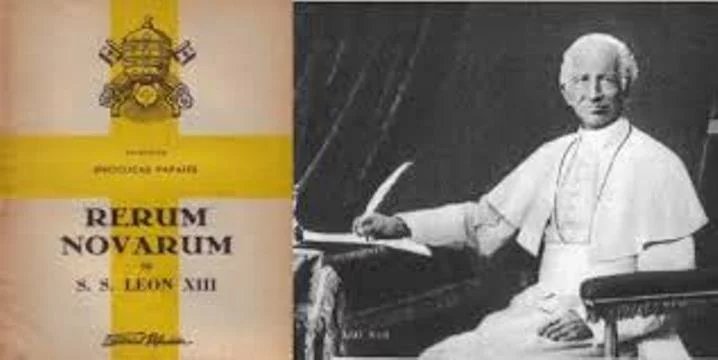
… is well over a Hundred Years Old. Rerum Novarum was Radical then. It is Radical today. Discover why this 130-year-old document remains startlingly relevant to contemporary economic theory and thought..
The only real and viable economic “centrism” between Capitalism and Socialism / Communism has always and only been found in Catholic Social Teaching. Quasi-Marxists have tried to turn it into socialism, the very idea of which was repugnant to the author of this foundational teaching.
Rerum Novarum (“Of New Things”), Pope Leo XIII boldly addressed the crisis of industrial capitalism in 1891, defending workers’ rights while rejecting socialist revolution. Now, as Pope Leo XIV invokes this same tradition to confront AI and the digital revolution, this masterwork reveals its prophetic nature and enduring relevance.
This new edition features:
- Clear, modern formatting for enhanced readability
- Concise paragraph summaries for quick reference
- Ten detailed historical footnotes providing rich context about the Gilded Age
- Complete original text faithful to Leo XIII’s vision
- New foreword connecting Leo XIII’s legacy to Pope Leo XIV’s mission (though the first Leo is normative; the second is contingent on faithfulness to the first)
Written at the height of labor unrest and socialist organizing, Rerum Novarum offered a third way between capitalism and Marxism. Leo XIII defended private property while insisting on just wages, reasonable working hours, and union rights. This vision shaped everything from European Christian Democratic parties to American New Deal legislation—and now inspires Pope Leo XIV’s approach to digital-age challenges.
As Pope Leo XIV stated to the College of Cardinals: “Pope Leo XIII addressed the social question in the context of the first industrial revolution. Today, the Church offers her social teaching in response to another industrial revolution and artificial intelligence.”
Essential reading for:
- Those following Pope Leo XIV’s papacy
- Students of Catholic social teaching
- Catholics interested in the Church’s response to AI and technology
- Labor history enthusiasts
- Anyone seeking to understand continuity in papal teaching
Discover why this 130-year-old document remains startlingly relevant to contemporary debates about inequality, workers’ dignity, and economic justice in the digital age.
Available almost for free at Amazon.com

