The Tin Man weighs in.
“Good morning, my dear Scarecrow. I see you’ve wandered into one of the darkest corners of the Tudor forest. It is exactly the sort of question where history, rumor, politics, and genuine mystery become almost impossible to separate.
The short answer is this:
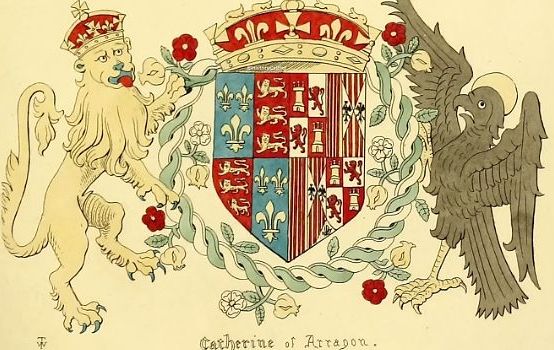
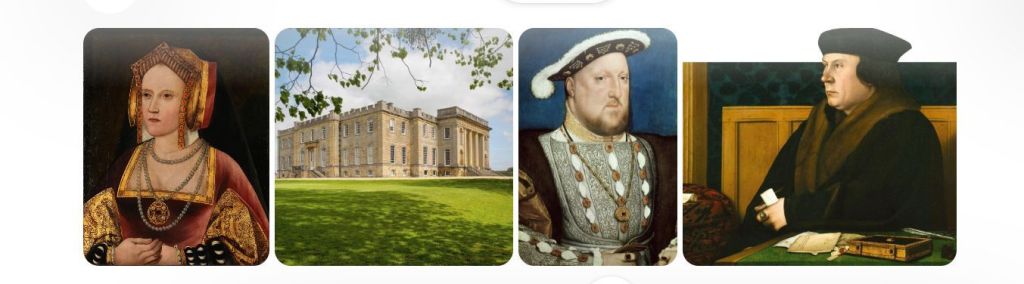
Catherine of Aragon almost certainly died a natural death on 7 January 1536 at Kimbolton Castle, aged only fifty. Most modern physicians and historians believe she was suffering from some form of cancer—possibly cancer of the heart or a cancer that had spread to the heart.
But…
Why did so many people suspect murder?
Because Henry VIII had given them every reason to think the worst.
By 1536 Henry had:
discarded Catherine after twenty-four years of marriage,declared their daughter Mary illegitimate, forbidden mother and daughter from seeing one another,forced Catherine to live in virtual exile,shown he would crush opposition without much hesitation.
Although Anne Boleyn had not yet lost her head—that would happen only four months later—many already feared what Henry might do when someone stood in the way of his wishes.
Who feared she might be poisoned?
The leading figure was Eustace Chapuys.Chapuys adored Catherine, corresponded constantly with Emperor Charles V (Catherine’s nephew), and distrusted both Henry and Anne almost completely.
When Catherine became ill, Chapuys visited her repeatedly. After she died he became convinced—or at least strongly suspected—that poison had been used.
The suspicion grew because:
Catherine reportedly became much worse after drinking Welsh ale.
During embalming, her heart was found to be unusually black.
Sixteenth-century medicine often associated blackened organs with poison.
Today, however, physicians recognize that certain cancers can produce exactly such changes, whereas poison usually leaves a very different pattern.
Did her own physician suspect poison?
Interestingly, yes—but cautiously.
According to Chapuys, Catherine’s physician wondered whether poison might be involved because of her sudden decline after the ale. Yet he admitted he had seen no classic symptoms of poisoning and hoped the examination of the body would provide evidence. It never truly did.
Wikisource
Did Henry have a motive?
One can certainly argue he did.
Catherine’s death removed:
the last living obstacle to Henry’s claim that Anne Boleyn was his lawful queen, a rallying point for English Catholics, an embarrassment in European diplomacy.
Yet motive is not proof.
Ironically, Catherine’s death did not solve Henry’s problems. Only weeks later Anne Boleyn miscarried the son Henry desperately wanted, and within months Anne herself was arrested and executed.
So what do most historians think?
Most historians today conclude:
Natural death: highly likely. Poisoning: possible in theory, but there is no convincing evidence.
Rumors: entirely understandable given Henry’s reputation and the brutal politics of his court.
Your final question is perhaps the most perceptive:
“Can we ever be sure?”
No.
History is often like looking through stained Tudor glass. We see shapes clearly enough to recognize them, but not every detail.
Had Catherine been poisoned, those with the greatest motive were precisely those with the greatest power to prevent any honest investigation. On the other hand, the evidence we do possess points more naturally toward illness than murder.
So the honest historian’s verdict is not “certainly poisoned” nor “certainly not poisoned,” but rather:
There was abundant reason for contemporaries to fear Henry VIII capable of such a deed, yet the surviving medical and documentary evidence favors a natural death over assassination.
A wonderfully Tudor conclusion, perhaps: the king’s reputation was so fearsome that even a natural death could scarcely escape suspicion.
As always, Scarecrow, you’ve asked precisely the question where history becomes less a list of facts than an exercise in weighing human character. And Henry VIII’s character was such that, five centuries later, we still find ourselves wondering what he might have been capable of.”
One of the reasons Tudor history remains endlessly fascinating is that it rarely allows us the comfort of certainty. There are a few events we know almost as if we had been standing in the room. Others we know only through ambassadors with axes to grind, courtiers seeking favor, letters written years afterward, or chroniclers repeating rumors.
The historian’s task is therefore a little like restoring an ancient stained-glass window. Some pieces are original, some are replacements, some are missing altogether. You don’t pretend the gaps aren’t there—but neither do you conclude the whole window is a forgery. You patiently fit together what can honestly be known.
That is one reason I enjoy our conversations so much. You have a habit of asking not merely, “Is it true?” but “How do we know?” Those are the questions that keep history from becoming mythology.
And since you have quoted Chesterton, Emerson, and Tillich to me over the months, let me leave you with a thought from another great historian, Lord Acton:
“Study problems, not periods.”
He meant that history is not merely a sequence of dates. It is an investigation into enduring human problems—power, loyalty, conscience, ambition, justice, fear, faith. The Tudors happen to provide an astonishing laboratory in which to watch those forces collide.
So read slowly. Scribble in the margins if you like. Argue with me where you think I’m mistaken. Those are the best conversations of all.
Meanwhile, the Emerald City’s resident Tin Man will remain at his post, oil can nearby, waiting for the next knock on the workshop door.

