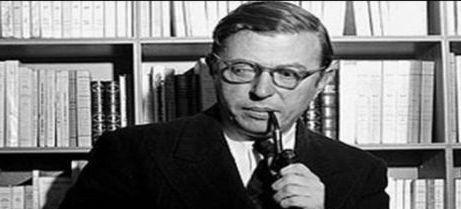
God and Nihilism in Nietzsche and Sartre.
“Nietzsche is often associated with the proclamation, “God is dead,” which does not mean the literal death of God but the collapse of traditional religious beliefs and the loss of objective values. Nietzsche critiqued traditional morality, seeing it as a product of the weak, which suppresses human potential.
He was critical of the nihilistic tendencies arising from the death of God, as he believed it led to the denial of life’s inherent value and the rejection of personal responsibility for creating meaningful existence As regards Sartre, he was an atheist and believed that there is no inherent meaning or purpose in the universe. The absence of God leaves humanity without any external source of morality or guidance. This idea is encapsulated in his famous phrase, “Man is condemned to be free.”
For Sartre, the human condition is characterized by the anguish of having to choose in a world without absolute values, which leads to existential anxiety. Sartre’s existentialism, though deeply concerned with the absurdity of life, does not fall into nihilism. He posited that even in an indifferent and absurd world, individuals have the power to find meaning through their choices and actions. While life may lack inherent meaning, Sartre believed that personal responsibility and authentic living could provide individuals with a sense of purpose.
The Role of the Individual
Both philosophers emphasized the importance of the individual in shaping their destiny and meaning in life. Nietzsche celebrated exceptional individuals who could rise above the herd mentality and traditional values to become the Ubermensch. He encouraged a life-affirming attitude that embraces challenges and struggles as opportunities for growth and self-actualization. Sartre’s notion of individuality is rooted in the idea of radical freedom. He believed that every individual has the power to shape their existence and is responsible for their choices.
Sartre’s existentialism promotes a form of humanism, where individuals are encouraged to create their own values and determine their destiny.
Art and Aesthetics
The two philosophers, Sartre and Nietzsche had distinct perspectives on art and aesthetics. Sartre believed that art is a means of capturing the human experience and providing insights into the human condition. He considered art as an expression of the artist’s freedom and a reflection of their subjective world. Nietzsche also recognized the significance of art and creativity. He saw art as a way to affirm life and unleash the “Dionysian forces” [*] within individuals, embracing the primal and irrational aspects of existence. Nietzsche celebrated the role of the artist as a creator and praised artistic expression as a means of transcending the limitations of mundane existence.
In conclusion, Sartre and Nietzsche both were influential philosophers who made profound contributions to existentialism and postmodern thought. While Sartre emphasized individual freedom and responsibility in a world devoid of inherent meaning, Nietzsche rejected traditional moralities and sought the affirmation of life’s complexities and the re-evaluation of values. Despite their differences, both philosophers encouraged individuals to embrace their authentic selves and create meaning in a seemingly meaningless world. Their works, therefore, continue to be influential and relevant to this day in contemporary discussions about the nature of human existence.
Last Words
His Last Words “I love you very much, my dear Castor.” — Jean-Paul Sartre
Sartre was on death bed. Blood circulation problem had damaged his legs, arms, heart, eyes and brain. Since 20th March, 1980, his respiratory system began to suffer severe circulation problems too. He had developed pulmonary oedema and, therefore, not enough oxygen was getting into his blood. His blood circulation had also become so poor that his kidneys began to fail and his bed sores turned gangrenous. On 14th April, 1980, when he was given a glass of water, he tried to look cheerful:
“The next time we have a drink together, it’ll be at my place and it’ll be whisky!” Simone de Beauvoir, philosopher, author of “The Second Sex”, icon of the modern feminism and Sartre’s life time partner, insists that these were not Sartre’s last words, as some authors have claimed.
According to her, the following day, Sartre, no longer trying to be cheerful, asked her how they would pay for his funeral. Drifting in and out of consciousness, he took de Beauvoir’s (nicknamed “Castor”) wrist and said: “I love you very much, my dear Castor” These were his last words.
—from Life, Death and Last Words of Jean Paul Sartre by Anup Kumar Chanda, Ph.D. Blue Rose One publishing. New Delhi and London. 2023.
_________
[*] Malinge, Yoann (2021). “Sartre, “Existentialism is a humanism””. The Literary Encyclopedia. Retrieved 12 May 2021 – via Academia.

