Note: What to make of this. Our (former SSPX!) priest and I both appreciate some of Thomas Merton’s writings, as you might know, but our stance is critical, not naive or magisterial in any left-wing sense. That is the approach this website takes towards many thinkers on many subjects: take the wheat and leave the chaff.
What follows here should not be construed as wholesale approval but as merely informative, even if in other liturgical contexts I admit to similar thoughts of weariness as I get older and older. But it is almost always true that I consider most (not all!) Novus Ordo masses to be worse, dismal at best, though certainly valid. SH.
Merton (circa 1968) writes,
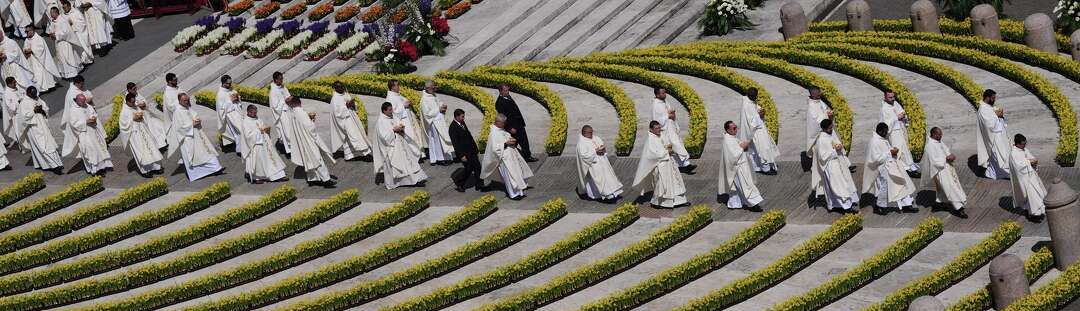
“The less said about the Easter morning Pontifical Mass the better. Interminable pontifical maneuverings, with the “Master of Ceremonies” calling every play, and trying to marshal the ministers into formation and keep things moving. Purple zuchetto and cappa magna and of course it had to be our Mexican novice who was appointed to carry the long train (this inwardly made me furious and practically choked any desire I may have had to sing alleluias). The church was stifling with solemn, feudal, and unbreathable fictions. This taste for plush, for ornamentation, for display strikes me as secular, no matter how much it is supposed to be “for the glory of God.” The spring outside seemed much more sacred.
Easter afternoon I went to the lake and sat in silence looking at the green buds, the wind skimming the utterly silent surface of the water, a muskrat slowly paddling to the other side. Peace and meaning. Sweet spring air. One could breathe. The alleluias came back by themselves.
The riches of this day (in Easter Week). First of all the day itself, brilliant and cloudless. The trees are now almost fully in leaf. Jack Ford brought an ikon (a copy, mounted at St. Meinrad’s to look real) of St. Elias. I put it up on the east wall. Fabulously beautiful, delicate and strong. A great red globe of fiery light and glory, with angelic horses rearing up in unison inside it, drawing a simple Russian peasant’s cart with the prophet standing in it, looking toward the great globe of the divine darkness to which he ascends—the blackness of the divine mystery.
Darker curve and shelves of mountains below. On one of the mountains Eliseus reaches into the globe of glory and touches the prophet’s robe. Below Eliseus, a second Elias, the Elias of sorrow, sleeps. That was the Elias who fled for his life into the wilderness. The same is now in the globe of glory and fire because of the sorrow that went before. An angel leans over and mentions the hearth cake to the sleeping prophet. What a thing to have in the room. It transfigures everything.”

