David Berlinski holds a PhD from Princeton University and has taught philosophy and mathematics at universities in France and the United States. A Senior Fellow of Discovery Insitute, he is the author of such books as The Deniable Darwin, A Tour of the Calculus, The Advent of the Algorithm, Newton’s Gift, and The Devil’s Delusion: Atheism and Its Scientific Pretensions. He lives in Paris, France. David Berlinski.org
The Deniable Darwin
By Dr. David Berlinski
When in the thirteenth century, Pope Innocent III realized that the Catholic faith had become too complicated an intellectual structure easily to be grasped, he created the Dominican order and charged it with the double responsibilities of combating error and inculcating belief. A difficult task was performed with great industry by men such as Albertus Magnus and Thomas Aquinas. The regnant position of the Catholic faith came to an end in the early seventeenth century. After viewing the heavens through a telescope, Cardinal Bellarmine acknowledged that in choosing between Copernicus and Ptolemy, the Church might be forced by the facts to choose Copernicus. The facts engendered the choice. The great scientific revolution of the West was set in motion.
It is hardly surprising that from their inception in the seventeenth century to the present day, the physical sciences, like the Catholic Church, have required a cadre of dedicated Dominicans, men prepared to spread the faith while dispelling doubt. Voltaire played this role with respect to the Principia Mathematica, making Newton’s noble work known throughout learned circles in Europe. In the United States and England, scientists today appear before the public as mandarins to the manner born. Their books fill every bookstore shelf, and their views have by a process of Internet multiplication and amplification been conveyed to an audience that might otherwise have been deprived of the sound of their voices. The advent of Newtonian mechanics, many scientists believe, marks a radical departure in intellectual history. Before Newton, there are all the old failed systems of thought, and afterwards, there is Science.
This is the popular view and so the myth. Like many myths, it contains a portion of the truth. Nothing like Newton’s Principia appeared before the seventeenth century. Nothing like it occurred afterwards either, circumstances that suggest a singular moment in intellectual history. There are now four great physical theories: Newton’s mechanics, of course, Clerk Maxwell’s theory of the electromagnetic field, Einstein’s theories of special and general relativity, and quantum mechanics. Each is fundamental. The laws of nature that they express are so compressed and therefore so vatic that they may be written down in no more than half a page. They are extraordinary in their quantitative precision, theory and experiment agreeing in both general relativity and quantum mechanics to something like 13 decimal places. And they are unique.
Where the Newtonian revolution has been extended, it has been extended in essentially Newton’s terms: A scientific theory must be mathematical; and it must appeal to theoretical structures very far from experience. To the extent that there are sciences that go beyond the great physical theories, they have without exception been parasitic. What we understand of biology we understand in terms of its chemistry; what we do not understand in these terms, we do not understand. It is odd to imagine that intellectual structures so singular could carry a general burden of belief, one often expressed in religious terms.
Nonetheless, as others were once prepared to say that they believed in God, a great many men and women are prepared to affirm that they believe in science. It is widely considered inappropriate not to. When the great logician Kurt Gödel remarked to a luncheon companion at the Institute for Advanced Study that he did not believe in the physical sciences, his comment, like his paranoia, was considered shocking enough to have become a part of his legend. Just what follows from a belief in science? It is not at all easy to say.
“After the devastating attacks by Wittgenstein and Quine,” the philosopher Paul Horwich has argued, “it is now widely believed that the sciences exhaust what can be known.”
Do they indeed? If the sciences are identified with the four physical theories, then it is plain that most of what we know, from contract law to the history of the Roman empire, has nothing to do with science at all. The claim that “the sciences exhaust what can be known,” to take the obvious example, is neither an assumption nor a conclusion of any physical theory. If it is known, it is not science, and if it is not known, it has no interest. If, on the other hand, the sciences are open-ended, then the thesis that the sciences exhaust what can be known comes to nothing more than the observation that what we know we tend to call scientific. This is true enough, but it is not interesting. What remains of belief in the sciences when belief has precious little content is an attitude.
The great virtue of a scientific education, Ernest Nagel once remarked, lies just in its capacity to provoke a liberation from illusion. Nagel did not specify which illusions he had in mind, but plainly he believed in getting rid of them all. In this, he was expressing a characteristic deflationary note, a kind of sullen skepticism.
My own view, repeated in virtually all of my essays, is that the sense of skepticism engendered by the sciences would be far more appropriately directed toward the sciences than toward anything else. It is not a view that the scientific community has ever encouraged. The sciences require no criticism, many scientists say, because the sciences comprise a uniquely self-critical institution, with questionable theories and theoreticians passing constantly before stern appellate review.
Judgment is unrelenting. And impartial. Individual scientists may make mistakes, but like the Communist Party under Lenin, science is infallible because its judgments are collective. Critics are not only unwelcome, they are unneeded. The biologist Paul Gross has made himself the master of this attitude and flaunts it on every conceivable occasion. Now no one doubts that scientists are sometimes critical of themselves. Among astrophysicists, for example, backbiting often leads to backstabbing. The bloodletting that ensues is salutary. But the process of peer review by which grants are funded and papers assigned to scientific journals, is, by its very nature, an undertaking in which a court reviews its own decisions and generally finds them good. It serves the useful purpose of settling various scores, but it does not—and it cannot—achieve the ends that criticism is intended to serve. If the scientific critic finds himself needed wherever he goes, like a hanging judge he finds himself unwelcome wherever he appears, all the more reason, it seems to me, that he really should get around as much as possible.
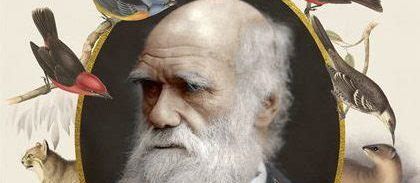
The essays that I have collected in this volume were written over roughly a 15-year period, the earliest in 1994, the most recent in 2008. Many were written specifically for Commentary. These essays owe much to editor Neal Kozodoy’s brilliant efforts on their behalf. Although they range over a diverse number of subjects, these essays are the expression of concerns that have occupied me for more than forty years. There is a connection in this respect between my first book, On Systems Analysis: An Essay on the Limitations of Some Mathematical Methods in the Social, Political and Biological Sciences, which I wrote for the MIT Press in 1976, and my last essay. The essays thus comprise a critical meditation, but one whose focus has been the sciences rather than the arts. “You must clear your mind of cant,” Dr. Johnson advised Boswell. It is not easy; I have been trying. I have named this collection The Deniable Darwin because it has been this essay more than any other that has prompted a gratifying commotion. And for obvious reasons. Darwinism has become far more than a narrow and not very interesting nineteenth-century theory of speciation; it is a way of thought, an attitude, and so an ideology.
As political correctness is the reigning ideology of social and political life, so Darwinism is the reigning ideology of scientific life. Both ideologies are forms of cant; they are expressions of attitude and in the case of Darwinism, the attitude runs straight through almost everything that has loosely collected under the name of science itself. It is most typically an attitude of confident conviction in the scientific enterprise itself, and it has as its correlative an attitude of confident contempt for doubt or even rational uncertainty. There is obviously Darwinism among the Darwinians; but there is Darwinism where physicists get together, and psychologists as well. It is a vile but universal fluid, one that seeps into every interstice, with even journalists splashing happily in the stuff. So I have decided to call this collection The Deniable Darwin and I hope that the reader understands that what is being denied is more than that poor drab Darwin ever advanced. I am against the spirit that he engendered. It remains for me to acknowledge with pleasure my debt to the Discovery Institute. It is not a simple matter. The Institute has since its inception been the subject of a richly conceived campaign of vilification. Paul Gross and Barbara Forrest, who represent the triumph in academic politics of the principle of reflex action, have discovered to their great alarm that the Discovery Institute has a political agenda. Their ensuing indignation has the quality of squid ink. It is black. It sheds no light. And it permits a fast get-a-way.
The Discovery Institute is a think tank and in this respect no different from the Hudson Institute, the Cato Institute, the Hoover Institution, and at least a dozen other institutions that ply the same trade and ply that trade by the same means. The National Center for Science Education, which is devoted entirely to persuading a reluctant public that in all respects Darwin was right and that they are wrong, carries on its affairs untroubled by any accusation that its mission is compromised by its politics. And this is as it should be. How else does anyone in a democratic society make his views known? Perhaps I should add the obvious. The Discovery Institute does not propose to inaugurate a form of theocratic kingship in the United States, and far from being a Christian right-wing fundamentalist, I am myself a secular Jew, one who has faithfully maintained since the age of 13 a remarkable indifference to the religious life.
—David Berlinski Paris

