“For the average person, all problems date to World War II; for the more informed, to World War I; for the genuine historian, to the French Revolution.” —Erik von Kuehnelt-Leddihn
“Our Lord never intended that any other blood than His own should be shed in expiation for sins. Because men have not invoked the blood of Christ for their sins, they are now at war shedding one another’s blood.” — Archbishop Fulton J. Sheen, Sorrowful Mysteries.
The Permanent Revolution. Prototype of A New World.
“The French Revolution (1789-1799) was a period of major societal and political upheaval in France. It witnessed the collapse of the monarchy, the establishment of the First French Republic, and culminated in the rise of Napoleon Bonaparte and the start of the Napoleonic era. The French Revolution is considered one of the defining events of Western history.
The Revolution of 1789, as it is sometimes called to distinguish it from later French revolutions, originated from deep-rooted problems that the government of King Louis XVI of France (r. 1774-1792) proved incapable of fixing; such problems were primarily related to France’s financial troubles as well as the systemic social inequality embedded within the Ancien Régime. The Estates-General of 1789, summoned to address these issues, resulted in the formation of a National Constituent Assembly, a body of elected representatives from the three societal orders who swore never to disband until they had written a new constitution. Over the next decade, the revolutionaries attempted to dismantle the oppressive old society and build a new one based on the principles of the Age of Enlightenment exemplified in the motto: “Liberté, égalité, fraternité.” (Liberty, Equality, Fraternity)
Terror became the means employed to effectively launch the Revolution and especially to consolidate it’s mighty power.

“The Terror was the culmination of years of fear and paranoia, feelings which had long existed as undercurrents to the Revolution. In the autumn of 1793, as the Revolution fractured and the War of the First Coalition (1792-1797) spiraled out of control, the National Convention deemed it necessary to implement Terror as the order of the day so that it could root out counter-revolutionary spies and conspirators. This led to the enactment of the Law of Suspects, which allowed for the arrests of between 300,000 and half a million citizens nationwide. 16,594 of these ‘suspects’ were formally executed after a trial, while around 10,000 died in prison, and thousands more were killed in various massacres staged across France. It is estimated that the total death toll during the ten-month Reign of Terror rests anywhere between 30-50,000.”
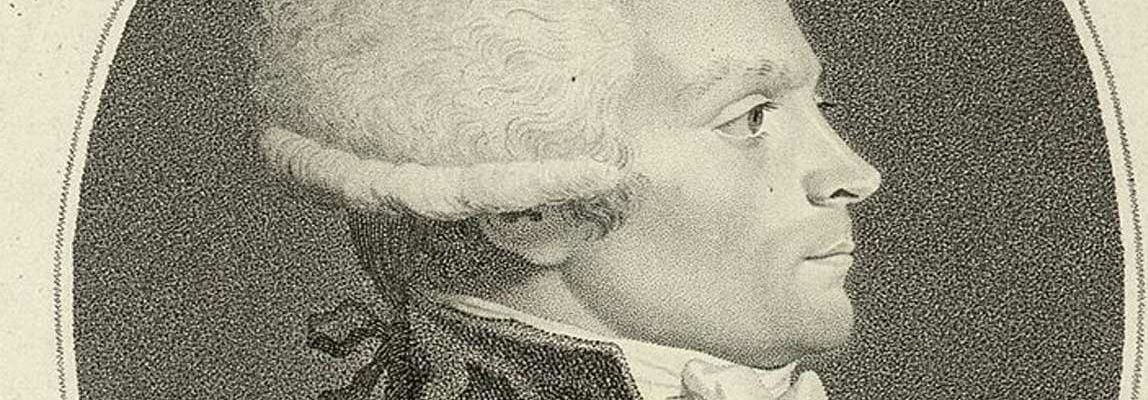
Robespierre
“Maximilien François Marie Isidore de Robespierre (1758-1794) was a French lawyer who became one of the primary leaders of the French Revolution (1789-1799). From his initial rise to stardom in the Jacobin Club, Robespierre went on to dominate the powerful Committee of Public Safety and oversee the Reign of Terror. He was overthrown and guillotined on 28 July 1794.
Beginning in May 1789, Robespierre’s political career was brief yet impactful. He championed the will of the people with such a degree of conviction that he became known as the “Incorruptible”; a contemporary once mused that Robespierre was the type to pay a man to offer him a bribe so he could make a show of declining it. His strict adherence to his principles was drawn from a perceived mandate from the people. Robespierre considered himself to be the people’s spokesman, which meant that those who opposed him necessarily opposed the people. Such would be his rise and his downfall.
Robespierre’s Fall
“….The fall of Maximilien Robespierre, or the Coup of 9 Thermidor, was a series of events that resulted in the arrests and executions of Robespierre and his allies on 27-28 July 1794. It signaled the end of the Reign of Terror, the end of Jacobin dominance of the French Revolution (1789-1799)
What led to Robespierre’s fall from power?
Maximilien Robespierre’s fall from power occurred after he intensified the Reign of Terror to such a degree that many other revolutionary leaders feared that they might be the next to be executed. On 26 July 1794, Robespierre announced he had a list of traitors but refused to name names, causing his enemies to overthrow him out of self-defense.
[Note: many Communist leaders in the 20th century learned this lesson well from the French Revolution.]
What was Robespierre’s downfall?
Robespierre’s downfall was his overconfidence in his position. He felt secure enough in his power to take a month-long break from public life, and to accuse other revolutionary leaders of treason to their faces, apparently failing to realize how many had turned against him
Which events led to the downfall of Robespierre?

Two major events that led to the downfall of Robespierre were the Festival of the Supreme Being, which gave many the perception that Robespierre aspired to dictatorship, and the Law of 22 Prairial, which made powerful revolutionary leaders scared for their own lives. These two events caused Robespierre’s enemies to start plotting against him.
What happened to Maximilien Robespierre in the end?
The National Convention declared Robespierre and his allies to be outlaws on 27 July 1794. At 2 a.m. the next morning, Robespierre was arrested after his jaw was shattered by a bullet, either self-inflicted or fired by a guard. He and 21 of his supporters were executed on 28 July 1794 (10 Thermidor Year II). — WorldHistory. Org
“The French Revolution,” then, “was a 1789 revolution which began the modern era. In a sequence of upheavals, it saw the downfall of King Louis XVI, rise of Robespierre and the Reign of Terror, a chaos wherein thousands were guillotined for political differences.
Radicals saw the Catholic Church as the enemy and promoted in its place a Cult of Reason. The Revolution emerged in part from the rationalism of the Enlightenment which distrusted all established institutions. It inspired fear into European monarchs and aristocrats as well as conservative intellectuals like Edmund Burke in Britain, who mobilized to fight the Revolution, and finally succeeded in 1815.
The revolution was very liberal in nature, and saw a perfect execution of the classical liberal ideas of the Enlightenment. It resulted in chaos, destruction, and radicalization, which were the very ideas that Burke and other classical conservatives had warned about. It gave the world a glimpse of what liberalism was like when put into action” … Conservapedia
+ Jacobins: Inspired by America’s vision of seductive false liberty. No Kings, no gods.
Spawning Another “Equality“
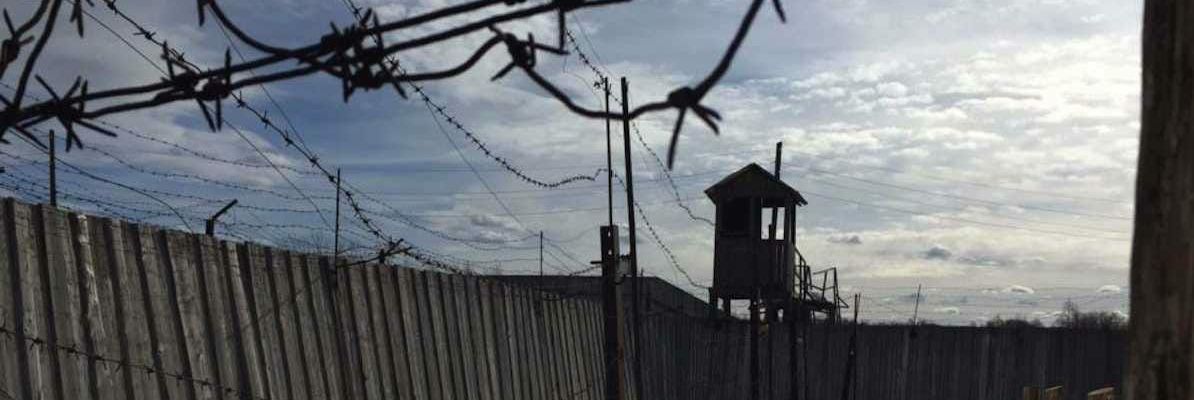
Lenin’s Pure “Equality”. & the October Revolution.
“Kim Crenshaw tends to be credited with Intersectionality, but she got it from the radicals in the Combahee River Collective. They put the idea together, in their turn, from the advocacy and activism of Herbert Marcuse. Marcuse was copying Mao, who was completing ideas laid down by Stalin for completing the perfect Soviet Union.”
+ Maoism with American characteristics
+

Solange Hertz: The Family’s Threat to Utopia

 Catholic Critique