Mary gets a fair shake
Customer Reviewed in the United States on January 22, 2010
One approaches a biography of a famous person with prejudices. You already have an opinion. The book may agree with your assessment or refute it and the success of the book and the characterization of the protagonist depend upon which way the wind blows- the book agrees with you or convinces you that you need to have second thoughts.
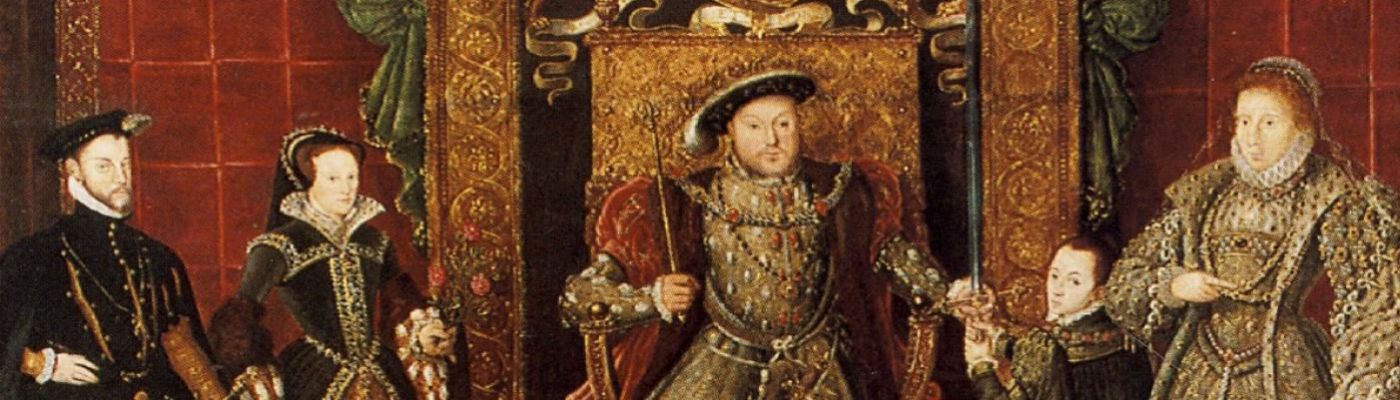
I approached Mary Tudor with many prejudices. I had looked at the portraits of Mary with her little wizened face, upon which her suffering is clearly etched and I had felt a profound pity for her- but on the other hand I deplored her persecution of the Protestants, her gullibility in thinking she could forcibly mold England into a Catholic state, her lack of understanding of the English psyche when she married Philip. I was judging Mary by twenty first century standards and what this book does is to put Mary where she belongs, in the sixteenth century, and we have to judge her not from here but from there, in her own back yard. This book made me much more tolerant of Mary and it is a fine read as well.
Author Porter does not whitewash Mary, she simply fleshes her out, creates a whole person rather than a two-dimensional cardboard figure. Whatever your feelings about Mary are, this is a must-read for Tudor buffs. Because the book is written from the perspective of Mary, not say, Anne Boleyn or Henry VIII, there are many vignettes and facts presented that you may not be familiar with. For instance, the redoubtable Margaret Pole Countess of Salisbury who helped to bring Mary up, appears in some detail. And the fact that Henry VIII had this venerable 67 year old lady beheaded by an executioner so inexperienced he hacked at her shoulders and took many strokes to finally do the job will make you shudder.
Eustace Chapuys, the famous ambassador of Charles V and staunch supporter of Mary, plays a big role in the book. We get a fine glimpse of Catherine Parr, Henry’s sixth wife and good friend to Mary and she appears as a most attractive personality. Of course we see all the well known players on that stage- Katherine of Aragon, Anne Boleyn, Henry himself, Philip II and Lady Jane Grey that “hideously manipulated slip of a girl”. Many other personalities are brought to life by this skillful writer.
One of the most fascinating parts of the book is the relationship between Mary and her brother Edward VI. Edward is not portrayed as the somewhat Jane Seymourish pallid personality often encountered in biographies. Before his final illness, he appears as a robust, feisty young man on the cusp of manhood who couldn’t wait to attain his majority and was determined to put his sister Mary in her place both as a Catholic and a woman, women being inferior. He lumped Mary and Elizabeth together as being unsuitable for the succession. Confrontations between Edward and Mary could result in their both succumbing to tears. But Edward was king and his “Devise for the Succession” put Lady Jane Grey and her heirs male on the throne and caused a civil war and Mary’s ascension. So Mary triumphed in the end over Edward.

And now for the infamous burning of some 300 Protestants. Author Porter does not condone the executions, but she believes that most of the gruesome killings were ordered by magistrates on the local level and Mary possibly didn’t even know about many of hem. She was, of course, highly responsible for sending Cranmer to the stake but he had been a thorn in her side for years and had been instrumental in obtaining Henry’s divorce from Catherine. Heresy was to Mary the most venal sin and Cranmer in her eyes was the supreme heretic. Mary was acting according to her conscience.
Poor Mary. She was discarded by both her father Henry VIII and her brother Edward VI. She endured two highly embarrassing phantom pregnancies and was married to a man who barely tolerated her. She died at 42. You still may not like her after you read this excellent book, but she just can’t be swept under the rug.
P.S. We learn in the book that Henry VIII was rumored to have had a high-pitched, thin voice, whereas many resources remark on his daughter Mary’s exceptionally deep voice. That Mary’s voice may have been lower than that of her huge, hulking father, boggles the mind.
About the Author
Linda Porter has a Ph.D. in history from the University of York, England. She was the winner of the 2004 Biographers Club/Daily Mail prize in England and is the author of The Myth of “Bloody Mary”, also available from St. Martin’s Press. She is married with one daughter and lives near London

