Chesterton’s Fence: A Lesson in Thinking

“Chesterton challenged the common belief that previous generations were foolish.” By Shane Parrish. Chesterton’s Fence is a principle that reminds us to look before we leap. To understand before we act. It’s a cautionary reminder to understand why something is the way it is before meddling in change. The principle comes from a parable by… Read More Chesterton’s Fence: A Lesson in Thinking

History of Philosophy

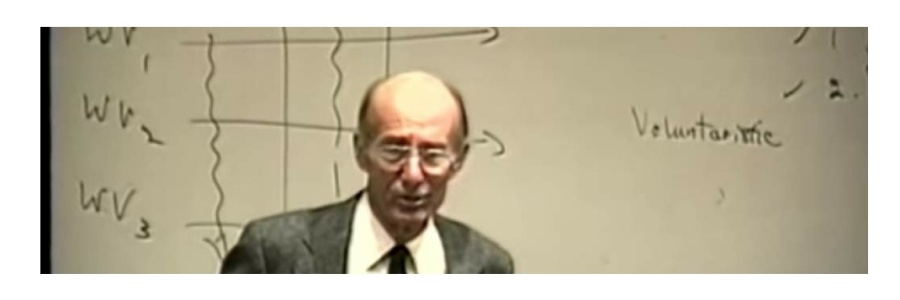
Dr. Arthur Holmes, History of Philosophy : This is an excellent series, it is very informative and fair to the ancients, to Catholic, Protestant and Enlightenment philosophies from Thales to Sartre and beyond. 81 comprehensive episodes. One can learn something new with every listen, or relisten, of any episode in this History of Philosophy series.… Read More History of Philosophy

Encyclical Letter ‘Faith and Reason’. Pope John Paul II.

“Without wonder, men and women would lapse into deadening routine and little by little would become incapable of a life which is genuinely personal”—Pope John Paul II Fides et Ratio,” meaning “Faith and Reason,” is an encyclical by Pope John Paul II published on September 14, 1998. It emphasizes the essential relationship between faith and… Read More Encyclical Letter ‘Faith and Reason’. Pope John Paul II.

The Perversions of Michel Foucault

Or, where the Left would take us. by Roger Kimball.The New Criterion. On The Passion of Michel Foucault by James Miller. Michel Foucault’s personal perversions involved him in private tragedy. The celebration of his intellectual perversions by academics continues to be a public scandal. The career of this “representative man” of the twentieth century really represents one of… Read More The Perversions of Michel Foucault

Francis Schaeffer on the Philosophy of being

…and Epistemology. [P]hilosophy and religion deal with the same basic questions. Christians, and especially evangelical Christians, have tended to forget this. Philosophy and religion do not deal with different questions, though they give different answers and in different terms. The basic questions of both philosophy and religion (and I mean religion here in the wide… Read More Francis Schaeffer on the Philosophy of being

Dr. Arthur Holmes Lectures. A History of Philosophy.

Put the news aside for a time. If unhappiness is growing consider it a reset signal to return to philosophy where all education and earthly wisdom began. …This is an excellent series, very informative and very fair to Catholic, Protestant and Enlightenment philosophies. Thales to Sartre and beyond. 81 comprehensive episodes. One can learn something… Read More Dr. Arthur Holmes Lectures. A History of Philosophy.

The Beat Generation… cultural catastrophe. By Roger Kimball

“We’ll get you through your children.” —Allen Ginsberg, 1958 The core of the heresy of the Free Spirit lay in the adept’s attitude towards himself: he believed that he had attained a perfection so absolute that he was incapable of sin. Disclaiming book-learning and theological subtleties, they rejoiced in direct knowledge of God- indeed, they… Read More The Beat Generation… cultural catastrophe. By Roger Kimball

Being and Bunk.

Apropos of everything: Because Martin Heidegger forsook his early roots in Thomistic [objective] Christian philosophy, the unapologetic Nazi who enjoyed philosophy was forced to create a new and eccentric philosophical superstructure [undecipherable and irrelevant to most human beings] to dodge the consequent existential void. It was necessary because his system toppled the Holy Trinity in… Read More Being and Bunk.

How Amy Coney Barrett’s close friendship could affect future of major supreme court Ed case

Recusal from case with huge implications for education could tilt scales in cause her friend spent a career defending. Linda Jacobson | The Guardian | Opinion / CC. On 30 April, the court will consider a legal question that has defined her career: can explicitly religious organizations operate charter schools? At the center of the dispute… Read More How Amy Coney Barrett’s close friendship could affect future of major supreme court Ed case

Thoreau on “News” Media As the “Ruling Powers”

Cynical news media daily turn many a local story, especially calamities, into national or international stories for political and financial purposes. The media bosses reap all the profit by spreading fear and shattering nerves. Motives are often far from noble despite all the self-righteous pretense. Henry David Thoreau anticipated this and there is lesson in… Read More Thoreau on “News” Media As the “Ruling Powers”

Peter Kreeft: “Why We’re Not Saving Western Civilization”

Dr. Kreeft is one of the most prolific, respected, and influential Catholic writers of the last fifty years. He is the author of nearly a hundred books (he doesn’t keep count, but says it’s somewhere around there), more than forty of which have been published by Ignatius Press—with more coming along all the time. Peter Kreeft,… Read More Peter Kreeft: “Why We’re Not Saving Western Civilization”

The Reformation: Historical Conditions, Unintended Consequences

Brad S. Gregory is Dorothy G. Griffin Professor of Early Modern European History at the University of Notre Dame, a world-class historian, and award-winning author of Salvation at Stake: Christian Martyrdom in Early Modern Europe and The Unintended Reformation: How a Religious Revolution Secularized Society. He received his Ph.D. from Princeton University and was a Junior Fellow in the Harvard… Read More The Reformation: Historical Conditions, Unintended Consequences

Hegel, the Idolatry of the State,  and the Cunning of [his] ‘Reason’.

“Hegel is the ideological nexus where the Gnostic scientific dictatorships of Nazism and Communism intersect.” — Phillip and Paul Collins, The Ascendancy of the Scientific Dictatorship. “All the worth which the human being possesses – all spiritual reality, he possesses only through the State. … For Truth is the Unity of the universal and subjective… Read More Hegel, the Idolatry of the State,  and the Cunning of [his] ‘Reason’.

Heidegger in Ruins

There is scarcely a Catholic philospher (of the Left especially) who does not consider the Catholic apostate Martin Heidegger a brilliant philospher whose teachings in no small way show us the way out of the restraints of biblical literalism and philosophical realism (in other words, the Christian revelation of God in Christ Jesus, the Incarnation),… Read More Heidegger in Ruins

I’ve had the book for decades. But I never read it. “Shows About Nothing.”

For some reason I thought it was another book about our frivolous TV shows and general culture (Seinfeld,  Larry David’s vicious Curb Your Enthusiasm —pick your nonsense— and I already knew this about the culture. But then things got darker. Very recently I somehow bumped into this reading. I listened. I couldn’t have been more… Read More I’ve had the book for decades. But I never read it. “Shows About Nothing.”

Gleaning The Wisdom of the Ancients. On Depression.

The stoics were important pre-modern psychologists. “It was in Greece that the most sublime wisdom flourished, as it is said in the Epistle to the Corinthians: “The Jews require signs, and the Greeks seek after wisdom.” —  St. Albert the Great  “Finally, brothers and sisters, whatever is true, whatever is noble, whatever is right, whatever… Read More Gleaning The Wisdom of the Ancients. On Depression.

Pope St. Pius X on  Progressivist “Evolution”. From “Page to Page.”

“Know this, that in the last days shall come perilous times.” — 2 Tim. 3:1 Excerpts from Pope St. Pius X, Pascendi Dominici Gregis: “First of all they lay down the general principle that in a living religion everything is subject to change, and must in fact be changed. In this way they pass to… Read More Pope St. Pius X on  Progressivist “Evolution”. From “Page to Page.”

When Popes Exposed and Denounced Doctrinal Ambiguity, the “Art of Deception.”

Pinned 2.15.23 —Auctorem Fidei, August 28, 1794, is a papal document issued by Pius VI in condemnation of the Gallican and Jansenist acts and tendencies of the Synod of Pistoia (1786). In the introductory text the Pope exposes the “art of deception,” just as Pius X did again at the dawn of the twentieth century… Read More When Popes Exposed and Denounced Doctrinal Ambiguity, the “Art of Deception.”

Reginald Garrigou-Lagrange on Reason and The Law of Non-Contradiction.

Truth does not change with the changes in political parties, current philosophies or trends. ” a thing cannot be and not be at the same time”— St. Thomas (Summa Contra Gentiles, Book 1, chap. 84) “…reason’s first principle is the principle of contradiction. He who denies this principle affirms a self-destructive sentence. To deny this principle… Read More Reginald Garrigou-Lagrange on Reason and The Law of Non-Contradiction.