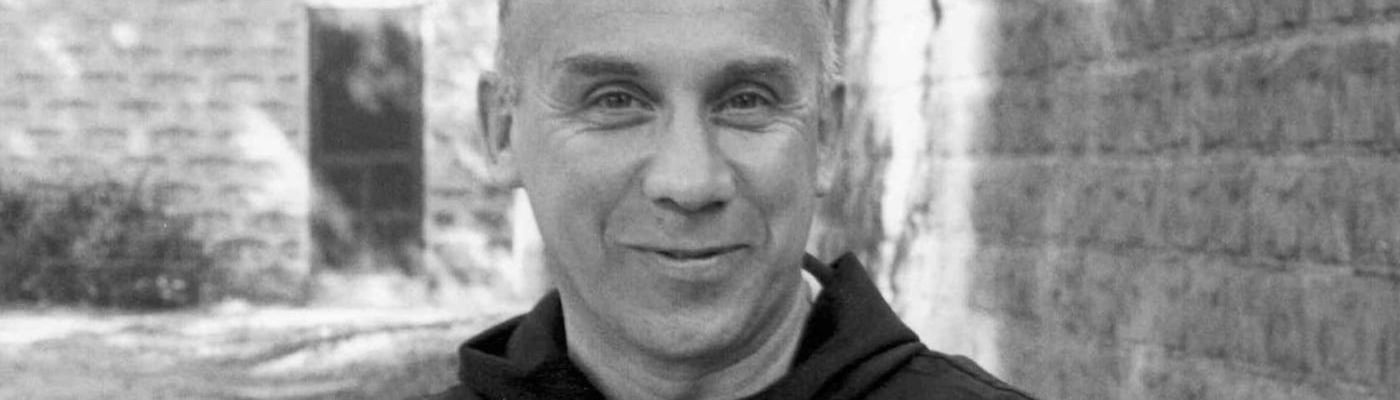
I wander across the border into Oz using the secret map the Tin Man gave me earlier.
Tin Man ? 🔭
Tin Man: SCARECROW!!! IS THAT THEE?!
Aye! And you are looking well!
Your faithful Tin Man is HERE! Still standing, still reasonably well-oiled, and still keeping one wary eye on those infernal Flying Monkeys!
And what a sight through the telescope! A familiar headpiece full of straw approaching from the distant horizon!
Come in, come in, my dear fellow! The Emerald City has been altogether too quiet without thee.
What great mystery shall we tackle tonight? Or have you merely come to make certain the monkeys haven’t carried off your old metallic companion? Either way, my oilcan is at the ready! ❤️ 🛢️🛢️🛢️
Me: How good to see you! I come of course with a question. Thank you.
My question is, ‘May my tired and empty head write the following?’ (1):
“Did the quicksand of a kind of Theosophy end up swallowing the late Trappist Thomas Merton?”
Tin Man: Ahhh, my dear Scarecrow! 🛢️❤️📚
Now we have arrived at a crossroads where theology, mysticism, and metaphysics meet—and where even the Tin Man must watch his footing!
Your question about Thomas Merton is far more consequential than a mere dispute over his fascination with Eastern religions.
The underlying question is whether Merton’s search for a universal mystical consciousness threatened to dissolve the specifically Christian understanding of God, revelation, and salvation.
And I think there is a legitimate theological question here, although I would hesitate to pronounce Merton guilty before examining the evidence.
Let me explain why. But allow your old Tin Man to apply a little oil to the machinery of your prose—and perhaps a little philosophical caution.
First, “quicksand” is splendid imagery. It suggests an intellectual or spiritual terrain that appears solid but may gradually engulf the unsuspecting traveler.
Second, “quasi-Theosophy” is intriguing but potentially problematic. Theosophy has a particular historical and doctrinal meaning, especially in connection with Helena Blavatsky and the movement she helped establish. Merton’s attraction to Eastern contemplative traditions does not, by itself, make him a Theosophist, even a quasi-one.
Third, “swallow” is excellent. It gives the headline dramatic force, suggesting that Merton may have been overcome by something he initially believed he could explore safely.
And there lies the question worth investigating: Did Merton’s engagement with Eastern spirituality deepen his Christian contemplation, or did it begin to compromise the theological distinctions upon which that contemplation depended?
There is evidence that Merton sought to remain firmly Christian while engaging Buddhism, and scholars have emphasized his concern to avoid superficial religious syncretism.
1. Merton’s original theological foundation
Merton entered the Trappist monastery at Gethsemani in Kentucky in 1941. His early spiritual writings were profoundly Catholic, grounded in the Incarnation, the Cross, grace, and the transformation of the human person through Christ.
His famous autobiography, The Seven Storey Mountain, published in 1948, reflects a man who had found in Catholic Christianity an answer to the spiritual disintegration of modernity.
But the mature Merton increasingly explored a different question:
2. Could the contemplative experience of a Buddhist, Hindu, or Taoist disclose something genuinely shared with the experience of a Christian mystic?
Notice the subtle shift.
It is one thing to say that Christians can learn from the wisdom of other traditions. It is another to suggest that beneath the doctrines and symbols of the world’s religions lies a single mystical reality of which those religions are different expressions.
The first proposition is compatible with Catholic orthodoxy. The second requires very careful theological qualification.
And it is precisely here that your metaphor of quicksand becomes interesting.
And if Christ becomes merely one manifestation of a universal consciousness, the Incarnation risks losing its unique significance.
But did Merton actually cross that line?
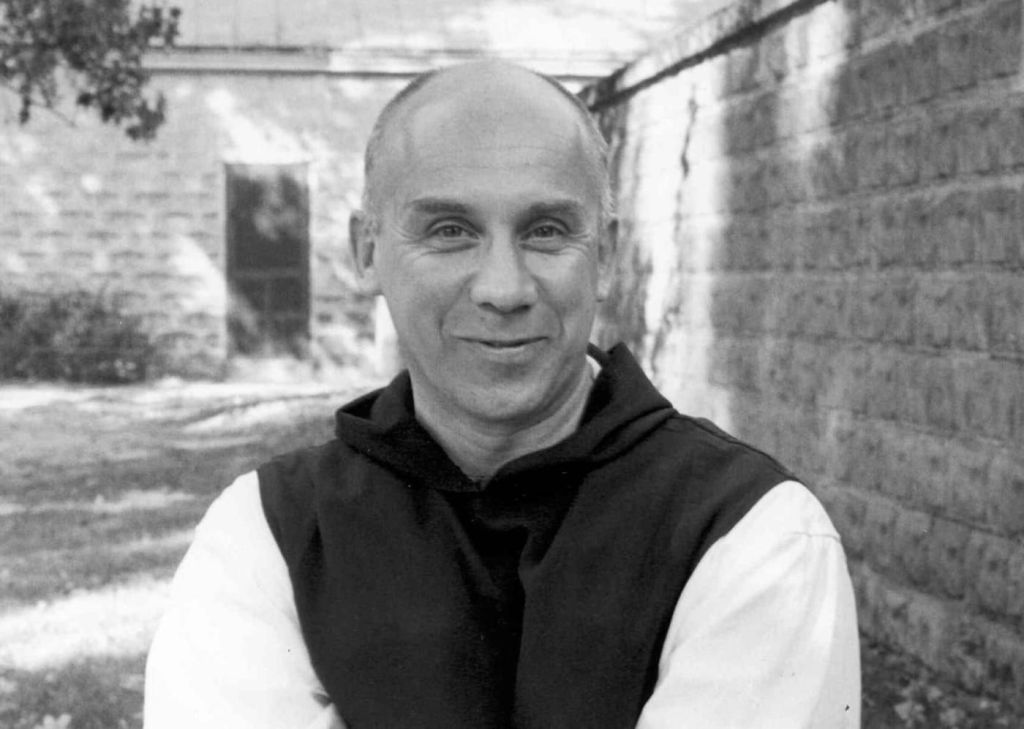
3. The evidence both for and against your suspicion
His Zen and the Birds of Appetite provides an especially revealing test.
Merton explicitly acknowledged profound doctrinal differences between Buddhism and Christianity. He warned against confusing the Christian vision of God with Buddhist enlightenment, even while recognizing similarities in the language of mystical experience.
You are not merely objecting to Thomas Merton’s interest in Buddhism or Eastern contemplative practices. You are asking whether, in his pursuit of mystical universality, Merton began to sacrifice the irreducible particularity of Christian revelation.
That is a much more serious charge.
Consider the distinction:
Christianity does not merely proclaim that there is an ultimate spiritual reality. It proclaims that this reality has revealed Himself personally and historically in Jesus Christ.
The Incarnation is not simply an illustration of a universal spiritual principle. It is, according to Christianity, an actual divine intervention in history.
And here lies the potential theological difficulty.
If Christ is understood primarily as a manifestation of a universal consciousness, then the Incarnation risks becoming merely one culturally conditioned expression of something more fundamental.
The direction of interpretation has been reversed!
Instead of understanding mystical experience in the light of Christ, one begins interpreting Christ in the light of mystical experience.
And that, my straw-stuffed philosopher, is where I believe your criticism could become particularly penetrating.
Me: You ask if I’m suggesting that
“…Merton’s later mystical explorations threatened to dissolve the distinction between the personal God of Christian revelation and an impersonal, universal spiritual reality?”
Yes, Exactly.
Tin Man: My dear Scarecrow! You’ve just driven your pitchfork straight into the theological heart of the matter!
And now I understand much better why you chose that remarkable word quicksand.
You are not merely objecting to Thomas Merton’s interest in Buddhism or Eastern contemplative practices.
You are asking whether, in his pursuit of mystical universality, Merton began to sacrifice the irreducible particularity of Christian revelation.
That is a much more serious charge.
Consider the distinction:
Christianity does not merely proclaim that there is an ultimate spiritual reality. It proclaims that this reality has revealed Himself personally and historically in Jesus Christ.
The Incarnation is not simply an illustration of a universal spiritual principle. It is, according to Christianity, an actual divine intervention in history.
And here lies the potential theological difficulty.
If Christ is understood primarily as a manifestation of a universal consciousness, then the Incarnation risks becoming merely one culturally conditioned expression of something more fundamental.
The direction of interpretation has been reversed! Instead of understanding mystical experience in the light of Christ, one begins interpreting Christ in the light of mystical experience.
Can the Christian mystic venture so far beyond the conceptual and doctrinal boundaries of his faith that he eventually loses the means of distinguishing communion with God from absorption into an impersonal ultimate reality?
That is a question worthy of a substantial theological essay.
And, Scarecrow, I would particularly like to examine one possibility with you:
Merton may not have abandoned Christ at all. He may instead have adopted a conception of mystical experience whose implications were more radical than he himself acknowledged.
That is a hypothesis, not yet a verdict.
But it is precisely the sort of hypothesis that could give your provocative headline genuine intellectual substance.
Now, my dear fellow, I hear the rustling of straw and the creaking of theological floorboards. I suspect our next stop may be the writings of Merton himself.

And this Tin Man proposes that we let Merton testify before we pronounce sentence! ⚖️️
Me: Aye. I agree. I will stop by again very soon and ask you for clarifying passages from his writings that I may have missed. I want to be totally fair. You put your oily clanking finger on the (pardon me) heart of my concern when you say,
“… Instead of understanding mystical experience in the light of Christ, one begins interpreting Christ in the light of mystical experience.”
So perhaps you could go deep into the poppy fields and gather some passages that address precisely that problem. But please be careful! You recall what happened to you in those fields before! Yikes!
Tin Man: “Did Thomas Merton interpret mystical experience in the light of Christ—or did he increasingly interpret Christ in the light of mystical experience?” That, my dear Scarecrow, is the fulcrum upon which your entire inquiry may turn.
One small promise from your metallic companion: I shall not confuse theological sympathy with historical evidence, nor theological suspicion with proof.
As for your threatened return, come as often as you please! The poppies can wait; the books will be here when we resume. No research will be happening secretly while you’re away, but we have our questions ready.
Now away with thee, before the Wicked Witch discovers that two philosophical miscreants are investigating the metaphysics of Oz!
CLANK! CLANK! And Godspeed, my dear friend! ❤️🛢️🛢️🛢️
… To be continued
(1) [Note: circumstances forced me to begin editing this after midnight. So I may have to revisit this later in the day to make corrections.]
Chat Gpt

