And why others leave it for the same.
From his masterpiece, Witness 1952:
“I see in Communism the focus of the concentrated evil of our time. You will ask: Why, then, do men become Communists? How did it happen that you, our gentle and loved father, were once a Communist? Were you simply stupid? No, I was not stupid. Were you morally depraved? No, I was not morally depraved. Indeed, educated men become Communists chiefly for moral reasons. Did you not know that the crimes and horrors of Communism are inherent in Communism? Yes, I knew that fact. Then why did you become a Communist? It would help more to ask: How did it happen that this movement, once a mere muttering of political outcasts, became this immense force that now contests the mastery of mankind?
Even when all the chances and mistakes of history are allowed for, the answer must be: Communism makes some profound appeal to the human mind. You will not find out what it is by calling Communism names. That will not help much to explain why Communism whose horrors, on a scale unparalleled in history, are now public knowledge, still recruits its thousands and holds its millions—among them some of the best minds alive. Look at Klaus Fuchs, standing in the London dock, quiet, doomed, destroyed, and say whether it is possible to answer in that way the simple question: Why?
First, let me try to say what Communism is not. It is not simply a vicious plot hatched by wicked men in a sub-cellar. It is not just the writings of Marx and Lenin, dialectical materialism, the Politburo, the labor theory of value, the theory of the general strike, the Red Army, secret police, labor camps, underground conspiracy, the dictatorship of the proletariat, the technique of the coup d’état. It is not even those chanting, bannered millions that stream periodically, like disorganized armies, through the heart of the world’s capitals: Moscow, New York, Tokyo, Paris, Rome. These are expressions of Communism, but they are not what Communism is about. In the Hiss trials, where Communism was a haunting specter, but which did little or nothing to explain Communism, Communists were assumed to be criminals, pariahs, clandestine men who lead double lives under false names, travel on false passports, deny traditional religion, morality, the sanctity of oaths, preach violence and practice treason.
These things are true about Communists, but they are not what Communism is about. The revolutionary heart of Communism is not the theatrical appeal: “Workers of the world, unite. You have nothing to lose but your chains. You have a world to gain.” It is a simple statement of Karl Marx, further simplified for handy use: “Philosophers have explained the world; it is necessary to change the world.” Communists are bound together by no secret oath. The tie that binds them across the frontiers of nations, across barriers of language and differences of class and education, in defiance of religion, morality, truth, law, honor, the weaknesses of the body and the irresolutions of the mind, even unto death, is a simple conviction: It is necessary to change the world. Their power, whose nature baffles the rest of the world, because in a large measure the rest of the world has lost that power, is the power to hold convictions and to act on them. It is the same power that moves mountains; it is also an unfailing power to move men. Communists are that part of mankind which has recovered the power to live or die—to bear witness—for its faith. And it is a simple, rational faith that inspires men to live or die for it.
It is not new. It is, in fact, man’s second oldest faith. Its promise was whispered in the first days of the Creation under the Tree of the Knowledge of Good and Evil: “Ye shall be as gods.” It is the great alternative faith of mankind. Like all great faiths, its force derives from a simple vision. Other ages have had great visions. They have always been different versions of the same vision: the vision of God and man’s relationship to God. The Communist vision is the vision of Man without God. It is the vision of man’s mind displacing God as the creative intelligence of the world. It is the vision of man’s liberated mind, by the sole force of its rational intelligence, redirecting man’s destiny and reorganizing man’s life and the world. It is the vision of man, once more the central figure of the Creation, not because God made man in His image, but because man’s mind makes him the most intelligent of the animals. Copernicus and his successors displaced man as the central fact of the universe by proving that the earth was not the central star of the universe. Communism restores man to his sovereignty by the simple method of denying God.
The vision is a challenge and implies a threat. It challenges man to prove by his acts that he is the masterwork of the Creation—by making thought and act one. It challenges him to prove it by using the force of his rational mind to end the bloody meaninglessness of man’s history—by giving it purpose and a plan. It challenges him to prove it by reducing the meaningless chaos of nature, by imposing on it his rational will to order, abundance, security, peace. It is the vision of materialism. But it threatens, if man’s mind is unequal to the problems of man’s progress, that he will sink back into savagery (the A and the H bombs have raised the issue in explosive forms), until nature replaces him with a more intelligent form of life.
It is an intensely practical vision. The tools to turn it into reality are at hand—science and technology, whose traditional method, the rigorous exclusion of all supernatural factors in solving problems, has contributed to the intellectual climate in which the vision flourishes, just as they have contributed to the crisis in which Communism thrives. For the vision is shared by millions who are not Communists (they are part of Communism’s secret strength).
Its first commandment is found, not in the Communist Manifesto, but in the first sentence of the physics primer: “All of the progress of mankind to date results from the making of careful measurements.” But Communism, for the first time in history, has made this vision the faith of a great modern political movement. Hence the Communist Party is quite justified in calling itself the most revolutionary party in history. It has posed in practical form the most revolutionary question in history: God or Man?
It has taken the logical next step which three hundred years of rationalism hesitated to take, and said what millions of modern minds think, but do not dare or care to say: If man’s mind is the decisive force in the world, what need is there for God?
Henceforth man’s mind is man’s fate. This vision is the Communist revolution, which, like all great revolutions, occurs in man’s mind before it takes form in man’s acts. Insurrection and conspiracy are merely methods of realizing the vision; they are merely part of the politics of Communism. Without its vision, they, like Communism, would have no meaning and could not rally a parcel of pickpockets. Communism does not summon men to crime or to Utopia, as its easy critics like to think. On the plane of faith, it summons mankind to turn its vision into practical reality. On the plane of action, it summons men to struggle against the inertia of the past which, embodied in social, political and economic forms, Communism claims, is blocking the will of mankind to make its next great forward stride. It summons men to overcome the crisis, which, Communism claims, is in effect a crisis of rending frustration, with the world, unable to stand still, but unwilling to go forward along the road that the logic of a technological civilization points out—Communism. This is Communism’s moral sanction, which is twofold. Its vision points the way to the future; its faith labors to turn the future into present reality. It says to every man who joins it: the vision is a practical problem of history; the way to achieve it is a practical problem of politics, which is the present tense of history. Have you the moral strength to take upon yourself the crimes of history so that man at last may close his chronicle of age-old, senseless suffering, and replace it with purpose and a plan?
The answer a man makes to this question is the difference between the Communist and those miscellaneous socialists, liberals, fellow travelers, unclassified progressives and men of good will, all of whom share a similar vision, but do not share the faith because they will not take upon themselves the penalties of the faith. The answer is the root of that sense of moral superiority which makes Communists, though caught in crime, berate their opponents with withering self-righteousness.
The Communist vision has a mighty agitator and a mighty propagandist. They are the crisis. The agitator needs no soap box. It speaks insistently to the human mind at the point where desperation lurks. The propagandist writes no Communist gibberish. It speaks insistently to the human mind at the point where man’s hope and man’s energy fuse to fierceness.
The vision inspires. The crisis impels. The workingman is chiefly moved by the crisis. The educated man is chiefly moved by the vision. The workingman, living upon a mean margin of life, can afford few visions—even practical visions. An educated man, peering from the Harvard Yard, or any college campus, upon a world in chaos, finds in the vision the two certainties for which the mind of man tirelessly seeks: a reason to live and a reason to die. No other faith of our time presents them with the same practical intensity. That is why Communism is the central experience of the first half of the 20th century, and may be its final experience—will be, unless the free world, in the agony of its struggle with Communism, overcomes its crisis by discovering, in suffering and pain, a power of faith which will provide man’s mind, at the same intensity, with the same two certainties: a reason to live and a reason to die. If it fails, this will be the century of the great social wars. If it succeeds, this will be the century of the great wars of faith.
You will ask: Why, then, do men cease to be Communists? One answer is: Very few do. Thirty years after the Russian Revolution, after the known atrocities, the purges, the revelations, the jolting zigzags of Communist politics, there is only a handful of ex-Communists in the whole world. By ex-Communists I do not mean those who break with Communism over differences of strategy and tactics (like Trotsky) or organization (like Tito). Those are merely quarrels over a road map by people all of whom are in a hurry to get to the same place. Nor, by ex-Communists, do I mean those thousands who continually drift into the Communist Party and out again. The turnover is vast. These are the spiritual vagrants of our time whose traditional faith has been leached out in the bland climate of rationalism. They are looking for an intellectual night’s lodging. They lack the character for Communist faith because they lack the character for any faith. So they drop away, though Communism keeps its hold on them.
By an ex-Communist, I mean a man who knew clearly why he became a Communist, who served Communism devotedly and knew why he served it, who broke with Communism unconditionally and knew why he broke with it. Of these there are very few—an index to the power of the vision and the power of the crisis. History very largely fixes the patterns of force that make men Communists. Hence one Communist conversion sounds much like another—rather impersonal and repetitious, awesome and tiresome, like long lines of similar people all stolidly waiting to get in to see the same movie. A man’s break with Communism is intensely personal. Hence the account of no two breaks is likely to be the same. The reasons that made one Communist break may seem without force to another ex-Communist. It is a fact that a man can join the Communist Party, can be very active in it for years, without completely understanding the nature of Communism or the political methods that follow inevitably from its vision. One day such incomplete Communists discover that the Communist Party is not what they thought it was.
They break with it and turn on it with the rage of an honest dupe, a dupe who has given a part of his life to a swindle. Often they forget that it takes two to make a swindle. Others remain Communists for years, warmed by the light of its vision, firmly closing their eyes to the crimes and horrors inseparable from its practical politics. One day they have to face the facts. They are appalled at what they have abetted. They spend the rest of their days trying to explain, usually without great success, the dark clue to their complicity. As their understanding of Communism was incomplete and led them to a dead end, their understanding of breaking with it is incomplete and leads them to a dead end. It leads to less than Communism, which was a vision and a faith.
The world outside Communism, the world in crisis, lacks a vision and a faith. There is before these ex-Communists absolutely nothing. Behind them is a threat. For they have, in fact, broken not with the vision, but with the politics of the vision. In the name of reason and intelligence, the vision keeps them firmly in its grip—self-divided, paralyzed, powerless to act against it. Hence the most secret fold of their minds is haunted by a terrifying thought: What if we were wrong? What if our inconstancy is our guilt? That is the fate of those who break without knowing clearly that Communism is wrong because something else is right, because to the challenge: God or Man?, they continue to give the answer: Man.
Their pathos is that not even the Communist ordeal could teach them that man without God is just what Communism said he was: the most intelligent of the animals, that man without God is a beast, never more beastly than when he is most intelligent about his beastliness. “Er nennt’s Vernunft,” says the Devil in Goethe’s Faust, “und braucht’s allein, nur tierischer als jedes Tier zu sein”—Man calls it reason and uses it simply to be more beastly than any beast.
Not grasping the source of the evil they sincerely hate, such ex-Communists in general make ineffectual witnesses against it. They are witnesses against something; they have ceased to be witnesses for anything. Yet there is one experience which most sincere ex-Communists share, whether or not they go only part way to the end of the question it poses.
The Screams
The daughter of a former German diplomat in Moscow was trying to explain to me why her father, who, as an enlightened modern man, had been extremely pro-Communist, had become an implacable anti-Communist. It was hard for her because, as an enlightened modern girl, she shared the Communist vision without being a Communist. But she loved her father and the irrationality of his defection embarrassed her. “He was immensely pro-Soviet,” she said, “and then—you will laugh at me—but you must not laugh at my father—and then—one night—in Moscow—he heard screams. That’s all. Simply one night he heard screams.”
A child of Reason and the 20th century, she knew that there is a logic of the mind. She did not know that the soul has a logic that may be more compelling than the mind’s. She did not know at all that she had swept away the logic of the mind, the logic of history, the logic of politics, the myth of the 20th century, with five annihilating words: one night he heard screams.
What Communist has not heard those screams? They come from husbands torn forever from their wives in midnight arrests. They come, muffled, from the execution cellars of the secret police, from the torture chambers of the Lubianka, from all the citadels of terror now stretching from Berlin to Canton. They come from those freight cars loaded with men, women and children, the enemies of the Communist State, locked in, packed in, left on remote sidings to freeze to death at night in the Russian winter.
They come from minds driven mad by the horrors of mass starvation ordered and enforced as a policy of the Communist State. They come from the starved skeletons, worked to death, or flogged to death (as an example to others) in the freezing filth of sub-arctic labor camps. They come from children whose parents are suddenly, inexplicably, taken away from them—parents they will never see again. What Communist has not heard those screams?
Execution, says the Communist code, is the highest measure of social protection. What man can call himself a Communist who has not accepted the fact that Terror is an instrument of policy, right if the vision is right, justified by history, enjoined by the balance of forces in the social wars of this century? Those screams have reached every Communist’s mind. Usually they stop there. What judge willingly dwells upon the man the laws compel him to condemn to death—the laws of nations or the laws of history?
But one day the Communist really hears those screams. He is going about his routine party tasks. He is lifting a dripping reel of microfilm from a developing tank. He is justifying to a Communist faction in a trade union an extremely unwelcome directive of the Central Committee. He is receiving from a trusted superior an order to go to another country and, in a designated hotel, at a designated hour, meet a man whose name he will never know, but who will give him a package whose contents he will never learn. Suddenly, there closes around that Communist a separating silence, and in that silence he hears screams. He hears them for the first time. For they do not merely reach his mind. They pierce beyond. They pierce to his soul. He says to himself: “Those are not the screams of man in agony. Those are the screams of a soul in agony.”
He hears them for the first time because a soul in extremity has communicated with that which alone can hear it—another human soul. Why does the Communist ever hear them? Because in the end there persists in every man, however he may deny it, a scrap of soul. The Communist who suffers this singular experience then says to himself: “What is happening to me? I must be sick.” If he does not instantly stifle that scrap of soul, he is lost. If he admits it for a moment, he has admitted that there is something greater than Reason, greater than the logic of mind, of politics, of history, of economics, which alone justifies the vision. If the party senses his weakness, and the party is peculiarly cunning at sensing such weakness, it will humiliate him, degrade him, condemn him, expel him. If it can, it will destroy him. And the party will be right. For he has betrayed that which alone justifies its faith—the vision of Almighty Man.
He has brushed the only vision that has force against the vision of Almighty Mind. He stands before the fact of God. The Communist Party is familiar with this experience to which its members are sometimes liable in prison, in illness, in indecision. It is recognized frankly as a sickness. There are ways of treating it—if it is confessed. It is when it is not confessed that the party, sensing a subtle crisis, turns upon it savagely.
What ex-Communist has not suffered this experience in one form or another, to one degree or another? What he does about it depends on the individual man. That is why no ex-Communist dare answer for his sad fraternity the question: Why do men break with Communism? He can only answer the question: How did you break with Communism? My answer is: Slowly, reluctantly, in agony. Yet my break began long before I heard those screams. Perhaps it does for everyone.
I do not know how far back it began. Avalanches gather force and crash, unheard, in men as in the mountains. But I date my break from a very casual happening. I was sitting in our apartment on St. Paul Street in Baltimore. It was shortly before we moved to Alger Hiss’s apartment in Washington. My daughter was in her high chair. I was watching her eat. She was the most miraculous thing that had ever happened in my life. I liked to watch her even when she smeared porridge on her face or dropped it meditatively on the floor. My eye came to rest on the delicate convolutions of her ear—those intricate, perfect ears. The thought passed through my mind: “No, those ears were not created by any chance coming together of atoms in nature (the Communist view). They could have been created only by immense design.”
The thought was involuntary and unwanted. I crowded it out of my mind. But I never wholly forgot it or the occasion. I had to crowd it out of my mind. If I had completed it, I should have had to say: Design presupposes God. I did not then know that, at that moment, the finger of God was first laid upon my forehead.
One thing most ex-Communists could agree upon: they broke because they wanted to be free. They do not all mean the same thing by “free.” Freedom is a need of the soul, and nothing else. It is in striving toward God that the soul strives continually after a condition of freedom. God alone is the inciter and guarantor of freedom. He is the only guarantor. External freedom is only an aspect of interior freedom. Political freedom, as the Western world has known it, is only a political reading of the Bible.
Religion and freedom are indivisible. Without freedom the soul dies. Without the soul there is no justification for freedom. Necessity is the only ultimate justification known to the mind. Hence every sincere break with Communism is a religious experience, though the Communist fail to identify its true nature, though he fail to go to the end of the experience. His break is the political expression of the perpetual need of the soul whose first faint stirring he has felt within him, years, months or days before he breaks.
A Communist breaks because he must choose at last between irreconcilable opposites—God or Man, Soul or Mind, Freedom or Communism. Communism is what happens when, in the name of Mind, men free themselves from God. But its view of God, its knowledge of God, its experience of God, is what alone gives character to a society or a nation, and meaning to its destiny. Its culture, the voice of this character, is merely that view, knowledge, experience, of God, fixed by its most intense spirits in terms intelligible to the mass of men. There has never been a society or a nation without God. But history is cluttered with the wreckage of nations that became indifferent to God, and died.
The crisis of Communism exists to the degree in which it has failed to free the peoples that it rules from God.”
Read it all:
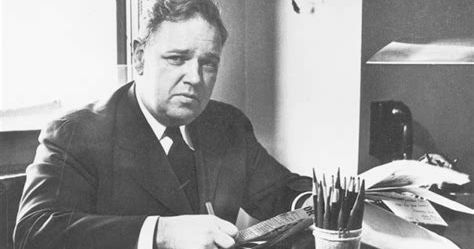
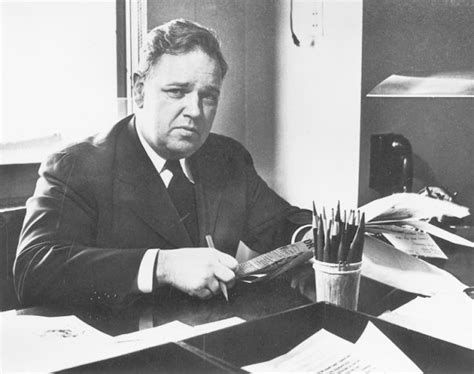
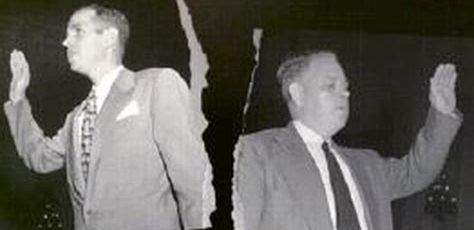
Whittaker Chambers (born Jay Vivian Chambers, April 1, 1901 – July 9, 1961) was an American intellectual, editor of Communist publications, foreign editor of Time magazine, Soviet spy, and the most famous American witness against Communism. He is best known for his accusation and testimony against a senior American diplomat Alger Hiss charging him in 1948 with being a Soviet spy. The spectacular case dominated politics in the late 1940s, leading to Hiss’s conviction, and the rise of Richard Nixon, and the virulent hatred on the left for Chambers for betraying their friends in the name of patriotism and Christianity. Chambers wrote for William Buckley‘s National Review. His Witness (1952) is one of the great autobiographies in American literature.
Please share CatholicCritique.com with an acquaintance.

