Steven Shaviro in his interesting book No Speed Limit writes, “Science fiction takes up certain implicit conditions of our personal and social lives, and makes these conditions fully explicit in narrative. It picks out “futuristic” trends that are already embedded within our actual social and technological situation.
These trends are not literal matters of fact, but they really exist as tendencies or potentialities. In the words of Deleuze, they are “real without being actual, ideal without being abstract, and symbolic without being fictional.” They are potentials for change, growth, or decay, but they have not fully expressed themselves or done all that they can do. And they may not ever do so, since (as Marx points out) a tendency is always accompanied by “counteracting factors” that can inhibit or even reverse it.
In sum, the present moment contains elements of futurity, but the unfolding of these elements as actual future events is contingent and not guaranteed. A match has the potential to start a fire, but there will not be a fire if the match is never struck, or if, when struck, it is blown out by the wind. Science fiction imagines the flame, and the ensuing conflagration. It provides us with narratives in which these potentials of futurity are fully actualized, unfolding their powers to the utmost. In this way, we might say that science fiction is the accelerationist art par excellence, accelerationist in its very nature.
Accelerationism is a speculative movement that seeks to extrapolate the entire globalized neoliberal capitalist order. This means that it is necessarily an aesthetic movement as well as a political one. The hope driving accelerationism is that, in fully expressing the potentialities of capitalism, we will be able to exhaust it and thereby open up access to something beyond it.
Understood in this way, accelerationism has deep roots in classical Marxism.
In The Communist Manifesto, Marx and Engels describe the production enhancing and globalizing effects of capitalism: In place of the old wants, satisfied by the production of the country, we find new wants, requiring for their satisfaction the products of distant lands and climes. In place of the old local and national seclusion and self-sufficiency, we have intercourse in every direction, universal inter-dependence of nations. And as in material, so also in intellectual production.
The intellectual creations of individual nations become common property. National one-sidedness and narrow-mindedness become more and more impossible, and from the numerous national and local literatures, there arises a world literature. . . .
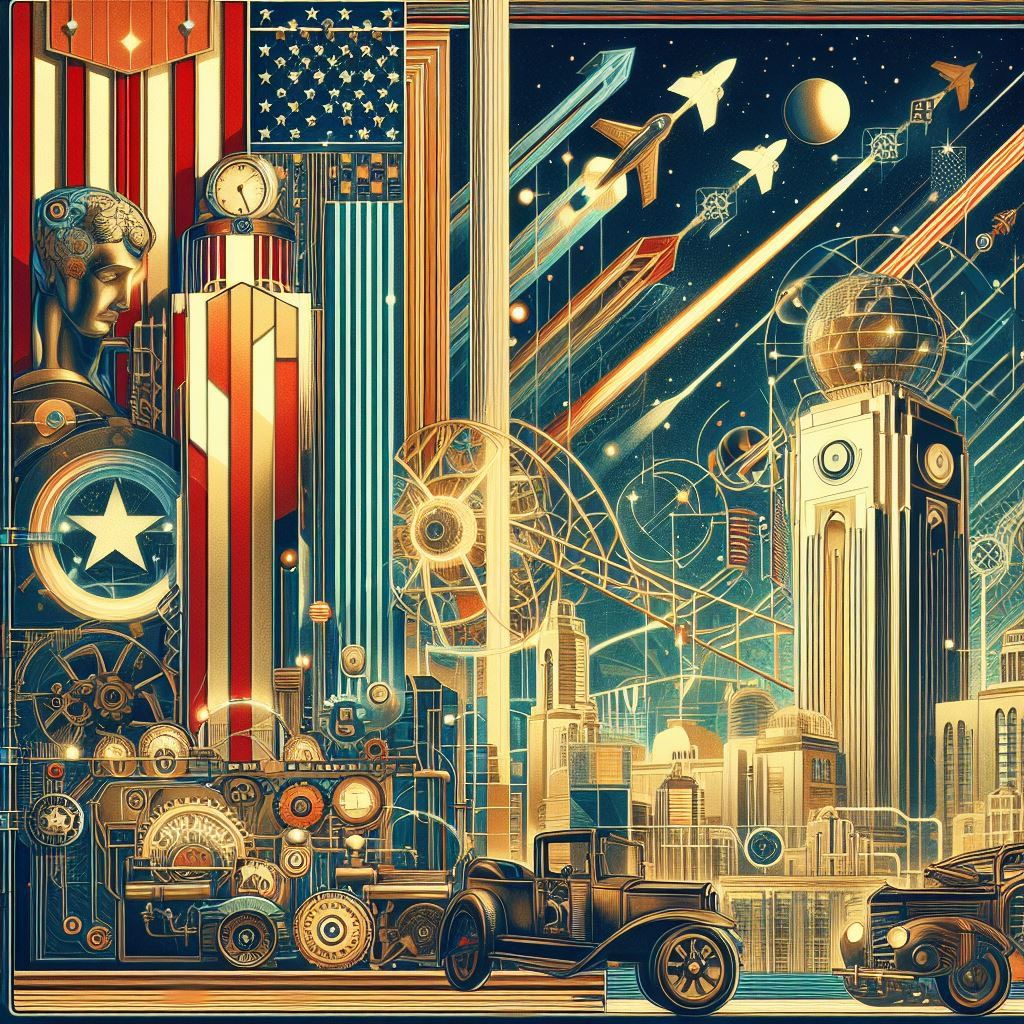
The bourgeoisie, during its rule of scarce one hundred years, has created more massive and more colossal productive forces than have all preceding generations together. Subjection of Nature’s forces to man, machinery, application of chemistry to industry and agriculture, steam-navigation, railways, electric telegraphs, clearing of whole continents for cultivation, canalisation of rivers, whole populations conjured out of the ground—what earlier century had even a presentiment that such productive forces slumbered in the lap of social labour?
In all this, Marx and Engels do not sound very critical; they have even been credited with—or blamed for—sounding celebratory. However, this is not quite right. Marx’s view of capitalism is dialectical, rather than moralistic. He does not oppose the creation of “new wants” or demand that we go back to the old ones. He does not condemn capitalism for being evil. Indeed, he hates capitalism for causing massive suffering and oppression, but he does not say that, where capitalism has mobilized new technologies, we need to reject them and return to life on a smaller scale.
Rather, Marx is fascinated by the way that capitalism creates wealth and poverty simultaneously. It produces the conditions of possibility for a world of affluence and freedom at the same time that it produces misery and alienation. Marx is compassionate toward the victims of history and full of scathing sarcasm toward their oppressors. But he also remains relentlessly non- and antinostalgic. For him, there is no possibility of going back from capitalism’s own convulsions.
Given this “parallax,” or double perspective, Marx argues that capitalism tends toward a point where its very form—the property form—becomes an obstacle to the further development of the productive forces that it has unleashed: At a certain stage of development, the material productive forces of society come into conflict with the existing relations of production or—this merely expresses the same thing in legal terms—with the property relations within the framework of which they have operated hitherto.
From forms of development of the productive forces these relations turn into their fetters. Then begins an era of social revolution. Accelerationism finds its origin in this passage and others like it throughout Marx’s writings. But of course, Marx’s discussion is far from unambigious; indeed, it has been interpreted in multiple, contradictory ways. In the Hegelian language that Marx sometimes uses, capitalism negates the very being of the workers, by expropriating the fruits of their labor. But this leads to the situation in which capitalism can be overthrown by means of a “negation of the negation.” That is to say, capitalism ironically creates the very conditions for, and even necessitates, its own supersession.
Accelerationism claims to offer a way out of this economic and imaginative impasse. It argues that we must meet the deadlock head on. We cannot escape the global “network society” by rejecting the latest technologies and retreating back to a supposedly simpler and better time. We need to embrace, and even extend, the abstractions of capitalist modernity, if we are ever to do anything about them. We cannot put a stop to environmental catastrophe and economic exploitation by adopting “small is beautiful” localism (E. F. Schumacher) or by building “a bridge to the eighteenth century” (Neil Postman). We cannot escape complexity by simplifying. We cannot secede from multinational capitalism, because it is everywhere and nowhere—just like the (heavily polluted) air that we must of necessity breathe. The actual term accelerationism was first used by Benjamin Noys in his 2010 book The Persistence of the Negative. Noys coined the word in order to designate a certain philosophical current that has its roots in French philosophy of the 1960s and 1970s: philosophy associated especially with the events of May 1968.
The failed uprising of that date was an important reference point for Gilles Deleuze and Félix Guattari, and for Jean-François Lyotard; it remains one for Badiou today. In the early 1970s, books like Deleuze and Guattari’s Anti-Oedipus and Lyotard’s Libidinal Economy take up Marx and Engels’s invocation of capitalism’s revolutionizing power, the ways that it destroys all traditions and all certainties.
Deleuze and Guattari argue that capitalism is founded upon a “twofold movement of decoding or deterritorializing flows on the one hand, and their violent and artificial reterritorialization on the other.”
Lyotard, less ambiguously, rhapsodizes over how the factory workers enlisted by nineteenth-century capitalism supposedly “enjoyed the decomposition of their personal identity, the identity that the peasant tradition had constructed for them, enjoyed the dissolution of their families and villages, and enjoyed the new monstrous anonymity of the suburbs and the pubs in the morning and evening.”

