Opinion.
St. John Paul II’s Rule for a Joy-Filled Marriage.
Edyrta McNichol
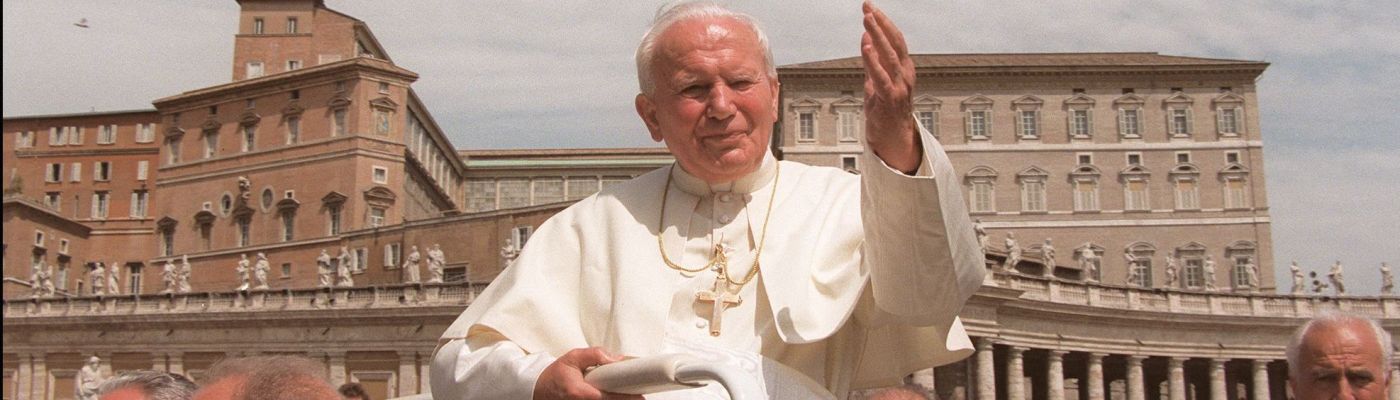
“Every person is flawed and, much to our own chagrin, continues to make mistakes and fall into sin. Yet, we desire to be holy and have a difficult time reconciling the two. St. John Paul II shows us that real growth in holiness happens right in the middle of this messy tension. It is easier to fall to an extreme. On the one hand, we may see our reality of failures and difficulties and fall into despair, entirely giving up on seeking the ideal. On the other hand, we may whitewash our own failings and act in a way that seems to be the ideal without vulnerably allowing God into those parts of our soul that need his help. The path to holiness is only in the messy tension: the humble acknowledgement of the real within ourselves and our own marriage (even being able to laugh at ourselves!), and still seeking the ideal God has made us to be every single day.”
“The Rule”
“How strictly are couples expected to abide by the Rule [for married couples]? To answer that, we must remember that all of this must be understood within St. John Paul II’s personalistic vision of man. The integral vision of the person is seeing each person in who they are and who they are meant to be. We’ve coined this as “the real and the ideal.” The Rule is set forth by St. John Paul as the ideal path forward, which would include consistently gathering together with your married couple group.
However, life happens and children get sick, extended family visit, whatever the case may be! This is each couple’s “real.” The couples continue to strive for the ideal, but accept and support each other when real life happens around them. No group is going to be perfect and all will have their real moments, but they keep encouraging one another on that journey toward the ideal, to what God has made each of us to be.” … Read more
Pope Paul VI:
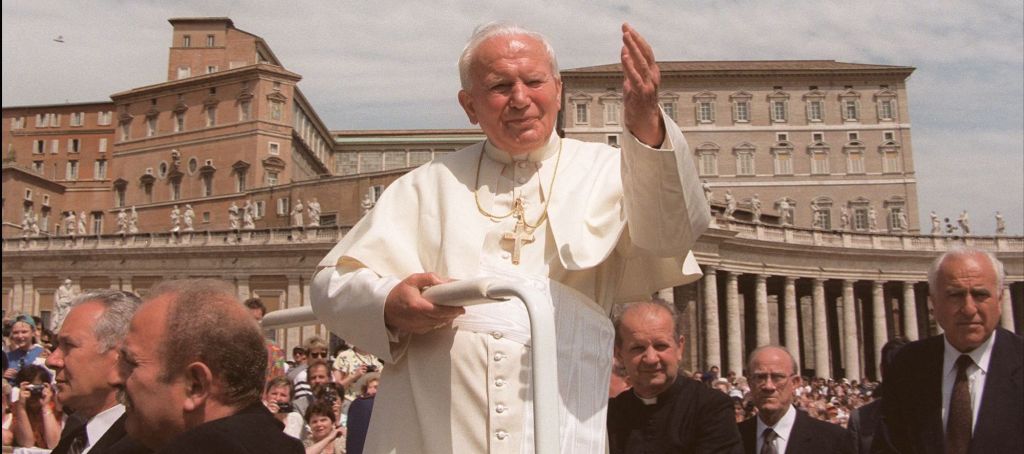
“Let married couples, then, face up to the efforts needed, supported by the faith and hope which “do not disappoint . . . because God’s love has been poured into our hearts through the Holy Spirit, who has been given to Us”36
“Let them implore divine assistance by persevering prayer; above all, let them draw from the source of grace and charity in the Eucharist. And if sin should still keep its hold over them, let them not be discouraged, but rather have recourse with humble perseverance to the mercy of God, which is poured forth in the sacrament of Penance. In this way they will be enabled to achieve the fullness of conjugal life described by the Apostle: “husbands, love your wives, as Christ loved the Church . . . husbands should love their wives as their own bodies. He who loves his wife loves himself. For no man ever hates his own flesh, but nourishes and cherishes it, as Christ does the Church . . . this is a great mystery, and I mean in reference to Christ and the Church. However, let each one of you love his wife as himself, and let the wife see that she respects her husband.” — Humane Vitae 37 [Emphasis supplied]

