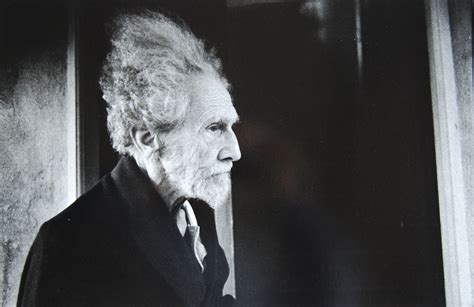
Excerpt from John Tytell’s Ezra Pound the Solitary Volcano.
“The years before the outbreak of World War I were a period of brimming vitality for Pound. He was occupied with his poetry, with journalism, with his work as foreign editor of Poetry, a Chicago magazine that became a central organ for the new poets, and with the new writers like Eliot and James Joyce, whom he had sponsored, and an unknown sculptor named Henri Gaudier-Brzeska, whom he had found under a railway arch working in poverty and neglect. Life was full of poetry and courtship, he met a young woman named Dorothy Shakespear, whom he later married, but suddenly everything was shattered by the international catastrophe of the First World War: Pound received frontline reports from his friends Gaudier-Brzeska, who was killed in 1915, Ford, who was shell-shocked, and Wyndham Lewis.
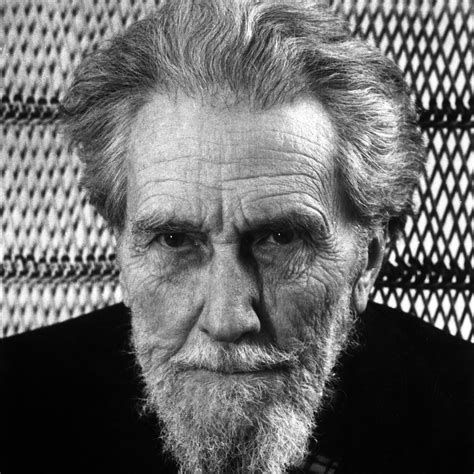
Pound felt the best part of his generation had been ravaged by an absurdly wasteful war, and he expressed some of his bitterness in his most powerful poem of the period, “Hugh Selwyn Mauberley”: “laughter out of dead bellies,” he declared, “for an old bitch gone in the teeth,” “a botched civilization.” Pound had begun his career with a prolonged study of the love poetry of the French twelfth-century troubador poets, but later venom, antagonism, and invective were to become as important motivations for his own work. He loathed Western civilization because it had no room left for its artists, and because it seemed systematically bent on its own extinction through warfare.
Pound took as his models two masters of hatred, Dante and Villon. He hated the liberal modern state, where there seemed to be no strong leaders and where the idea of responsibility had become corrupted by bureaucratic labyrinth. He hated the influence of organized religion and the small comforts of the middle class. He began to release some of his scorn in The Cantos, a long epic poem of 120 sections that juxtaposed various historical moments—classical, Confucian, and sequences drawn from early American politics—with his own memories, reading, and awareness.
The Cantos were to be a lifework, his supreme achievement, but they were also inaccessible, dense, and difficult to an extreme. Dissatisfied with England after the war, Pound moved to Paris in 1921. At first he recaptured some of his former ebullience, writing to William Carlos Williams about all sorts of projects “artoliteresque in the Peaceconferentialbolshevikair.”
On Pound’s thirty-fifth birthday, the day James Joyce completed his great novel Ulysses, Pound proclaimed that a new historical period had begun which with his typical irreverence he called the Pound Era. T. E. Lawrence characterized him at this time as all exclamation points. For E. E. Cummings, Pound was the “gymnastic personality” who “disengaged himself from a pillar and bowed” on their first meeting. Pound began composing an opera. He met a concert violinist who became his mistress. And he continued The Cantos. His letters from Paris were jaunty and excessively cheerful. He adopted various dialects, the homespun backwoodsman’s voice or one that resembled the punning pages of Joyce’s Finnegans Wake.
His friends were the Dadaists, Cocteau, the painters Picabia, Duchamp, and Léger, Ernest Hemingway, and a hard-drinking cynical Midwestern writer named Robert McAlmon. He had liver and digestive problems, partly because of the excitements of Paris, partly because of the continuing experiment of The Cantos, partly because of an insidious self-pity, a feeling that he had not received his due measure of acclaim.
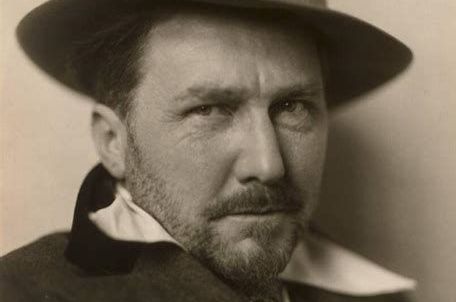
After four years in Paris he moved south again, settling in Rapallo on the Italian Riviera. Pound believed artists were the antennae of the race, and he began to fear the imminence of another great war, a second instance of organized madness. He became obsessively interested in economics, railing against Western banking practices, the monopoly on credit, and interest rates, which he felt were usurious. He imagined a Jewish conspiracy to influence political systems, the banking business, and the munitions industries, which he asserted would begin the next war to create a huge debt and new profits. He began writing letters to American senators and congressmen advocating Major C. H. Douglas’s Social Credit scheme, a plan to reduce taxes drastically and nationalize credit.
In The Cantos, but to a greater extent in his voluminous correspondence, he started to release a stream of invective and abuse: President Wilson was a “verbal masturbator,” Harding a “slob,” Hoover a “sausage headed crook,” French premier Léon Blum a “bank pimp,” and the economist John Maynard Keynes an imbecile and a “pusillanimous louse.” He wrote T. E. Lawrence that England was a “filthy country” where “every man in high office is a thief’s accomplice.” He campaigned against the passport system and the obscenity laws affecting literary works like Joyce’s Ulysses.
In 1927 he started a magazine called The Exile, whose title was one clear register of his own desperate disaffiliation. He seemed almost intent on outrage and scandal as a means of calling attention to himself and his work. But instead of insolently munching tulips, he was defaming men of power and their institutions, men who had the capacity to one day bring him to book for what he had said. Some of his closest friends saw the warning indications, the intemperance, the hysterically bilious vilification, and began to protest. Eliot complained that his letters were becoming incomprehensible. Sir Herbert Read called Pound’s ideas on Social Credit “amiable lunacy.” H. L. Mencken told him he was describing an imaginary United States, that it had been a great mistake to “set up shop as a wizard.” Archibald MacLeish wrote, “I think you are wrong as hell about America,” and E. E. Cummings pungently advised him to “haul your catgut out of the petty pond of practical politics.” But Pound’s invective only increased.
During World War II he made the mistake of doing a series of broadcasts on Italian State Radio in which he defended fascism and continued his defamations. The radio broadcasts were an example of what might be called a negative susceptibility, a self-destructive capacity shared by a number of modern artists. Hostile and hysterical, the talks bordered on incoherence as Pound savaged America and its political leadership with venomous bitterness. Pound’s own talk intoxicated him, although it made little sense to the outside world.
However, his diatribes were monitored by the Federal Bureau of Investigation. Pound’s friend the French writer Jean Cocteau had once told him, “The tact of audacity consists in knowing how far to go too far.”
Pound, crazed and off center because of the war, had gone far too far, and there was a serious price to be paid. The sixty-year-old man of letters was seized after the Allied invasion of Italy, incarcerated and isolated for three weeks in an exposed six-by-eight-foot wire cage, subject to broiling sun and searchlights all night, and underwent interrogation in a U.S. Army detention center in Pisa for American and Allied troops who had looted, raped civilians, or disobeyed their officers. No one was allowed to talk to him, not even his guards, and he saw from his “gorilla cage” several inmates machine gunned in escape attempts.
Finally, after his weeks of privation and fear, he believed something snapped in his head, and he suffered a nervous breakdown. He was flown to Washington, where preparations were begun for a treason trial, a crime punishable by death. He asserted that no one had heard the broadcasts, that even if they had they probably would not have understood them. In a letter to Attorney General Biddle he defended his action as a “protest against a system which creates one war after another, in a series and in system.”
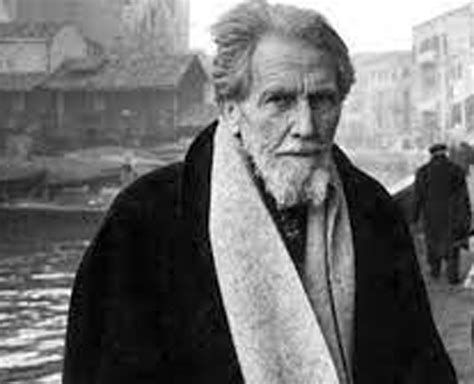
The examining psychiatrists found him paranoid and too unstable to stand trial. They prevented the embarrassment of having one of the world’s leading democracies execute one of its leading writers, but the judgment was controversial and disputed. Pound had seen himself as Tiresias, a prophetic witness, and Ulysses, a wandering voyager, and became convinced of his own intellectual omnipotence and indestructibility.
In his actions and words as well as in his art, he was mixing fact and fiction in the borderline zone of creativity which many artists inhabit, moving from moments of clarity to moments of frenzy. Melville, a century earlier, had compared this state of ambiguous sanity to the lack of demarcation between the colors in the rainbow. But after the horror of the Second World War such sympathetic explanations seemed only a rationalization for treason. Why should an artist deserve special treatment, even if he had contributed more than most to the general cultural level of the times?
Ezra Pound had first challenged the poetry establishment in London, then the state with his political broadcasts during the Second World War, and finally, it seemed, fate itself. He refused to admit that he had been wrong—he had played the madman-poet so long that he could no longer distinguish between a role and reality.
Pound was an overly sensitive man who in the midst of a maelstrom had shouted terrible words, absurdly defending some ideal of free speech from a stage while the theater was burning. He was sent to what he called the “Hell-hole,” a ward for lunatics in St. Elizabeths in Washington, D.C., an insane asylum where he was to be kept for the next twelve years of his life, from age sixty to seventy-two. His friend Cocteau had once remarked that the “artist is a kind of prison from which the works of art escape”; in St. Elizabeths the metaphor became brutal truth. His sentence was virtually indeterminate: he had to spend his time in the company of screaming men in straitjackets until the psychiatrists and politicians agreed that he could be freed.
Despite his suffering and confinement, he continued writing his Cantos, adding some of its most powerful and personal sections. Released in 1958 after pressure from some of the writers he had helped as critic and editor—Eliot, Hemingway, and Frost—he returned to Italy, at first still insubordinate and unregenerate.
During his last years, however, he recognized that he had made tragic choices which had been flawed by a certain pride in the infallibility of his judgment. He had been arrogant, what he had said was an expression of vanity. For the last ten years of his life he almost ceased writing and speaking, the poet and releaser of words then muted, caught in the prison of his own sensibility and contrition.
The theatricality of Pound’s silence was consonant with many of the flamboyant acts that in previous years he had used to gain attention; the silence may also have been a considerable convenience to Pound, since by refusing language he would not have to answer embarrassing questions about his wartime activities. With blasts of bardic energy, he had tried to transform the world in his own image; toward the end all images were hazy, unclear, confusing. His last years had the wordless terror and dignity of mythical atonement.
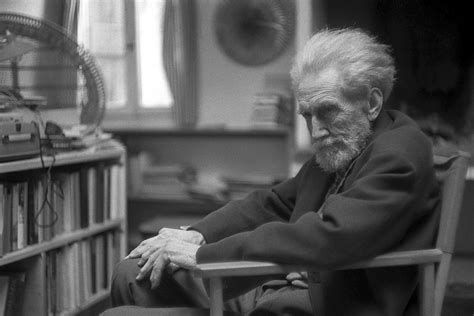
Pound’s life presents the puzzle of a humanist who studied many languages ancient and modern, who read and translated in a vast expanse of the world’s literature, who changed the way poets used language in our time, but who became our archetype of the literary pariah, a sort of King Lear of modernism, lost in a storm on the heath but still declaiming insistently at the top of his voice, the poet bawling and boiling in the abyss, full of denial and bitterness, a fury of rage and disappointment which came close, at times, to a terrifying barbarism.
It is a singular story of the outcast artist, a Promethean figure who chose exile, a volcanic antagonist reminding his world of ancient ways. But it is a story with brilliantly illuminating cultural signals as well: the artist who pushes the limits of conventional behavior, who violates the accepted and derides authority, who makes of his life so exceptional a case that more mundane exigencies are exposed, and who thus allows us to examine the very virtue and nature of our common behavior and governance.

