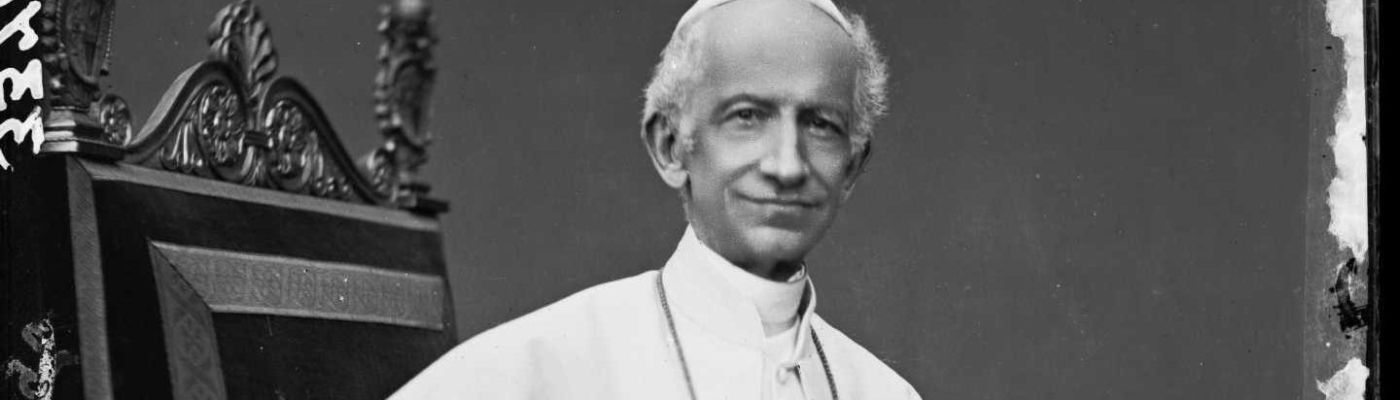
Why Did Pope Leo Xiii Endorse Worker Collective Bargaining?
Sportslaw blogger.com, April 20, 2024.
Pope Leo XIII’s Rerum Novarum, issued in 1891, emphasized the rights of workers to form unions and engage in peaceful strikes. He argued that employers should respect their workers’ right to organize and give in to their [just] demands. The first draft and content of the encyclical were written by Tommaso Maria Zigliara, a professor from 1870 to 1879 at the College of Saint Thomas.
The encyclical was written during the Industrial Revolution and political change in Europe. It criticized capitalism for its tendency towards greed, concentration of wealth, and mistreatment of workers, as well as socialism for what he considered as a “human dignity” of the laborer. Since the encyclical’s drafting, the global economy has not only supported the rights of labor to form unions but also rejected both socialism and unrestricted capitalism while affirming the right to private property.
The church fully supports the right of workers to form unions or other associations to secure their rights to fair wages and working conditions. In some circumstances, organizing into collective bargaining units may be an objective duty of each worker to their co-workers. Pope Leo XIII taught that the right of workers to choose to join a union was based on a natural right and that it was the government’s responsibility to protect them from the cruelty of greedy men.
The Pope also emphasized the importance of advocating for workers, as God has compassion for the poor and upholds the dignity of each person. He explicitly condemned unfettered capitalism and recognized the inherent right to form trade unions and engage in collective bargaining.
+
What did Pope Leo XIII do in the Industrial Revolution?
Pope Leo XIII’s encyclical Rerum Novarum addressed the changing relationship between employers and employees during the industrial revolution and political change in Europe. Despite increased wealth, many remained poor, despite hard work. The Church acknowledged the lack of workers’ unions, leading to unjust working conditions. Socialists proposed eliminating private property, but Pope Leo XIII dismissed this solution as it would only hurt those it was intended to benefit.
He argued that private ownership was lawful and necessary for maintaining family structure, allowing workers to live sparingly, save money, and invest their savings for the future. He emphasized the importance of property in maintaining the structure of the family and promoting economic growth.
Does Rerum Novarum support labor unions?
Rerum Novarum is a text that discusses the relationships between labor, capital, government, and citizens, focusing on the need to alleviate the misery and wretchedness of the working class. It supports the rights of labor to form unions, rejects socialism and unrestricted capitalism, and affirms the right to private property. Rerum Novarum is considered a foundational text of modern Catholic social teaching and is supplemented by later encyclicals, such as Pius XI’s Quadragesimo anno, John XXIII’s Mater et magistra, and John Paul II’s Centesimus annus.
The first draft and content of the encyclical were written by Tommaso Maria Zigliara, a prominent scholar at the forefront of the Thomist revival. Zigliara also helped prepare the great encyclicals Aeterni Patris and Rerum Novarum, opposing traditionalism and ontologism in favor of the moderate realism of Aquinas. German theologian Wilhelm Emmanuel von Ketteler and British Cardinal Henry Edward Manning were also influential in its composition.
What is Pope Leo XIII remembered for?
Pope Leo XIII was a prominent figure in Latin America, known for his contributions to the First Plenary Council of Latin America in 1899 and his encyclical, In plurimis, on the abolition of slavery. He also published the Apostolic Letter Trans Oceanum in 1897, which addressed the privileges and ecclesiastical structure of the Catholic Church in Latin America. He bestowed his pontifical benediction over Chilean troops on the eve of the Battle of Chorrillos in 1881, which resulted in the looting of cities and the Biblioteca Nacional del Perú, where rare and ancient Bible editions were seized. Pope Leo XIII also founded the national seminary, Papal Seminary, urging his own sons to be the heralds of salvation.
What did Pope Leo XIII believe?
Leo XIII’s pontificate was marked by a new spirit, characterized by a preference for diplomacy and a renewed emphasis on the papacy’s authority. Unlike his predecessor, Pius IX, who had been a conservative authoritarian, Leo XIII emphasized the traditional doctrine of the Christian state and reacted strongly against Freemasonry and secular liberalism. He reinforced the power of the nuncios in church administration and encouraged devotion to the Sacred Heart of Jesus and Mary.
Despite his political preferences, Leo XIII was also an intellectual sympathetic to scientific progress and the need for the Roman Catholic Church to demonstrate openness to such progress. He was concerned for the church’s internal life and the spread of its message worldwide. His concern toward renewing dialogue between the church and the world was evident in his numerous encyclical letters, including Providentissimus Deus (“The Most Provident God”) in 1893, which defined the principles on which Catholics should interpret the Bible.
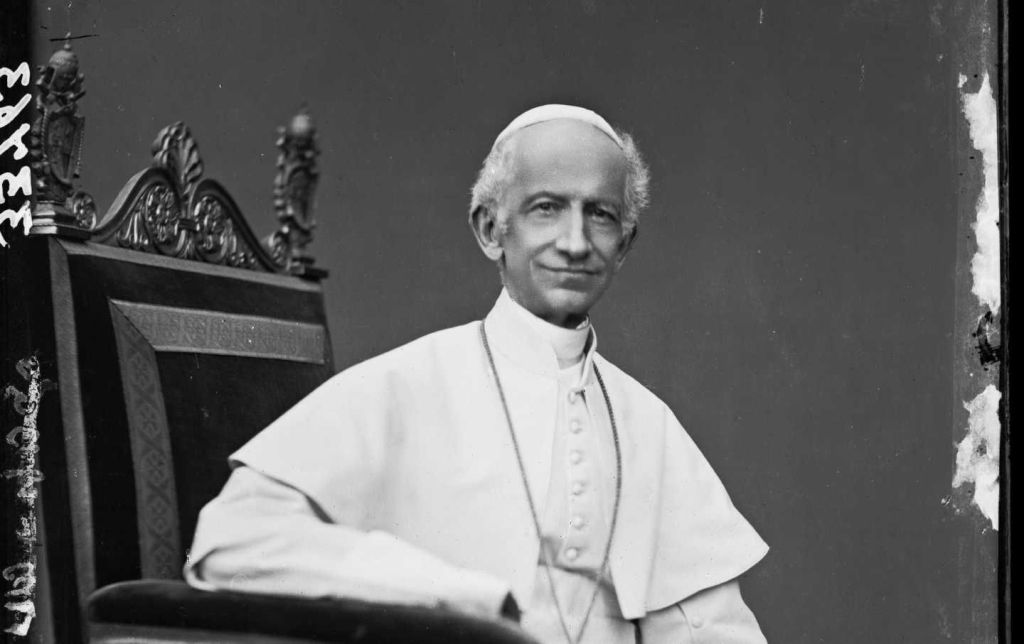
In 1891, Leo XIII showed that the papacy had taken cognizance of the problems of the working class and supported the organization of the Catholic laity. He also sought to create a link between the Anglican Church and Rome and respect for the traditions of the Eastern churches.
In summary, Leo XIII’s pontificate was marked by a new spirit, a focus on diplomacy, and a commitment to renewing dialogue between the church and the world.
Why did Leo XIII argue against socialism?
Pope Leo XIII criticized socialism for its fundamental flaws, arguing that it aimed to replace rights and Catholic moral teaching with state power, leading to the destruction of the family unit. To address this, socialists sought to abolish private property and make individual possessions the common property of all, administered by the state or municipal bodies. They argued that this would set the current state of things to rights, ensuring each citizen gets their fair share of what is to enjoy.
However, their contentions were powerless to end the controversy, as they would rob the lawful possessor, distort the functions of the State, and create confusion in the community. To build social harmony, the Pope proposed a framework of reciprocal rights and duties between workers and employers, including specific duties for workers.
What is Pope Leo most famous for?
Leo, a Roman aristocrat and the first pope called “the Great”, was known for his meeting with Attila the Hun in 452 and persuading him to turn back from his invasion of Italy. He was a Doctor of the Church and is most remembered for issuing the Tome of Leo, which was a foundation for the debates of the Council of Chalcedon, the fourth ecumenical council. This meeting focused on Christology and elucidated the orthodox definition of Christ as the hypostatic union of divine and human natures united in one person. Leo also contributed significantly to the development of papal authority.
A native of Tuscany, Leo was well-known outside Rome by 431, and John Cassian dedicated a treatise against Nestorius to him. He was dispatched to settle a dispute between Aëtius and the chief magistrate Albinus near the end of Pope Sixtus III’s reign, as a proof of the confidence placed in him by the Imperial Court.
What was Pope Leo most known for?
Leo, a Roman aristocrat and the first pope called “the Great”, was known for his meeting with Attila the Hun in 452 and persuading him to turn back from his invasion of Italy. He was a Doctor of the Church and is most remembered for issuing the Tome of Leo, which was a foundation for the debates of the Council of Chalcedon, the fourth ecumenical council. This meeting focused on Christology and elucidated the orthodox definition of Christ as the hypostatic union of divine and human natures united in one person. Leo also contributed significantly to the development of papal authority
A native of Tuscany, Leo was well-known outside Rome by 431, and John Cassian dedicated a treatise against Nestorius to him. He was dispatched to settle a dispute between Aëtius and the chief magistrate Albinus near the end of Pope Sixtus III’s reign, as a proof of the confidence placed in him by the Imperial Court.
What is the Rerum Novarum on the condition of workers?
In 1891, the Catholic Church released the first papal encyclical, “Rerum Novarum”, which aimed to address the harsh working conditions of the time. The encyclical highlighted the low pay, surplus of unskilled labor jobs, and intense competition for jobs, leading to life oppression. Many families worked in industrial factories, docks, and as domestic servants. Pope Leo XIII emphasized the Church’s response to the social conflict arising from capitalism and industrialization, which led to the rise of socialism and communism as ideologies.
The Church’s wisdom for the world revolves around the dignity of man and the dignity of the work he does. It emphasizes that wealthy owners and employers should respect the dignity of every man, not treating them as bondmen. Working for gain is creditable, but misuse of men for their physical powers is shameful and inhuman. Justice demands that religion and the good of the soul must be considered when dealing with the working man. Employers should ensure that workers have time for their religious duties, avoid corrupting influences, and avoid neglecting their home and family.
What is the main message of Rerum Novarum?
Leo XIII proposed a third approach, focusing on workers’ rights and economic principles, contrasting with class struggle theories. Catholic doctrine affirmed property ownership, fair wages, charity, and freedom of association for workers. State intervention was allowed but limited to matters beyond the jurisdiction of other competent authorities. International issues, such as international debt, communism’s collapse, cross-border migration, and financial crises, could only be addressed by competent economic and social authorities. Since 1891, successive popes have published updates to the Rerum novarum, addressing various issues such as international debt, communism’s collapse, and cross-border migration.

