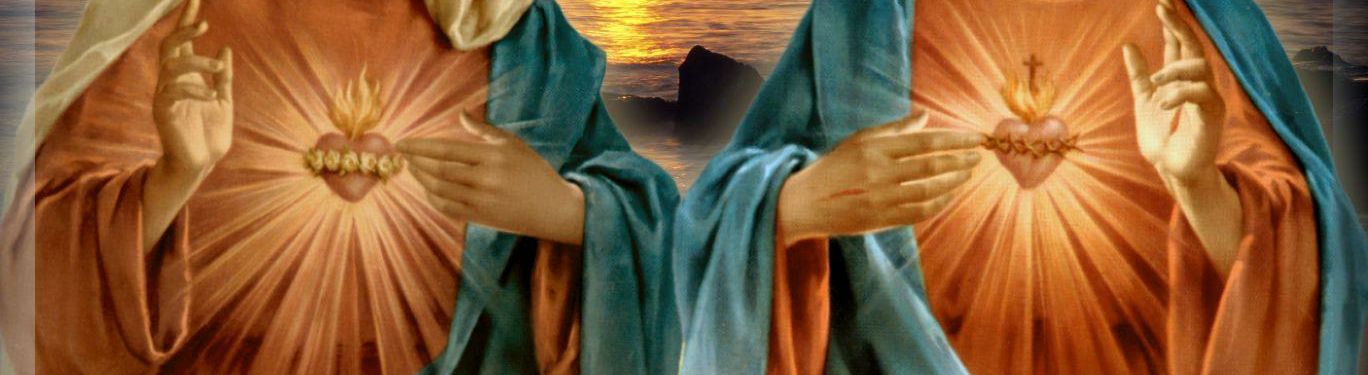
Father Gabriel of St Mary Magdalene, O.C.D., The Marian Life, Divine Intimacy
“The high place which Mary, as the Mother of God, occupies in the work of our sanctification fully justifies our desire to live intimately with her. As children love to be near their mother, so we as Christians want to live with Mary, and in order to do this, we resort to little means of keeping her in our thoughts, For instance, we may have her holy picture before us and greet her affectionately every time we look at it.
Then, with a glance of faith, we can go beyond the picture, and reach Mary living in glory, Mary who, by means of the Beatific Vision(1), sees us, follows us, knows all our needs, and helps us with her maternal aid.
By means of this our faith, our soul remains in continual contact with Mary.
Spontaneously throughout the day, we increase our little pious practices in her honor, our prayers and spontaneous acts of love; all these combine to intensify our relations with Mary.
Saturdays, the month of May, the several feasts of Mary are for us so many occasions of remembering her especially, of meditating on her prerogatives, contemplating.her beauty, and continually increasing our love for her.
In fact, it is impossible to bear a sweet holy picture of Mary in our mind and heart without feeling moved to love her, without feeling the need of showing her the reality of our love by trying to please her, that is, by living like true children of hers.
In this way the “Marian” life, can penetrate the whole all our duties, for nothing can please Mary more than to see us accomplishing with love her Son’s will.
Furthermore, Christian life lived under Mary’s maternal eye acquires that special gentleness and sweetness which arise spontaneously from the constant companionship of a most loving Mother who lavishes prayerful attention on us.
+ The predestination of Mary by Reginald Garrigou-Lagrange
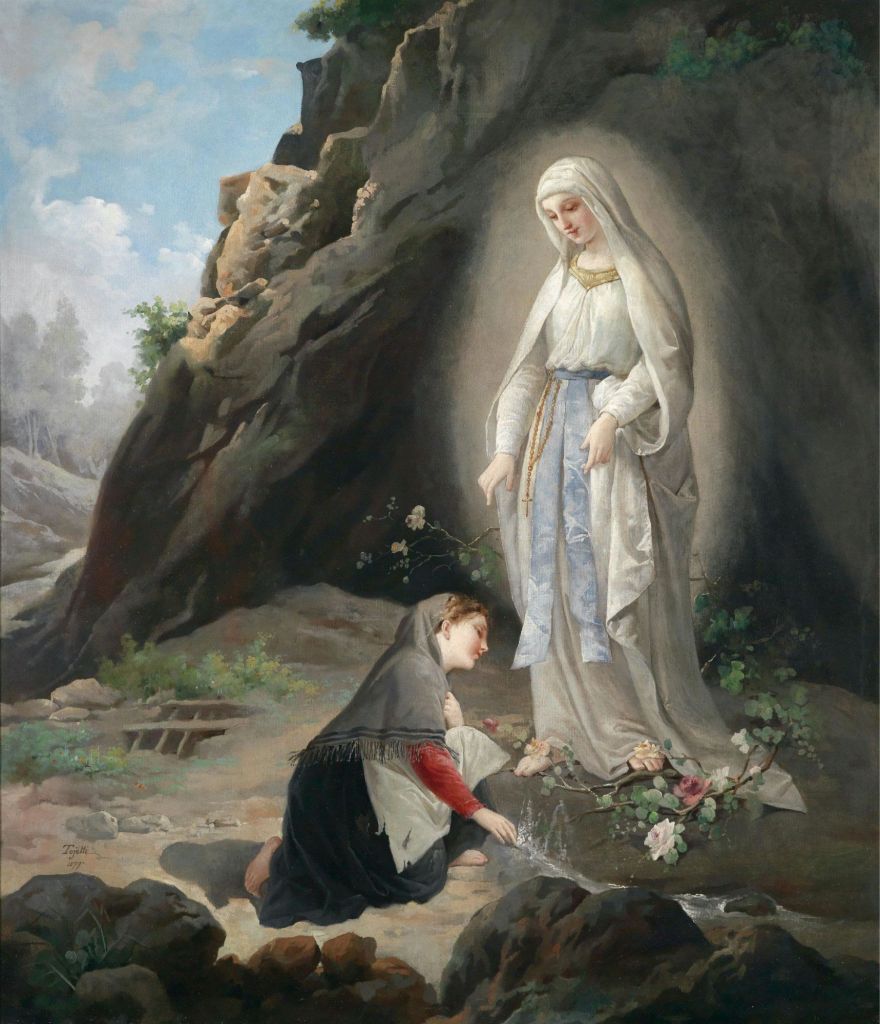
Indulgences Prayers
From “Daily Pilgrimage to Purgatory” by Brother Hermenegild
“Eternal Father, I offer Thee the Precious Blood of Jesus Christ in satisfaction for my sins, and in supplication for the Holy Souls in Purgatory, and for the needs of the Holy Church.
(Partial Indulgence or Plenary Indulgence once a month if said daily.)
My Jesus mercy!
(Partial Indulgence or Plenary Indulgence once a month if said daily)
Jesus, meek and humble of Heart, make my heart like unto Thine!
(Partial Indulgence once a day. Plenary indulgence once a month if said daily)
May the Sacred Heart of Jesus be loved everywhere!
(Partial Indulgence)
Our Lady of the Sacred Heart, pray for us!
(Partial Indulgence)
St. Joseph, Model and Patron of those who love the Sacred Heart, pray for us! (Partial Indulgence. Plenary Indulgence once a month.)”
(1) “The beatific vision is the ultimate goal and fulfillment of the human person, according to Catholic teaching. The provided resources offer a comprehensive understanding of this profound theological concept.
The Catholic Encyclopedia explains that the beatific vision is the “immediate knowledge of God which the angelic spirits and the souls of the just enjoy in Heaven.” 1 It is a direct, intuitive experience of the divine essence, where the blessed see God “face to face” and are “entirely immersed in Him.” 1 This vision is a mystery that transcends the natural capacity of the human intellect, as it is a supernatural gift from God. 1
The Catechism of the Catholic Church further elaborates that the beatific vision is the “contemplation of God in his heavenly glory” which God himself grants to the human person. 3 This vision is the ultimate “goal of human existence” and the “vocation” to which God calls all people. 4 The New Testament describes this vision using various expressions, such as the “coming of the Kingdom of God,” the “vision of God,” and “entering into the joy of the Lord.” 5
Ultimately, the beatific vision represents the fulfillment of human longing for happiness and union with the divine. As St. Augustine beautifully expresses, in the beatific vision, the blessed “shall rest and see, we shall see and love, we shall love and praise.” 5 This is the eternal destiny to which God calls all people. — Magisterium AI

