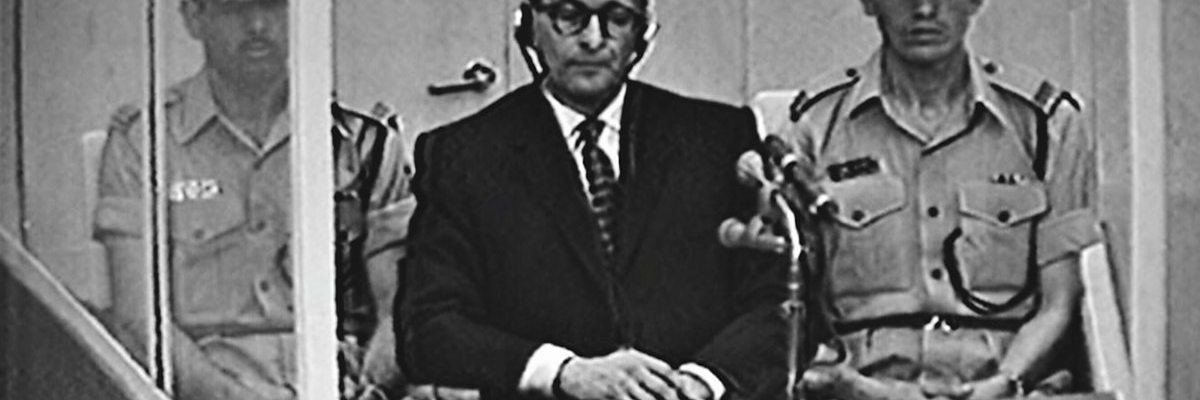
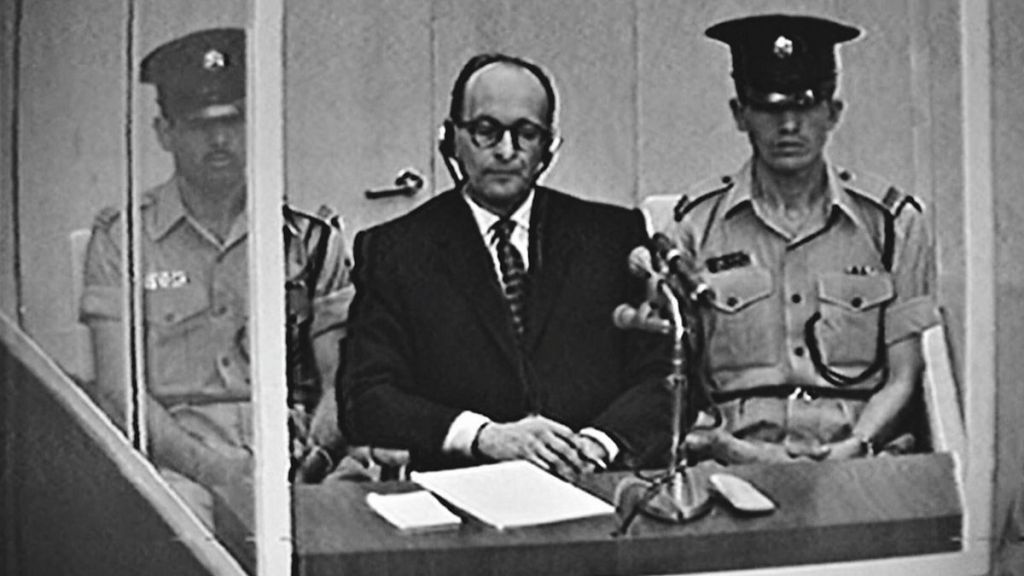
Eichmann was no slovenly dressed bohemian. His pants were always impeccably creased, his tie knot kept straight, and his shoes were ever clicking and shining. In all of this he saw discipline and virtue. –SH.
Thomas Merton.
Morality itself is brought into complete contempt by the Eichmann story, by Eichmann’s own appeal to his virtues. This “blind obedience” and his “corpselike obedience.” These are not only ethical concepts, they belong to the language of ascetic perfection.
Eichmann, however, appealed to philosophy—since philosophy, too, must be contemned! Eichmann claimed that his whole life was lived according to the imperatives of Kant, the Kantian conception of duty. But Kant rules out “blind obedience.” Yes, that was true, Eichmann admitted that, when it came to the final solution, this exceptional, limit situation, he had gone beyond Kantian principles. Instead of simply being guided by conscience and duty, he had completely identified himself with the Fuehrer in the most perfect immolation of his own will.
His principle was now no longer the categorical imperative, but “Act as if the Fuehrer himself would approve of it if he saw you.” Consequently, Eichmann’s conscience bothered him not because he had directed the “final solution”—the liquidation of the Jews—but because he had in fact made two exceptions and allowed Jews to escape. Thus he had neglected his duty to the Fuehrer. If the Fuehrer had seen that
… The awful details of this case can give monks food for thought. Are novices not sometimes trained to “do everything as if the abbot were watching you”? Are monks and priests not sometimes extremely upset over acts that are in fact good, not bad, but which happen to violate some tiny detail of a conventional code of observance? [circa 1960]
Is it not after all familiar to see that, when there is a choice between real charity and human compassion on one hand, and the violation of a punctilious usage on the other—for instance concerning silence or deportment—they will prefer to violate charity rather than the observance? Violation of the observance would make them feel far more guilty.
… The Eichmann story shows the breakdown of forensic concepts of morality and demands an existential respect for the human reality of each situation. Without this respect, principles will never regain their meaning in concrete life. Meanwhile, there is no legal machinery to deal with such moral disasters. What judgment could add anything to the judgment already implied in the fact that a man who was by certain accepted standards quite honest, respectable, sane, and efficient could do the things he did without feeling that he was wrong? This judgment falls not on Eichmann alone, but on our whole society. What then is the significance of a special judgment pronounced upon Eichmann by our society? This is the real question.
—— from Conjectures of a Guilty Bystander by Thomas Merton
Updated

