…and Ambiguity in Doctrine.
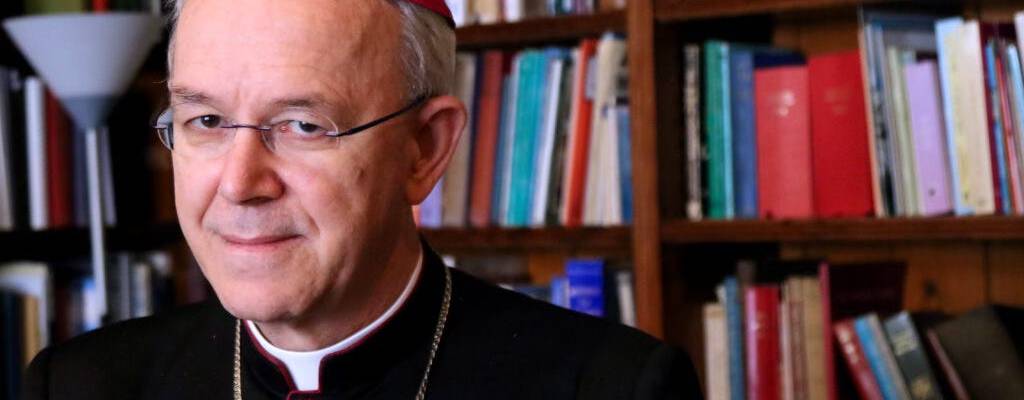
The Kazakh auxiliary bishop launched the publication of Credo — Compendium of the Catholic Faith Oct. 26 in Rome.
Edward Pentin,
VATICAN CITY — A new compendium of the Catholic faith has been published that aims to provide clear answers to many of contemporary problems as well as counter the ambiguity and relativism now prevalent in both Western society and in the Church.
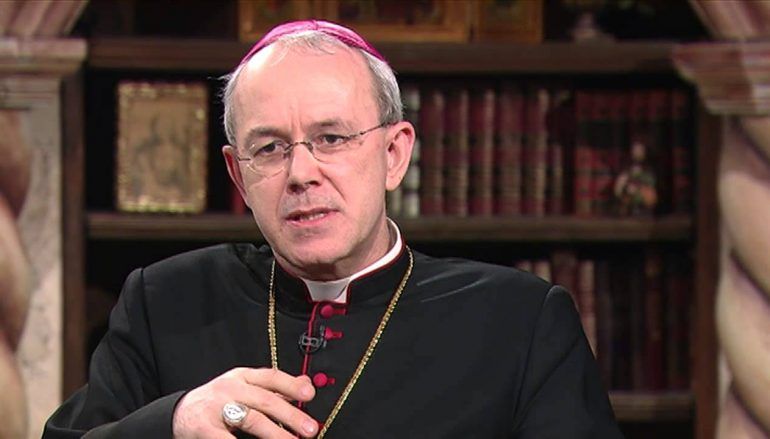
Written by Auxiliary Bishop Athanasius Schneider of Astana, Kazakhstan, Credo —Compendium of the Catholic Faith (Sophia Institute Press) is the first such work by a Catholic bishop in more than 50 years, and aims to help the reader to know what to believe, how to live, and how to pray as Christ taught.
As well as providing a clear and concise summary of Catholicism as a whole, the book applies the truths of the faith to many scourges of our time such as gender ideology, transhumanism, drug use, social media use and pornography — issues that were not prevalent when the Catechism of the Catholic Church was promulgated by Pope St. John Paul II in 1992.
In this Oct. 26 interview with the Register in Rome, Bishop Schneider discusses more about his reasons for writing the compendium, what contemporary problems concern him the most, and how confident he is that the Church’s immutable teaching on faith and morals can return to prominence in this so-called “post-truth era.”
Your Excellency, what prompted you to write this compendium?
What prompted me to write this compendium is my concern for the simple faithful and also for seminarians and priests in view of the very widespread doctrinal confusion, which has infected the Church in recent decades — not only in the current pontificate, in which the confusion is very evident, but also in the decades after the Second Vatican Council, and in the Council itself, relating to some ambiguities in doctrine. These ambiguities grew over past decades. As St. Thomas Aquinas says, “A small error at the beginning will grow and become a great error in the end.”
So I wanted to offer this compendium as a help, as a pastoral help. The bishop has a mission, defined by his episcopal consecration, to be a teacher of the faith as a successor of the apostles. I feel this deeply in my soul — this duty to share, to give, as a teacher of the faith, with the faithful and priests — to offer this compendium to help expel the darkness of confusion in doctrine, in morals and in the liturgy. They are all connected. And by doing this, I tried always to base my answers on the Fathers of the Church, on the magisterium — not my own opinion, but to give voice to the constant and sure tradition of the Church.
You list many contemporary problems and offer a blueprint on how to effectively respond to them. What are most pressing problems in your view, and which ones are in need of clear answers that only the Church can give?
The most pressing are relativism in doctrine in general and, concretely, within the relativizing of doctrine, the issue of the pluralism of religions, as they say today. The phenomenon which is called interreligious dialogue has been promoted since the Council. This creates, for me, the most profound danger: the relativism of truth itself, in the sense of relativizing the uniqueness of Jesus Christ, the uniqueness of the Catholic faith and Church by this sometimes ambiguous teaching on the diversity of religions and practice.
In the magisterial text of the Council, and after the Council, they restate that, of course, Our Lord is the unique redeemer and so on. But along with stating this truth, at the same time there are affirmations which undermine it by essentially saying that to choose, exercise and spread any religion, even a wrong religion, is a matter of conscience and so a natural right. But this is ambiguous because our natural right is a positive will of God; and not only a permission through which God permits an evil. And therefore this formulation is at the base, at the foundation, of this current relativism — in spite of stating at the same time the uniqueness of Jesus Christ. It’s a kind of dialectic — that is, you make a statement and then another statement you relativize it. This is our problem — what Pope St. Pius X characterized as modernism which states the truth and then, at the same time, undermines it.
How much has a lack of clear teaching by many Church leaders on these issues for the past decades, and which prompted you to write this book, led us to this place of ambiguity, especially on morals, that you describe?
It started with some ambiguous statements, more on the doctrinal issues in the Council, and then, I repeat, through these ambiguous ecumenical and interreligious meetings and practices in morals. Thanks be to God, the clarity of moral teaching was kept at the Council and the post-conciliar magisterium. Paul VI in Humanae Vitae is clear, and then there were several statements of the Congregation for the Doctrine of the Faith on homosexuality, on sexuality, on abortion, and so on. And then especially there was John Paul II, his magisterium and encyclical Veritatis Splendor on morality, which is very clear and thanks be to God this was kept.
But with Pope Francis, relativism and systematic ambiguity, even in moral teachings, continued. This started with the Council and some with these repeat interreligious practices, but doctrinal confusion and moral relativism have reached new depths with Pope Francis.
You also talk about the scourges of our time such as gender ideology, transhumanism, pornography, and drug use. What concerns you most about these?
Yes, indeed, besides the relativism regarding the uniqueness of Jesus Christ and the Catholic Church, the most dangerous in my opinion is the attack on the divine order of creation of man, as male and female. This is a basic, almost satanic attack, and revolt against the human creation of God. This is even, to some extent, an apocalyptical attack and revolt against this beautiful creation of God, of two sexes, male and female, through the global totalitarian ideology, the so-called gender or “LGBT” ideology. This I consider one of the most dangerous scourges of contemporary life.
How do you hope Credo will be used in a practical sense? Where do you see it being most effectively used as a point of reference?
The text is in the form of short answers to questions, so in a style that is easy to read for the ordinary person, and therefore very helpful also from a didactical point of view. I hope it can be a resource for teachers, those who will instruct children and youth. From this compendium they can choose questions more apt for the age of those who they will teach. The more difficult questions such as the several levels of magisterium, or Freemasonry, or those other aspects of doctrine that are difficult are more suitable for, let us say, those already well-trained such as young adults, seminarians or priests.
The format is reminiscent of the compendium that Cardinal Joseph Ratzinger wrote on the Catechism of the Catholic Church back in the 2000s. How much does your compendium have in common with his, or differ from it, would you say?
What they have in common are really the style of question and answers, that it is written as a kind of dogmatic handbook or manual. But whereas the compendium of Benedict XVI is very short and with very few explanations, I provide in the footnotes more extensive explanations so the reader can explain an answer more deeply if asked. This is also because I wanted to help the reader explain the roots of some problems of our time, of the ambiguities and relativism.
Given the extent of moral relativism in both society and the Church and what’s sometimes called our “post-truth era,” how confident are you that the Church’s immutable teaching on faith and morals can return to prominence? And do you foresee other similar efforts to Credo being part of that effort?
Yes, it is exactly in view of this tremendous moral confusion in the society of our time that the Church has prophetic appeal. The mission of the Church and of the apostles is to always be a prophetic voice, to provide a prophetical answer to the needs of the time. Pope John XXIII and the other popes after the Council said, “The Church must recognize and be aware of the signs of the times.” But the response was partly wrong because in our modern time and in our current culture there is a revolt against Christ, against divine revelation, against the perennial validity and the objectivity of truth and morals. Even before the Council, a characteristic of modern times was to abandon Christ, to abandon the revelation of God and to exalt the human being above the revelation of God, above the truth. And in some ways, the Council tried to gain sympathy from the world instead of presenting, with great clarity, the clear teaching of God, of Christ, of course in a respectful away and with love to our modern world which has abandoned God. And now it is worse.
The prophetic mission of the Church is again to teach the entire world, to remind humanity of the beauty, clarity and perennial validity of the truth of God regarding the uniqueness of Christ in the Catholic Church, and regarding the moral law. The Church must now unite all people of goodwill in this almost apocalyptic battle to defend family and marriage, to defend the human being as male and female, and family and marriage, and then to defend life against the horrendous, almost global genocide of the unborn.
In essence, you’re also calling on all to place God at the center again of their life through the right liturgy, to honor and love God above all things?
Yes, exactly, also through prayer. This is a task of the Church amid this almost general chaos: to establish, again, in the liturgy, the dignity, the sacredness, the sublimity of worship, which will also heal the wounds of people who are wounded by immorality and confusion and help them, through the right worship, to experience the beauty of God and His truths. This can be given now, through the treasure which the Church has in her traditional literature, which must again be opened to the people of our time.
+
Edward Pentin is the Register’s Senior Contributor and EWTN News Vatican Analyst. He began reporting on the Pope and the Vatican with Vatican Radio before moving on to become the Rome correspondent for EWTN’s National Catholic Register. He has also reported on the Holy See and the Catholic Church for a number of other publications including Newsweek, Newsmax, Zenit, The Catholic Herald, and The Holy Land Review, a Franciscan publication specializing in the Church and the Middle East.
+



and Ambiguity in Doctrine.
The Kazakh auxiliary bishop launched the publication of Credo — Compendium of the Catholic Faith Oct. 26 in Rome.
Edward Pentin,
VATICAN CITY — A new compendium of the Catholic faith has been published that aims to provide clear answers to many of contemporary problems as well as counter the ambiguity and relativism now prevalent in both Western society and in the Church.
Written by Auxiliary Bishop Athanasius Schneider of Astana, Kazakhstan, Credo —Compendium of the Catholic Faith (Sophia Institute Press) is the first such work by a Catholic bishop in more than 50 years, and aims to help the reader to know what to believe, how to live, and how to pray as Christ taught.
As well as providing a clear and concise summary of Catholicism as a whole, the book applies the truths of the faith to many scourges of our time such as gender ideology, transhumanism, drug use, social media use and pornography — issues that were not prevalent when the Catechism of the Catholic Church was promulgated by Pope St. John Paul II in 1992.
In this Oct. 26 interview with the Register in Rome, Bishop Schneider discusses more about his reasons for writing the compendium, what contemporary problems concern him the most, and how confident he is that the Church’s immutable teaching on faith and morals can return to prominence in this so-called “post-truth era.”
Your Excellency, what prompted you to write this compendium?
What prompted me to write this compendium is my concern for the simple faithful and also for seminarians and priests in view of the very widespread doctrinal confusion, which has infected the Church in recent decades — not only in the current pontificate, in which the confusion is very evident, but also in the decades after the Second Vatican Council, and in the Council itself, relating to some ambiguities in doctrine. These ambiguities grew over past decades. As St. Thomas Aquinas says, “A small error at the beginning will grow and become a great error in the end.”
So I wanted to offer this compendium as a help, as a pastoral help. The bishop has a mission, defined by his episcopal consecration, to be a teacher of the faith as a successor of the apostles. I feel this deeply in my soul — this duty to share, to give, as a teacher of the faith, with the faithful and priests — to offer this compendium to help expel the darkness of confusion in doctrine, in morals and in the liturgy. They are all connected. And by doing this, I tried always to base my answers on the Fathers of the Church, on the magisterium — not my own opinion, but to give voice to the constant and sure tradition of the Church.
You list many contemporary problems and offer a blueprint on how to effectively respond to them. What are most pressing problems in your view, and which ones are in need of clear answers that only the Church can give?
The most pressing are relativism in doctrine in general and, concretely, within the relativizing of doctrine, the issue of the pluralism of religions, as they say today. The phenomenon which is called interreligious dialogue has been promoted since the Council. This creates, for me, the most profound danger: the relativism of truth itself, in the sense of relativizing the uniqueness of Jesus Christ, the uniqueness of the Catholic faith and Church by this sometimes ambiguous teaching on the diversity of religions and practice.
In the magisterial text of the Council, and after the Council, they restate that, of course, Our Lord is the unique redeemer and so on. But along with stating this truth, at the same time there are affirmations which undermine it by essentially saying that to choose, exercise and spread any religion, even a wrong religion, is a matter of conscience and so a natural right. But this is ambiguous because our natural right is a positive will of God; and not only a permission through which God permits an evil. And therefore this formulation is at the base, at the foundation, of this current relativism — in spite of stating at the same time the uniqueness of Jesus Christ. It’s a kind of dialectic — that is, you make a statement and then another statement you relativize it. This is our problem — what Pope St. Pius X characterized as modernism which states the truth and then, at the same time, undermines it.
How much has a lack of clear teaching by many Church leaders on these issues for the past decades, and which prompted you to write this book, led us to this place of ambiguity, especially on morals, that you describe?
It started with some ambiguous statements, more on the doctrinal issues in the Council, and then, I repeat, through these ambiguous ecumenical and interreligious meetings and practices in morals. Thanks be to God, the clarity of moral teaching was kept at the Council and the post-conciliar magisterium. Paul VI in Humanae Vitae is clear, and then there were several statements of the Congregation for the Doctrine of the Faith on homosexuality, on sexuality, on abortion, and so on. And then especially there was John Paul II, his magisterium and encyclical Veritatis Splendor on morality, which is very clear and thanks be to God this was kept.
But with Pope Francis, relativism and systematic ambiguity, even in moral teachings, continued. This started with the Council and some with these repeat interreligious practices, but doctrinal confusion and moral relativism have reached new depths with Pope Francis.
You also talk about the scourges of our time such as gender ideology, transhumanism, pornography, and drug use. What concerns you most about these?
Yes, indeed, besides the relativism regarding the uniqueness of Jesus Christ and the Catholic Church, the most dangerous in my opinion is the attack on the divine order of creation of man, as male and female. This is a basic, almost satanic attack, and revolt against the human creation of God. This is even, to some extent, an apocalyptical attack and revolt against this beautiful creation of God, of two sexes, male and female, through the global totalitarian ideology, the so-called gender or “LGBT” ideology. This I consider one of the most dangerous scourges of contemporary life.
How do you hope Credo will be used in a practical sense? Where do you see it being most effectively used as a point of reference?
The text is in the form of short answers to questions, so in a style that is easy to read for the ordinary person, and therefore very helpful also from a didactical point of view. I hope it can be a resource for teachers, those who will instruct children and youth. From this compendium they can choose questions more apt for the age of those who they will teach. The more difficult questions such as the several levels of magisterium, or Freemasonry, or those other aspects of doctrine that are difficult are more suitable for, let us say, those already well-trained such as young adults, seminarians or priests.
The format is reminiscent of the compendium that Cardinal Joseph Ratzinger wrote on the Catechism of the Catholic Church back in the 2000s. How much does your compendium have in common with his, or differ from it, would you say?
What they have in common are really the style of question and answers, that it is written as a kind of dogmatic handbook or manual. But whereas the compendium of Benedict XVI is very short and with very few explanations, I provide in the footnotes more extensive explanations so the reader can explain an answer more deeply if asked. This is also because I wanted to help the reader explain the roots of some problems of our time, of the ambiguities and relativism.
Given the extent of moral relativism in both society and the Church and what’s sometimes called our “post-truth era,” how confident are you that the Church’s immutable teaching on faith and morals can return to prominence? And do you foresee other similar efforts to Credo being part of that effort?
Yes, it is exactly in view of this tremendous moral confusion in the society of our time that the Church has prophetic appeal. The mission of the Church and of the apostles is to always be a prophetic voice, to provide a prophetical answer to the needs of the time. Pope John XXIII and the other popes after the Council said, “The Church must recognize and be aware of the signs of the times.” But the response was partly wrong because in our modern time and in our current culture there is a revolt against Christ, against divine revelation, against the perennial validity and the objectivity of truth and morals. Even before the Council, a characteristic of modern times was to abandon Christ, to abandon the revelation of God and to exalt the human being above the revelation of God, above the truth. And in some ways, the Council tried to gain sympathy from the world instead of presenting, with great clarity, the clear teaching of God, of Christ, of course in a respectful away and with love to our modern world which has abandoned God. And now it is worse.
The prophetic mission of the Church is again to teach the entire world, to remind humanity of the beauty, clarity and perennial validity of the truth of God regarding the uniqueness of Christ in the Catholic Church, and regarding the moral law. The Church must now unite all people of goodwill in this almost apocalyptic battle to defend family and marriage, to defend the human being as male and female, and family and marriage, and then to defend life against the horrendous, almost global genocide of the unborn.
In essence, you’re also calling on all to place God at the center again of their life through the right liturgy, to honor and love God above all things?
Yes, exactly, also through prayer. This is a task of the Church amid this almost general chaos: to establish, again, in the liturgy, the dignity, the sacredness, the sublimity of worship, which will also heal the wounds of people who are wounded by immorality and confusion and help them, through the right worship, to experience the beauty of God and His truths. This can be given now, through the treasure which the Church has in her traditional literature, which must again be opened to the people of our time.
+
Edward Pentin is the Register’s Senior Contributor and EWTN News Vatican Analyst. He began reporting on the Pope and the Vatican with Vatican Radio before moving on to become the Rome correspondent for EWTN’s National Catholic Register. He has also reported on the Holy See and the Catholic Church for a number of other publications including Newsweek, Newsmax, Zenit, The Catholic Herald, and The Holy Land Review, a Franciscan publication specializing in the Church and the Middle East.
+
When Popes Exposed Doctrinal Ambiguity: calling it “the art of deception“.
Like
As far as I can read this Auxiliary bishop Athanasius Alexander Schnieder should see that homosexuality and sexuality and things that Destroy Marriage is not Right and I think he does
This article originally appeared in Voice of the Family.
221AThe passing into law of a bill banning LGBT propaganda in Kazakhstan is causing uproar in Western media, but follows a 2024 petition by the Kazakhstan Parents Union entitled, “We Are Against Open and Concealed LGBT Propaganda in the Republic of Kazakhstan”. In light of these developments, Voice of the Family presents this interview with His Excellency Athanasius Schneider, Auxiliary Bishop of Astana in Kazakhstan, on the right and duty of Catholic parents to protect their children from gender ideology.
VOICE OF THE FAMILY
What is your opinion of the reported legislative moves being made in the parliament of Kazakhstan to ban the spread of LGBT propaganda in the country?
BISHOP ATHANASIUS SCHNEIDER
Such a legislative move represents a real sign of hope. Indeed, in the midst of an almost worldwide systematic ideological indoctrination on behalf of powerful ideological and political organisations, there emerge countries that are starting to defend their own independence from such cultural colonisation by defending not only the moral traditional values of their peoples but also just common sense. I am happy that Kazakhstan is joining the ranks of a few countries in Europe who made similar legislative moves to enhance the institution of natural marriage and the family and protect society, and in the first place, the children and the youth, from morally devastating and nihilistic LGBT propaganda.
VOICE OF THE FAMILY
How would you respond to the reported comment of Tatiana Chernobyl, described as a human rights consultant, that the reported parliamentary moves to ban LGBT propaganda in Kazakhstan will “legitimise open discrimination based on sexual orientation and gender identity”?
BISHOP ATHANASIUS SCHNEIDER
Such fears are ill-founded, because as long as people are not displaying publicly and provocatively their sexual orientation, they will not be discriminated against by law. Moreover, in the civil identity document,s there is no place foreseen to indicate a sexual orientation or gender identity. Therefore, using their civil documents, such persons will enjoy the same rights as any other citizen.
VOICE OF THE FAMILY
In Britain, LGBT propaganda is routinely spread in schools, including in Catholic schools, with the support of the bishops and educational officials, as a result of both government legislation and the influence of the media and powerful lobby groups. What should parents who wish to protect the innocence of their children do in this situation?
BISHOP ATHANASIUS SCHNEIDER
Parents should form legal associations to protect their natural rights to be the first educators of their children. Members of legislative bodies should submit legislative initiatives and moves to guarantee this fundamental educational right of parents by law. In the meantime, parents should withdraw, if possible, their children from schools promoting LGBT propaganda. Catholic parents and other parents with common sense and who reject the LGBT ideology could found independent schools, where such propaganda would be banned in virtue of their statutes.
VOICE OF THE FAMILY
Are faithful Catholics right to be concerned about the influence of the homosexual lobby within the Church, for example, about gatherings like the one that took place in St Peter’s Basilica earlier this year?
BISHOP ATHANASIUS SCHNEIDER
They have not only the right but the duty to be concerned. Offering the most important Catholic church in the world — St Peter’s Basilica — as a platform for the propaganda and the legitimisation of sodomy and fornication constitutes a true abomination and an unheard profanation, which requires not only a firm protest but also acts of reparation.
VOICE OF THE FAMILY
Is there anything that the laity should do about the LGBT-themed liturgies that are now a regular occurrence in many dioceses?
BISHOP ATHANASIUS SCHNEIDER
The laity should peacefully protest against such “liturgies” which basically scorn God’s commandment and promote an objectively sinful lifestyle. Besides reasoned protests, the faithful should perform an act of reparation for every such LGBT-themed liturgy.
VOICE OF THE FAMILY
When most Catholics hear the word “synodality”, they are unsure of what it means. What are we to make of the German Synodal Way, which seems aimed at a radical restructuring of the Church’s moral teaching, her discipline, and her governance? For example, it contains an action plan, “Magisterial Reassessment of Homosexuality”, adopted in September 2022, which explicitly calls for the removal of homosexuality from the list of “mortal sins against chastity” in the Catechism.*
BISHOP ATHANASIUS SCHNEIDER
We should stick unshakably to the immutable truth of the Divine Revelation regarding the intrinsic evil of homosexual acts as taught infallibly by the perennial teaching office of the Church. Moreover, one should also highlight the fact that homosexual acts plainly contradict natural law and simple common sense. By rejecting the intrinsic evil of homosexual acts, the Church and every true Christian are thereby making an act of charity towards those persons who have become addicted and slaves to such a lifestyle, which contradicts the inner nature of a human being and violates the deepest depths of their conscience. Instead of legitimising homosexual behaviour, one should be moved by sincere compassion towards actively homosexual persons, so that they might be freed from such a spiritually and morally addicted existence, which makes them unhappy in the deepest depths of their souls. For these reasons, those who resist the moral and legal recognition of the practice of homosexuality are ultimately true benefactors of humanity.
Bishop Athanasius Schnieder says Homosexuality is heresy and I agree we should as a church not judge them but not agree with them being Married cause Marriage is a sacrament to join man and woman
LikeLike