
Excerpt from Jean Paul Sartre.
Freedom and the Disclosure of Being.
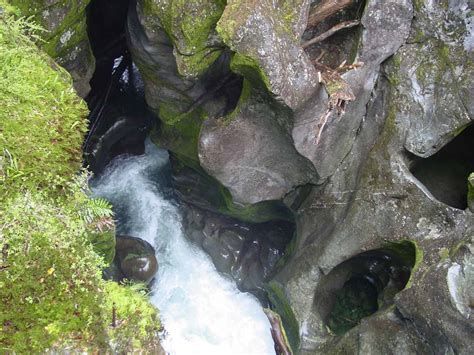
“It is through my horror that I am carried toward the future and, insofar as it constitutes the future as possible, my horror nihilates itself. It is precisely the consciousness of being one’s own future, in the mode of not-being, that we call anguish. And the positive counterpart to the nihilation of my horror as a reason—whose effect is to reinforce my horror as a state—is that other courses of action (in particular the one that consists in my throwing myself into the chasm) appear as my possible possibles. If nothing constrains me to save my life, nothing prevents me from hurling myself into the abyss.
The decisive behavior will emanate from a “me” that I am not yet, to exactly the extent to which the “me” that I am not yet does not depend on the “me” that I am. And my vertigo appears as my grasp of this dependence. I approach the chasm, and the person below it, whom I seek out with my gaze, is me. From that moment on, I am playing with my possibles.
My eyes, scanning the abyss from top to bottom, rehearse my possible fall and symbolically actualize it; at the same time, the act of suicide, due to its becoming “my” possible “possible,” reveals in its turn some possible reasons for adopting it (suicide would bring my anguish to an end).
Fortunately these reasons, in their turn—by virtue simply of their being reasons for a possible—are presented as inefficacious and not as determining: they can no more produce my suicide than my horror of falling can determine me to avoid it.
It is this counter-anguish that in general brings anguish to an end by transmuting it into indecision. That indecision, in its turn, calls for decision; suddenly, we move away from the edge of the chasm and continue on our way.
The example we have just analyzed has shown us what we might call “anguish in the face of the future.”
The Gambler
There is another kind: anguish in the face of the past. This is the anguish of the gambler who has freely and sincerely decided to stop playing and who, when he approaches the “green baize,” suddenly sees his resolutions “dissolve.” This phenomenon has often been described as if the mere sight of the gaming table brings out some tendency in us that enters into conflict with our earlier resolution, and ends up dragging us away in spite of it.
Apart from the fact that such a description is couched in reifying language, and populates the mind with antagonistic forces (as, for example, in the moralistes’48 well-known “struggle between reason and the passions”), it does not account for the facts. In reality—and we have the testimony of Dostoyevsky’s letters—there is nothing in us that resembles an internal debate, as if we had to weigh up our reasons and motives for acting before deciding.
The earlier resolution to “stop playing” is still there and in most cases the gambler present at the gaming table will turn back to it, to seek its help: for he does not want to play; or rather, having made his resolution the night before, he still thinks of himself as no longer wanting to play; he believes his resolution might be effective. But what he grasps then, in anguish, is precisely the total inefficacy of his past resolution.
It is there, of course, but frozen, inefficacious, surpassed, by virtue of the very fact that I am conscious of it. It is still part of me, to the extent that my identity with myself is constantly being actualized through the temporal flux, but, due to its being for my consciousness, it is no longer me. I escape it; it fails in the mission I had assigned to it. It is still there, and I am it in the mode of not-being.
What the gambler grasps at this moment is again the constant break in determinism, the nothingness separating him from himself: I would have liked so much to stop playing; yesterday I even grasped the situation, in a synthetic apprehension (the threat of ruin, the despair of my loved ones), as prohibiting me from playing. It seemed to me that I had thereby constituted a real barrier between myself and the game, and suddenly now I realize that this synthetic apprehension is only the memory of an idea, the memory of a feeling. For it to help me again, I must reproduce it ex nihilo, and freely; it is only one of my possibles, just as the fact of playing is another, neither more nor less.

This fear of destroying my family needs me to rediscover it, to re-create it as a lived fear; it stands behind me like a boneless ghost, and depends on me alone to lend it my flesh. I am alone and naked before temptation, as I was last night and, after having patiently constructed barricades and walls, having locked myself into the magic circle of a resolution, I realize with anguish that nothing can prevent me from playing. And the anguish is me, since, by the mere fact of bearing myself in existence as consciousness of being, I make myself as not being this past of good resolutions that I am.
— from Being and Nothingness, Jean Paul Sartre
See also, Harmony and Differences on Predestination in Catholic Theology

