…Permit me to correct my oversight here.
James DiEugenio is an American historian and author known for his extensive research on the assassination of President John F. Kennedy. He has written many books on the topic, including “Destiny Betrayed” and “Reclaiming Parkland,” and has contributed to documentaries about JFK’s assassination.
Understanding Special Operations by Prouty and Ratcliffe
Written by James DiEugenio
David Ratcliffe did a five-day interview with the late Fletcher Prouty in which he described his considerable experience with the CIA in the conduct of covert operations. He has packaged that interview with much other relevant, useful information into a valuable book.
Understanding Special Operations
By Fletcher Prouty with David Ratcliffe
Fletcher Prouty is undergoing a revival of sorts. In 2024, Jeff Carter released his film on the man, which was titled Fletcher Prouty’s Cold War. This was a well-done and quite informative biographical look at a military veteran who was in the middle of things when CIA Director Allen Dulles was at the height of his powers and influence. Prouty was also around when President John Kennedy decided that he had had enough of Dulles after the Bay of Pigs and decided that Dulles, Director of Plans Dick Bissell, and Deputy Director Charles Cabell all had to go. Prouty was also there when Kennedy was assassinated. He then retired his military commission in 1964 after 23 years of service. (Click here for a review of Carter’s film)
Why do I say that Prouty is in revival? Because in addition to Carter’s film, David Ratcliffe has now reissued his book on Prouty, Understanding Special Operations, in a revised and expanded version. When I say expanded, it now totals over 600 pages. It consists of a five-day interview Ratcliffe did with Prouty in 1989. And that is backed up with appendices, addenda and plentiful notes. It is a good literary supplement to Carter’s film.
Prouty had been a veteran of World War II, mostly in the Army Air Force. There, he piloted around people like General Omar Bradley in North Africa and the Middle East. Later in the war, he was transferred to the Pacific. He was in Japan when the peace treaty was signed. At war’s end, he went to Yale to start up an ROTC program. During the Korean War, he ran the Tokyo International Airport.
It was after that assignment, while still part of the Pentagon, that he became a coordinator for military supplies between the Air Force and the CIA. Translated into action, this meant that if the CIA needed an air aspect to an operation, Prouty would be the military man they would consult. Later on, when Prouty became a Colonel, CIA Director Allen Dulles transferred all duties dealing with CIA/Pentagon support to Prouty. He was now called the “focal point officer”. That was the position he retired from in 1964. Even though his commanding officer, General Victor Krulak, wanted him to stay.
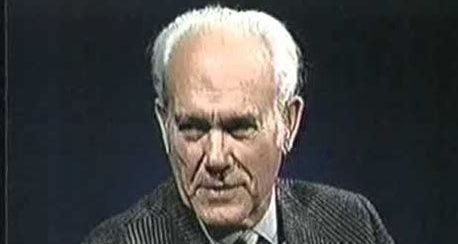
Once he retired, Prouty went into banking for First National Bank, and then management for Amtrak. But, and it’s a big but, Prouty also had a career as a writer. He penned books and articles. This is an important aspect of his career because Prouty did not sign a Non-Disclosure Agreement once he left the military. Therefore, he was free to write about many of his endeavors while both in the military and as a focal point officer. His book, The Secret Team, is considered by some—the late Mort Sahl, for one—to be a milestone in the field. But something happened to The Secret Team, and to his literary career. And Ratcliffe deals with it in this book. It is a subject we will take up later.
But his literary career is important in another way. Because this is how Oliver Stone got in contact with Prouty. Jim Garrison had read some of Prouty’s articles. When his book, On the Trail of the Assassins, was ready to be published, he sent a draft copy to Prouty. Prouty read it. He then wrote to Garrison telling him how much he liked the book. Garrison showed the correspondence to his editing assistant, Zachary Sklar. Both men ended up working with film director Oliver Stone when Stone purchased the rights to Garrison’s book. Sklar and Garrison both advised Stone to get in contact with Prouty. Because he knew a lot about Kennedy’s plans to withdraw from Vietnam in the fall of 1963, and how that plan got hijacked and then reversed.
So Stone got in contact with Prouty, and he became a consultant on the 1991 film JFK. But his participation went further than that. Stone decided to make him a character in the picture. He called him Mr. X. That role was first offered to Marlon Brando. He declined. Can you imagine all the cue cards Brando would have needed for that long monologue?
As Stone has said, Brando’s refusal was a blessing in disguise. Because Donald Sutherland now played the part. Sutherland did more than play Mr. X; he owned the role. The approximately 16-minute walk of Sutherland/X with Garrison/Kevin Costner from the Lincoln Memorial to the Washington Monument has become an icon of modern cinema. For the first time in a mass audience feature film, Americans were finally seeing the covert action crimes of the CIA brilliantly conveyed through photography, newsreels and virtuoso editing. And all the time this is being depicted, Sutherland is delivering a tour de force performance. He is completely in command: through inflections, cadence, modulations in pitch and timbre. Sutherland had a dog in this fight. Because he was the original producer of the film Executive Action. It’s like he recalled everything he wanted to put in that 1973 film, and poured it out in this movie-stealing performance. He is simply superb.
II
In a very real way, Sutherland was too good. Many people did not want to believe that 1.) His character could know so much, and 2.) The CIA could do all of these evil things. Which included the clear suggestion that they were in on the conspiracy to kill President Kennedy. So, in order to get at Stone’s film, critics went after Fletcher Prouty. Some of these writers—like Robert Sam Anson and Edward Epstein—had personal agendas. They had viciously attacked Jim Garrison years before. They were not going to let Stone and Prouty revive him in a mass market, Oscar-nominated film—one which also made Garrison’s book a best-seller. So, in addition to going after Stone and Garrison, they decided to attack Fletcher Prouty.
And this crew included Dan Moldea. There was a debate at American University in January of 1992, supervised by Sanford Ungar. Ungar had Moldea on this panel. Moldea seemed to be there to attack Prouty—also on the panel– and the film, which he called a paranoid fantasy. During that debate, looking directly at Prouty, he actually accused Jim Garrison of being on the payroll of Carlos Marcello. Therefore, the DA’s inquiry was a diversion from the true perpetrators of the crime. Which, in Moldea’s mind, was the Mafia. To put it mildly, Moldea’s ideas have not held up very well. (William Davy, Let Justice be Done, pp 149-67) In the face of much resistance, Prouty’s and Garrison’s have.
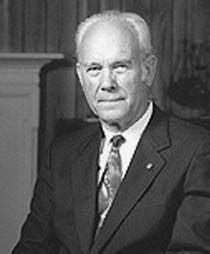
To show how far the resentment to Stone’s film reached, the attack on Prouty extended into the creation of the Assassination Records Review Board (ARRB). As Doug Horne told this writer, there were some people working for the Board who decided to go after Prouty/Mr. X. So they called the colonel in for an interview. Which was not really an interview. It was an ambush. Prouty sensed this early on, and he simply played along with the charade. Not revealing any of his sources for things like the failure of military intelligence to back up the Secret Service in Dallas on 11/22/63.
Finally, we should not forget the writer who ended up being the Establishment’s point man on the counter to Stone’s film. That was, of course, Gerald Posner. Posner took some swipes at Prouty in his godawful Case Closed. In Ratcliffe’s book, the colonel ably repels every detail of the long footnote Posner devoted to him. (Ratcliffe, pp. 346-47)
All of these critics had an agenda. In this writer’s view, Epstein and Anson should never have been allowed to write about Stone’s film, let alone Fletcher Prouty. Because they had made up their mind about Jim Garrison decades before. Moldea actually used a trial at which Garrison was acquitted to say that, somehow, he was on the take from Carlos Marcello. Yet, at trial, the case was exposed as a frame-up. Which included faked audio tapes and the prime witness admitting the case against the DA was a fabrication. (Garrison, Chapter 19)
III
In Understanding Special Operations, Ratcliffe uses a kind of Socratic method to question Prouty about his suppressed book, The Secret Team. Why do I call it suppressed? Because on its first issue in hardcover–through a major publisher, Prentice-Hall–the book sold well and got favorable reviews. Prentice-Hall sold the paperback rights to Ballantine Books with an expected printing of 100,000 copies. But the paperback simply began to disappear. And the owner had sold Ballantine. Prouty went to New York to visit the new owner to talk about his book’s fate. The new man said he knew nothing about Prouty or his book. Prentice-Hall then ran out of the hardcover also. That edition of the book was now more or less extinct. (Ratcliffe, p. 365)
Up until the time of the Ballantine suppression, the colonel had been published in journals like The Nation, The New Republic, and Air Force Magazine. This now forced him into having his articles published by Genesis, Gallery and Freedom magazine. As Ratcliffe notes, it is a sad state of affairs when a 23-year veteran who went as high up into the military as Prouty is reduced to such a state. (ibid, p. 479) This is the man who actually wrote a pamphlet called “Military Support of the Clandestine Operations of the United States Government.” (Ibid, p. xxiii) He then coordinated this document with those written by the Army and Navy Focal Point Offices. All three were then attached together and approved by the Defense Secretary. (ibid)
But, as the book notes, the CIA did not just arrange for this kind of military support. They also arranged a whole network of persons who were planted in other agencies of government, like the State Department, the FBI and Customs. The agencies accepting these liaisons thought they were from Defense. But they were really from the CIA. (Ratcliffe, p.xxiv). And their man would rise in the ranks of that agency, without anyone else knowing who he really was. Thus, he became even more effective.
The book also explains how money was manipulated between agencies:
The Air Force never spent any money on the CIA operations, technically. The money was immediately transferred through a comptroller’s office arrangement up in the office of the Comptroller of the Secretary of Defense. And that expenditure was actually Agency money. (p. xxv)
This is how the CIA managed to expand its budgets, by doing what were, in essence, black operations—which were, in a real way, not accountable. One of the most interesting aspects of the book is that Prouty acknowledges a decision by Eisenhower called NSC 10/2. This said that when the military supported the CIA for an operation, that equipment “was to be limited to that one time only and afterwards withdrawn.” (p. xxx) As Ratcliffe notes, this was eventually ignored, and the CIA was allowed to accumulate its own stockpiles of equipment.
Also, as time went on, Allen Dulles usurped the power of the NSC over the CIA. Instead of the former commissioning projects, Dulles went to them for approval of his own projects. This led to what, for Prouty, was a lamentable shift. Now, instead of diplomats making policy, intelligence information would lead policy-making. (p. 116, pp. 156, 157)
IV
In addition to NSC 10/2, Prouty also discusses Directive 5412. As explained to him by General Thomas White, this NSC ruling finally defined covert operations and how the Pentagon would support them, as they were really being run by the CIA (p. 42). Prouty argues that up until this time, there had really been no clear sanction for the Agency to do this. Which had not stopped CIA officer Frank Wisner from conducting them at the Office of Policy Coordination, later renamed Directorate of Plans. But with their formalization, Prouty now had his office:
We had staff all over the world, a rather large office, and special communications. I stayed in that job…until 1960, when I was assigned to the office of the Secretary of Defense, in the Office of Special Operations…. (p. 43)
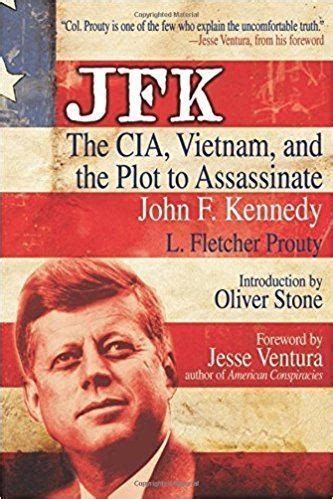
Available from Amazon
After acquainting himself with the position and putting together a manual, Prouty went over to see Director Allen Dulles and CIA lead counsel Larry Houston. Final arrangements were now worked out to make the relationship effective. Like setting up dummy companies for the transfer of equipment. (p. 44). This was done under an often-used law called the Economy Act of 1932. This allowed transfers of goods and services from one to other branches of government. (ibid) As Prouty notes, it was this law that was quoted for use by Secretary of Defense Caspar Weinberger during the Iran/Contra affair.
Once this system was set up and ready to enact, Dulles called him into his office. He now wanted to send him on a tour of the major CIA offices around the world so Prouty could meet with some of the people — Dulles titled them Chiefs of Station — who were going to be calling him for requests. It was on this tour, while in Greece, that Prouty encountered a camp for what the CIA called its “mechanics”, that is, its hit men, to be used for assassinations worldwide. (p. 49) This is how this reference got into the scene with Mr. X in the film JFK.
While on this tour, Prouty visited the CIA station in Frankfurt, which was their main HQ for Europe, and the Paris station, which was where the central SHAPE — Supreme Headquarters Allied Powers in Europe — office was located. Prouty offers a fascinating observation he picked up there. In preparations for atomic war, the planners would allow for paratroopers to be dropped into havens called “safe areas” in the USSR. Places where bombs had not hit, and weather patterns predicted no radioactivity would fall. This was the beginning of the concepts for special forces and stay behind operations. As Prouty notes, the CIA adapted the concept and infiltrated the Agency into these kinds of operations, for example, the Green Berets in Vietnam. (p. 53, p. 135)
… Continue

