In light of our personal failings, some of us may not be sure if we have earnestly “worked out our salvation with fear and trembling,” or whether we are more worthy of spiritual chastisements. But in our deepest selves we can know whose side we are on vis a vis the arrogant values of this world. We can cry out to the Lord and “lift up our drooping hands and strengthen our weak knees,” redouble our Hope and courage, in order to put our feet on the right path in this world, as we struggle up the Mountain of Faith against “the lusts of the flesh, the lusts of the eyes and the pride of life” (1 John 2:15-17).
“If we confess our sins, he who is faithful and just will forgive us our sins and cleanse us from all unrighteousness.2
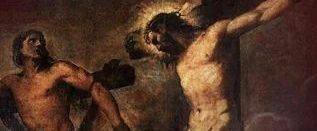
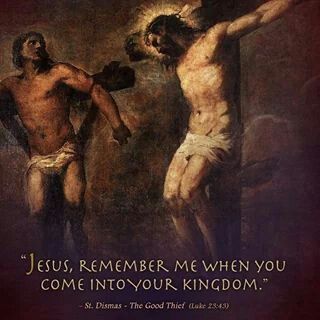
“The penitent thief, also known as the good thief, wise thief, grateful thief, or thief on the cross, is one of two unnamed thieves in Luke’s account of the crucifixion of Jesus in the New Testament. The Gospel of Luke describes him asking Jesus to “remember him” when Jesus comes into his kingdom. The other, as the impenitent thief, challenges Jesus to save himself and both of them to prove that he is the Messiah.
Cf. The courage to begin yet again.
Catechism of the Catholic Church
The Sacrament of Reconciliation, also known as Penance or Confession, effects the forgiveness of sins, reconciliation with God, cleansing from unrighteousness, and restoration to divine grace and salvation, as instituted by Christ and affirmed throughout Sacred Scripture.1 2 3 4
Forgiveness of Sins
Jesus explicitly grants the Apostles—and through them, their successors in the priesthood—the authority to forgive sins in his name, breathing upon them the Holy Spirit as the source of this power:
When he had said this, he breathed on them and said to them, “Receive the Holy Spirit. If you forgive the sins of any, they are forgiven them; if you retain the sins of any, they are retained.”1
This sacramental act mirrors the biblical promise that confession leads to divine pardon:
If we confess our sins, he who is faithful and just will forgive us our sins and cleanse us from all unrighteousness.2
Through Christ’s blood, poured out in redemption, trespasses are forgiven according to the riches of God’s grace:
In him we have redemption through his blood, the forgiveness of our trespasses, according to the riches of his grace.3
Reconciliation with God
The sacrament restores the sinner to intimate communion with the Father, entrusting the Church with the ministry of reconciliation:
All this is from God, who reconciled us to himself through Christ, and has given us the ministry of reconciliation; that is, in Christ God was reconciling the world to himself, not counting their trespasses against them, and entrusting the message of reconciliation to us.4
This echoes the parable of the Prodigal Son, where the father’s compassionate embrace symbolizes God’s merciful restoration upon the penitent’s return:
So he set off and went to his father. But while he was still far off, his father saw him and was filled with compassion; he ran and put his arms around him and kissed him.5
Salvation from Divine Wrath
Beyond mere pardon, Reconciliation secures justification and deliverance from God’s wrath, effected by Christ’s atoning blood:
Much more surely then, now that we have been justified by his blood, will we be saved through him from the wrath of God.6
In summary, the Sacrament of Reconciliation powerfully effects complete absolution, reconciliation, spiritual cleansing, and assurance of salvation, drawing directly from Christ’s institution and the apostolic witness in Scripture.
- 22. When he had said this, he breathed on them and said to them, “Receive the Holy Spirit. 20:23. If you forgive the sins of any, they are forgiven them; if you retain the sins of any, they are retained.”
- The New Revised Standard Version, Catholic Edition (NRSV-CE)The Holy Bible, 1 John 1:91:9. If we confess our sins, he who is faithful and just will forgive us our sins and cleanse us from all unrighteousness.
- The New Revised Standard Version, Catholic Edition (NRSV-CE)The Holy Bible, Ephesians 1:71:7. In him we have redemption through his blood, the forgiveness of our trespasses, according to the riches of his grace

 Catholic Critique