By James J. Thompson Jr. | New Oxford Review. |
Does God answer prayer? Christians respond to such a query with a mixture of bewilderment and irritation. Who but unbelievers and those of little faith would even think to pose the question? One need only turn to the Gospel of St. Luke to find Christ’s unequivocal promise: “Ask, and it shall be given you; seek, and ye shall find; knock, and it shall be opened unto you.” Secure in the promise, millions of Christians daily beseech God with unquestioning confidence that he will respond to their petitions.
A cornucopia of riches awaits those of such unambiguous faith: for two millennia, the faithful have repeatedly testified that God touches the lame, the halt, and the blind, and they are healed; he speaks and the tormented mind is soothed; a question is answered, a need filled, a conundrum solved, a mystery revealed. The devout have no problem with prayer: they have witnessed the shattering of the mundane when God answers the prayers of his children.
One cannot easily gainsay such testimony if one believes in an omnipotent and loving God. Yet I am disquieted by questions that will not disappear. Does wish fulfillment cunningly disguise itself as the voice of God? Does self-delusion distort the minds of those who ask, seek, and knock? Do Christians pounce upon coincidence and proclaim it as evidence of divine intervention? Do they rely upon God for quick and painless solutions for what remain the ineluctable givens of human existence? Materialists and rationalists settle the matter with little difficulty: There is no God; man’s prayers ascend into a cold and empty empyrean that stretches to infinity. As Sigmund Freud insisted, man fabricates the deity to whom he prays.
To be troubled by the means and ends of prayer does not lead one inevitably to assent to Freud’s banishing of God from the cosmos. The greater danger arises from the temptation to ask: Why pray at all? Why bother with an act that has often been perverted by Christians to serve their own narrow desires? Georges Bernanos once wrote that “the wish to pray is a prayer in itself…God can ask no more than that of us”; true in a limited sense, but for most Christians the act of prayer — the active seeking out of God — is an absolute necessity. One cannot lead the Christian life without it.
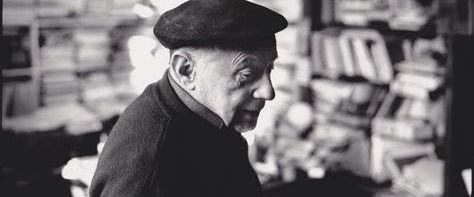
Jacques Ellul, the French sociologist and Reformed theologian, turned his attention to this problem of prayer in a book entitled Prayer and Modern Man, a volume published in the U.S. in 1973. Ellul brought to this topic the immense erudition and acute discernment with which, in a score or more of books published since World War II, he has analyzed the sociological and spiritual plight of modern Western man. Political ideologues of both Left and Right grow uneasy when confronted with Ellul’s books; neither can easily peg him as friend or foe. Ellul causes similar consternation among religious thinkers: his belief in universal salvation offends the orthodox — be they Catholic or Protestant — and his adherence to a God of might and majesty (what the poet John Crowe Ransom called a “God of Thunder”) dismays the heterodox. Onetime Calvinist, quondam Marxist, now best described as simply a Christian, Ellul has pursued the meaning of man’s relation to society and God with a tough-minded integrity that makes him a party of one, standing alone amidst the proclamations of independence shouted by thinkers who follow the herd while deluding themselves into believing they are leading it.
Ellul’s detractors have accused him of delighting in a perverse pessimism that skews his observations on society and religion. The critics may be partly correct, for in Prayer and Modern Man Ellul portrays a bleak scene — a Western world divided into two equally disastrous views of prayer. The force of the majority resides with those who have “outgrown” the need for prayer and have discarded it as yet another of those prescientific encumbrances that Western man has been shedding one by one since the Enlightenment:
“The man of our times does not know how to pray; but much more than that, he has neither the desire nor the need to do so.” What of the other party, those who still pray? The “heavenly telephone” serves their needs: ring up God, present him with a list of requests (happiness, security, success, or whatever material or psychological consumer item springs to mind) and wait for God (remember the promise: ask, seek, and knock) to comply. “We think about God with far too great familiarity. We are vulgarly, tritely accustomed to him. We treat him casually. Speaking to him does not strike us as a unique and stupefying experience.”
Is there no way out of this dilemma? Is one fated to choose between familiarity and contempt (and are they so very far apart)? Ellul illuminates the path of right prayer with Matthew 26:41: “Watch and pray, that ye enter not into temptation: the spirit indeed is willing, but the flesh is weak.” We pray, then, because God commands us to pray, but that command comes directly to each individual who is called personally to obey — not out of fear of punishment, but with the freely given obedience that one offers to a wise and good master. This entails no passivity: one prays for strength to combat the urge (so typical of modern man) to declare that all is nothingness; for stamina and the will to fight evil; for the grace to live in and for Christ. Prayer leads one into combat with the world and “with myself, with my milieu, with my past”; it also grips one in a struggle with God: “It must be a demand with respect to the hidden God that he reveal himself, that he declare himself and enter into our situation.” This is a vocation for spiritual heroes and saints (and however humble one’s lot, one can be such in the eyes of God), and not the preserve of those who pester the Lord for small comforts and cheap benefactions. Above all, prayer “is the ultimate act of hope” in a world that constantly conspires to choke one on the acrid smoke of despair. “At every moment the eschatological act of prayer is a combat against death and nothingness, so that we may pick up once again the thread of life.”
Watch and pray; strive fiercely against despair; hope, live and love; grasp the thread of life and follow it, not to death and nothingness, but to the hidden God who reveals himself to those who freely obey.
This article was originally published in December 1983.
©1983 New Oxford Review. All Rights Reserved.

 Catholic Critique