Sec. of State Rubio takes aim at UN. US president says a military operation in Colombia ‘sounds good’ to him and warns Mexico ‘to get their act together’.
The United States President Donald Trump has threatened military action against his Colombian counterpart, Gustavo Petro, following Washington’s abduction of Venezuela’s leader, and said he believed the government in Cuba, too, was likely to fall soon.
Trump’s comments on Sunday came amid a growing outcry [outside of Venezuela] over the brazen abduction of Nicolas Maduro, with Brazil, Chile, Colombia, Mexico, Uruguay and Spain condemning the US action as a “dangerous precedent for peace and regional security”.
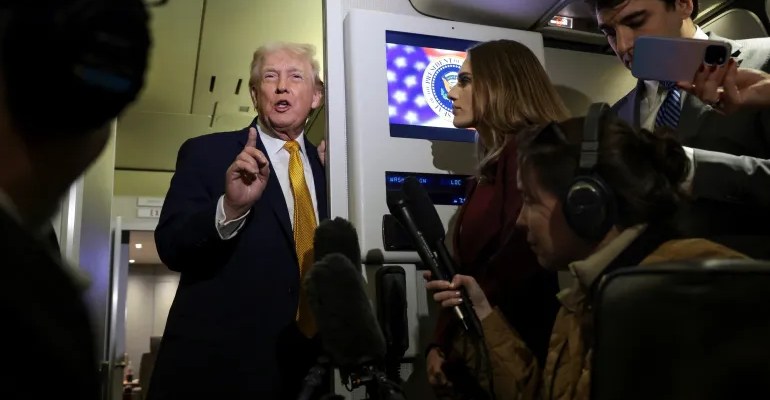
Trump told reporters on board Air Force One that Venezuela and Colombia were “very sick” and that the government in Bogota was run by “a sick man who likes making cocaine and selling it to the United States”.
“And he’s not going to be doing it very long. Let me tell you,” Trump said, referring to Petro.
When asked if he meant a US operation against Colombia, Trump said, “Sounds good to me.”
The remarks prompted a sharp rebuke from Petro, who told Trump to “stop slandering” him while also calling on Latin American countries to unite or risk being “treated as a servant and slave”.
In a series of lengthy posts on X, Petro noted that “the US is the first country in the world to bomb a South American capital in all of human history”. But he said revenge was not the answer.
Instead, Latin America must unite, Petro said, and become a region “with the capacity to understand, trade, and join together with the whole world”.
“We do not look only to the north, but in all directions,” he said… Read more.
Toppling of Venezuela’s Maduro stirs fear in Cuba
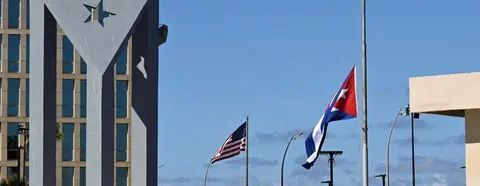
HAVANA – Cubans weary from years of economic crisis, shortages of basic supplies and regular power blackouts, fear the US attack on Venezuela, a leftist ideological ally and its main oil supplier, will see life get even tougher.
After American forces seized Venezuela’s leader Nicolas Maduro in an early-morning raid, US President Donald Trump over the weekend issued threats to other leftist leaders in the region and said he thought Cuba was “ready to fall”.
He played down the need for US military action on the island, saying it would be hard for Havana to “hold out” without Venezuelan oil, and “it looks like it’s going down”.
“2026 is going to be tough, very tough,” Mr Axel Alfonso, a 53-year-old working as a driver for a state enterprise, told AFP in the capital Havana on Jan 5.
“If Venezuela is the main supplier, at least of oil, it’s going to get a bit complicated,” said Mr Alfonso, who, like the vast majority of Cubans, has lived his whole life under a bruising US trade embargo in place since 1962.
The communist-run island has seen 13 US administrations come and go, some more punishing than others.
Monroe Doctrine
The Monroe Doctrine covers the Western Hemisphere, which includes North America, Central America, and South America. It asserts that European powers should not interfere in the political affairs of these regions.
The Monroe Doctrine primarily covers the Western Hemisphere, which includes:
- North America
- Central America
- South America
- Caribbean Islands
- When first articulated in 1823, the doctrine aimed to prevent European nations from reclaiming control over newly independent Latin American countries.
- Long-term Implications: Over time, the doctrine has been invoked to justify U.S. interventions in various Latin American countries, reinforcing the idea that the U.S. would act to protect its interests in the region.
The Monroe Doctrine has evolved but remains a significant element of U.S. foreign policy regarding the Americas. — Search Assist, A.I.

