
“We went [to Bethlehem] early in the day, and I sat by myself in the cave underneath the Church of the Nativity where Christ is supposed to have been born… Overhead are numerous silver and bronze lamps, and the stone walls are covered with silk and damask, now mostly threadbare.
Seated there in the half-light, a fit of melancholy seized me; the essential point of Christ’s birth, as I see it, is that it happened in the humblest and poorest circumstances conceivable. He, who was to be worshipped through twenty centuries by the most ardent spirits and perceptive minds of a great civilisation, was born more obscurely than probably anyone else that day in the whole world.
What a stupendous moment in history – when for the first time men were to see their God, not in terms of wealth or power or pulchritude, but of penury, weakness and obscurity. I loved the bare stone of the cave’s walls, and resented the coloured hangings which hid it, thereby hiding the true significance of Christ’s birth, and of what His life and death were to fulfil.
Truly we humans have an astonishing faculty for thus snatching fantasy from the jaws of truth. It is not just that history is distorted or falsified; it becomes its own opposite. From the first Christmas to Christmas 1967, from Golgotha to the crowning of a Pope, from St Paul to the Bishop of Woolwich, from Bethlehem to Regent Street – such is history’s gamut, which we must run.
It was a great relief to get to Galilee, where I forgot the shrines and suddenly felt happy. The Lake, the hills, even the ruins of Tiberias and Caperneum -it was all somehow perfect, uncontaminated, miraculous.
One realised that in some mysterious way only in this land could Christ’s mission have been undertaken and fulfilled; nowhere else. Its earth and its contours, its very texture and vegetation, were a book in which the Christian story was written, and where it could always be read. In that sense, despite everything, it was truly a Holy Land.
We followed out the story as best we might – climbing up the Mount of Beatitudes to listen to that stupendous sermon; going out into the desert to encounter the devil and with his three temptations:
-to turn stones into bread and thus augment the Gross National Product, to fly to the moon and thus impress the unbelieving, and to take over the kingdoms of the earth to ensure the everlasting reign in them of life, liberty and the pursuit of happiness.
We saw the fishermen lay down their nets and go running after a voice which called them; we heard the poor lunatic crying out for release from the evil spirits which were tormenting him, and saw the Gadarene swine go racing over the cliff.
We noticed how the sheep and goats were separated, how women gathered round wells to draw water as precious as truth, how thorns grew in sand shining like precious jewels in a crown, how the light of the setting sun beats down on a mountain peak to make a Transfiguration. Not one single detail seemed to be missing.
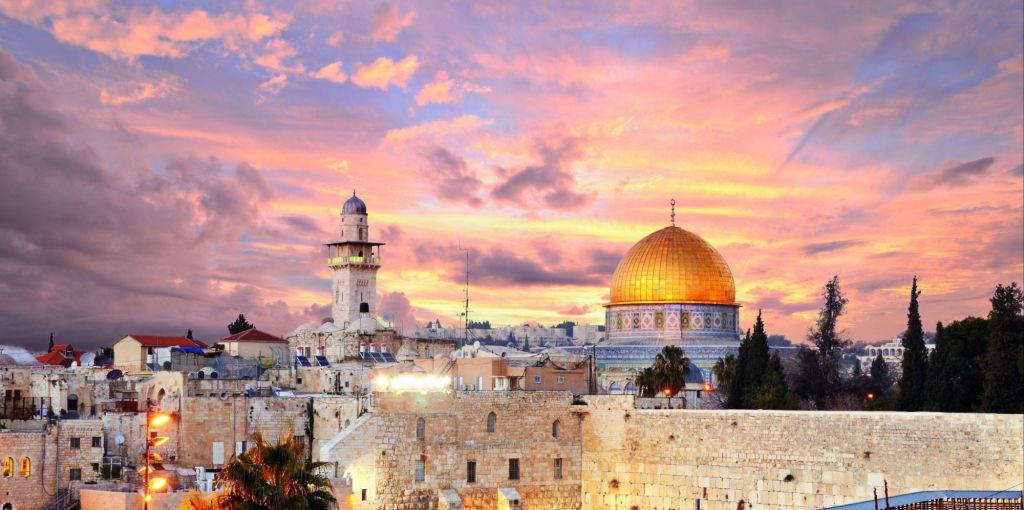
There was the road to Jericho along which the Good Samaritan passed, and Bethany where Mary and Martha lived, and the Mount of Olives with its view of Jerusalem – the city seen from there having about it some excruciating and yet entrancing poignancy, which makes Christ’s famous cry from the heart all too comprehensible:
‘O Jerusalem, Jerusalem, thou that killest the prophets, and stonest them which are sent unto thee, how often would I have gathered thy children together, even as a hen gathereth her chickens under her wings….’
It is even possible to take the road to Emmaus, as Cleopas and his companion did, thinking along the way like them about the events of the Crucifixion – two thousand years ago or yesterday – to the point that one becomes aware, as they did, of another presence detaching itself from the shadows and accompanying one along the dusty stony way.
— from Time and Eternity, Uncollected Writings

 Catholic Critique