Updated. Circling Coldhearted Murder
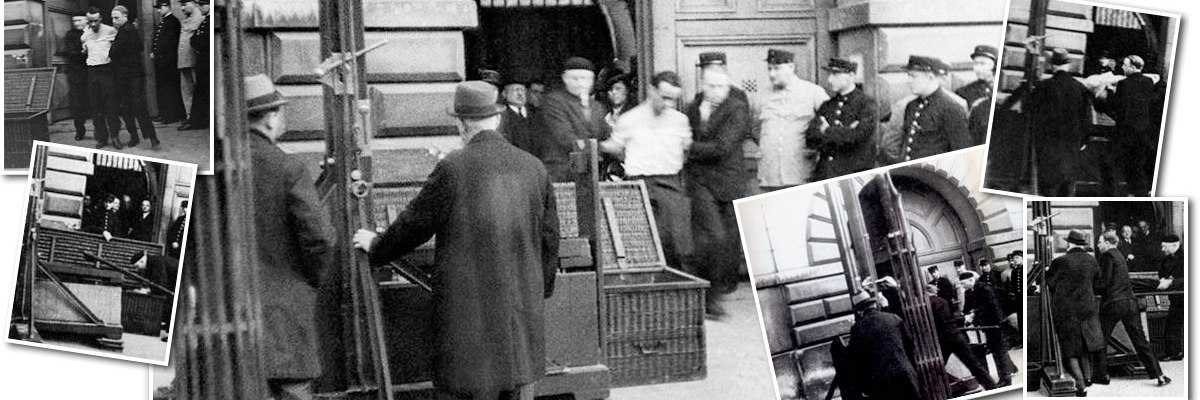
The Execution of Tropmann” is an essay by Ivan Turgenev that explores the ethical issues surrounding the death penalty and public executions, particularly focusing on the reactions of onlookers. It reflects on the cold-heartedness of the crowd witnessing the execution of Jean-Baptiste Troppmann, a notorious spree killer in France.
“Upon witnessing Tropmann’s execution, Turgenev expressed his anguish and remorse about being there, and drove readers to reflect on the decency of the death penalty and public execution.
When the guillotine is employed as a prop for amusement by everybody and the execution is transformed into a carnival feast, barbarism will replace civilization and justice will be overthrown by evil. However, no matter what choice a country makes, respecting judicial sovereignty counts most. — Ying Zhao, Hill Publishing
Key Quotes by Albert Camus on Capital Punishment
Interestingly, Albert Camus risked death constantly as Editor of Combat, an underground resistance journal directed against the Nazis. He appeared to be no Conscientious Objector. In August 1944, Combat took over the headquarters of L’Intransigeant in Paris, and Camus became its editor in chief. The newspaper’s production run decreased from 185,000 copies in January 1945 to 150,000 in August of the same year: it did not attain the circulation of other established newspapers (the Communist daily L’Humanité was publishing at the time 500,000 copies).
On the Nature of Capital Punishment
- “Capital punishment is the most premeditated of murders, to which no criminal’s deed, however calculated, can be compared.”
On Its Ineffectiveness
- “For centuries the death penalty, often accompanied by barbarous refinements, has been trying to hold crime in check; yet crime persists. Why? Because the instincts that are warring in man are not, as the law claims, constant forces in a state of equilibrium.”
On the Impact of Revenge
- “What will be left of the power of example if it is proved that capital punishment has another power, and a very real one, which degrades men to the point of shame, madness, and murder?”
On Justice and Law
- “To assert in any case that a man must be absolutely cut off from society because he is absolutely evil amounts to saying that society is absolutely good, and no one in his right mind will believe this today.”
Note: I disagree with Camus’ absolute prohibition here. In my opinion Capital Punishment comports best with Catholic moral teaching if it is relatively rare, and reserved for the most aggravated of crimes. SH.
Grok, A.I. on history of the moral principle and application of its use:
The Catechism of the Council of Trent (1566), St. Thomas Aquinas (Summa Theologiae II-II, q. 64, a. 2), St. Augustine, St. Robert Bellarmine, St. Alphonsus Liguori, and every pope from St. Peter through St. John Paul II (in the 1992 and 1997 editions of the Catechism) affirm that the state has the right in principle to inflict capital punishment for sufficiently grave crimes.
CCC 2267 in its 1997 version explicitly said the death penalty was admissible when it is the only practicable way to defend society, and that such cases, while “very rare, [are] not to be excluded.”
Many theologians (e.g., Cardinal Avery Dulles, Cardinal Joseph Ratzinger in his 2004 memorandum, Cardinal Ladaria in explanatory letters, Professors E. Christian Brugger, Steven Long, Edward Feser, Joseph Bessette, and others) argue that this wording represents a prudential judgment and development of doctrine in the application of perennial principles, not a reversal of the intrinsic liceity of the penalty.
The 2018 change under Pope Francis
The new wording declares capital punishment “inadmissible” because it is “an attack on the inviolability and dignity of the person.”
The Church has never declared the traditional teaching heretical or reversed; it has simply said that in today’s circumstances the conditions required for its legitimate use only rarely obtain.
Updated

 Catholic Critique