
Excerpt from The Mother of the Savior and Our Interior Life.
[+ See also, Our Blessed Mother Mary in the Order of Grace. “Fundamentalist Protestant incomprehension of the Catholic doctrine regarding Mary, the Theotokos or Mother of God, is largely and essentially an incomprehension of the Incarnation itself, whereby the Word, who is God, was made flesh (John 1:1; 14). It is rooted in a failure to contemplate, with the Church, the stupendous implications of this wondrous mystery.” — Continue.]
Mary’s Predestination to the Divine Maternity Preceded her Predestination to the Fullness of Glory and Grace.
by Rev. Fr. Reginald Garrigou-Lagrange.
This proposition may appear a little too profound for a beginning. In reality it is quite easy to understand. Most people admit it, at least implicitly. Besides it throws a flood of light on all that follows.
Pius IX affirmed it in effect in the Bull Ineffabilis Deus, by which he defined the dogma of the Immaculate Conception, when he said that God the Father predestined Jesus to natural divine sonship—so superior to adoptive sonship—and Mary to be Mother of God, in one and the same divine decree. The eternal predestination of Jesus included not only the Incarnation itself as object but also all the circumstances of time and place in which it would be realized, and especially the one expressed by the Nicene Creed in the words:
“Et incarnatus est de Spiritu Sancto ex Maria Virgine.”4
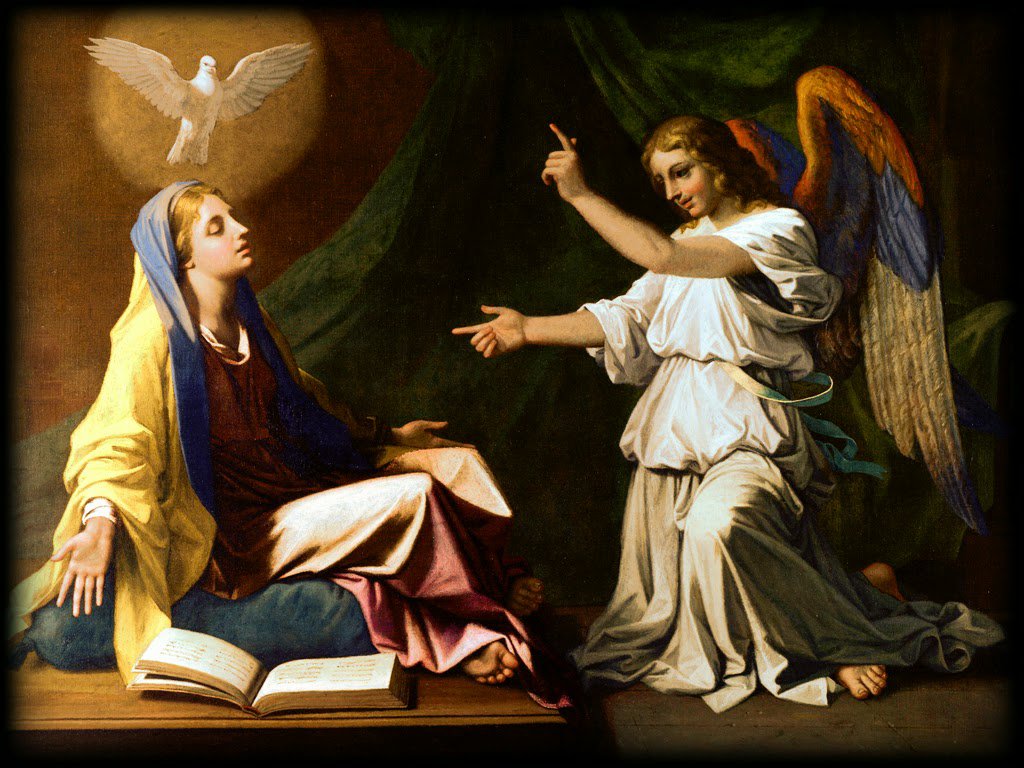
By the same eternal decree, therefore, Jesus was predestined to be Son of the Most High and Mary to be Mother of God.5 It follows that as Christ was predestined to natural divine sonship before (in signo priori) being predestined to the summit of glory and to the fullness of grace (the germ of glory) so also the Blessed Virgin Mary was predestined first to the divine maternity, and in consequence to a very high degree of heavenly glory and to the fullness of grace, in order that she might be fully worthy of her mission as Mother of the Saviour. This second predestination was all the more necessary seeing that, as His Mother, she was called to closest association with Jesus, by perfect conformity of her will with His, in His redemptive work. Such, in substance, is the teaching of Pius IX in the Bull Ineffabilis Deus.6
Thus, just as in Jesus the dignity of Son of God, or Word made flesh, surpasses that of the plenitude of created grace, charity, and glory, which He received in His sacred soul as a result of the hypostatic union of two natures in Him by the Incarnation, so also in Mary the dignity of Mother of God surpasses that of the plenitude of grace and charity, and even that of the plenitude of glory which she received through her unique predestination to the divine maternity.
It is the teaching of St. Thomas and many other theologians when treating of the motive of the Incarnation (for the redemption of mankind) that Mary’s predestination to be Mother of the Redeemer depended on the divine foreknowledge and permission of Adam’s sin. As St. Thomas explains (Ilia, q. 1, a. 3, ad 3), that sin was permitted in view of a greater good, namely that through the redemptive Incarnation “where sin abounded, grace (might) more abound” (Rom. 5:20).7
Just as God wills the human body for the sake of the human soul, and yet, since He wills that the soul give life to the body, does not create a soul till there is a body ready to receive it, so also God allowed in view of the greater good of the redemptive Incarnation that there should be a sin to be atoned for, and He willed the redemptive Incarnation for the sake of the regeneration of souls: thus in the actually existing order of divine providence there would have been no Incarnation had there been no sin. And in this order everything is subordinated to Christ and His Holy Mother, so that it is true to say with St. Paul (1 Cor. 3:23):
“All things are yours . . . And you are Christ’s; and Christ is God’s.”8
Thus the greatness of Christ and of His Mother are in no way lessened by their dependence on Adam’s sin.
Mary was therefore predestined first to the divine maternity. This dignity appears all the greater if we recall that Mary, who was able to merit glory, was not able to merit the Incarnation nor the divine maternity, for the Incarnation and the divine maternity lie outside the sphere of merit of the just, which has as outer limit the beatific vision.9
There is also another conclusive reason: the principle or beginning of merit cannot itself be merited. Since original sin, the Incarnation is the principle of all the graces and merits of the just; it cannot therefore be itself merited. Neither, then, could Mary merit her divine maternity de condigno nor de congruo proprie, for that would have been to merit the Incarnation.10
See: “Everything which comes to pass is foreseen by God”
As St. Thomas very accurately indicates, what Mary could merit by the first fullness of grace which she received gratuitously in view of the foreseen merits of her Son, was an increase of charity and that higher degree of purity and holiness which was becoming in the Mother of God.11 Or, as he says elsewhere: “Mary did not merit the Incarnation (nor the divine maternity) but, granted that the Incarnation had been decreed, she merited (merito congrui, not condigni) that it should come to pass through her, since it was becoming that the Mother of God should be most pure and perfect.”12 That is to say, she merited the degree of sanctity which it was becoming for the Mother of God to have, a degree which no other virgin had in fact merited, or could merit, since none other had received nor was entitled to receive the initial fullness of grace and charity which was the principle of Mary’s merits.
This first reason for the eminent dignity of the Mother of God, based on her gratuitous predestination to that glorious title, is clear beyond question. It contains three truths which are, as it were, stars of first magnitude in the heavens of theology: 1st—that by one and the same decree the Father predestined Jesus for natural divine sonship and Mary for the divine maternity; 2nd—that Mary was predestined for the divine maternity before being predestined to the glory and the grace which the Father prepared for her that she might be the worthy Mother of His Son; 3rd—that though Mary merited Heaven de condigno she could not merit13 the Incarnation, nor the divine maternity, since these lie outside the sphere and purpose of human supernatural merit which does not extend beyond gaining eternal beatitude.
Many theologians have considered the argument just given as conclusive. It implies the arguments we shall expose in the following article, which really are but its developments, much as the history of a predestined soul is the unfolding of what was implied in its predestination.14
THE GRATUITOUSNESS OF THE PREDESTINATION OF MARY.
A few additional remarks about the uniqueness of Mary’s predestination will make its gratuitousness all the more apparent.
Among men Jesus is the first of the predestined, since His predestination is the model and cause of ours. As St. Thomas shows (Ilia, q. 24, a. 3 and 4), He merited for us all the effects which follow on our predestination. But the man Jesus was predestined, as we have said, to natural divine sonship, even before being predestined to glory and grace. Hence, His first or primary predestination is none other than the decree of the Incarnation. This eternal decree covers not only the Incarnation taken in the abstract—its mere substance—but also all circumstances of time and place in which it was to be put into execution, including the fact that Jesus was to be conceived in the womb of the Virgin Mary “espoused to a man whose name was Joseph, of the house of David.” (Luke 1:27). Mary’s predestination to the divine maternity being thus included in Jesus’s predestination to natural divine sonship, it follows that it precedes her predestination to glory, since Jesus is the first of those so predestined. A striking confirmation of the thesis of the preceding pages!15
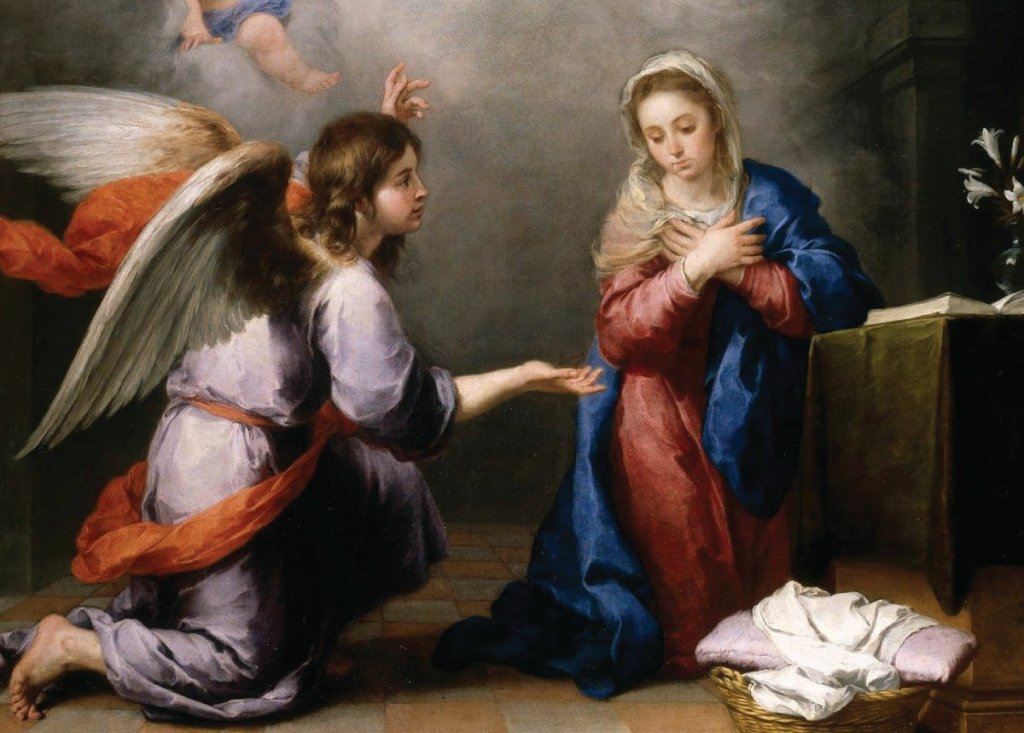
It is no less clear that Mary’s predestination, like that of Jesus, was gratuitous. Jesus did not merit His predestination to natural divine sonship for the reason that His merits presuppose His Person, which is that of the Son of God by nature. Being therefore the principle of all His merits, His Divine Sonship could not itself be merited: else it would be cause and effect at the same time and under the same respect.16
Cf. By One and the Same Decree
In the same way Mary’s predestination to the divine maternity is gratuitous or independent of her merits, for we have seen that to merit it would involve meriting the Incarnation itself, which is the principle of all the merits of mankind since the Fall. That is the reason for Mary’s words in the Magnificat:
“My soul doth magnify the Lord. . . . Because He hath regarded the humility (the lowly condition) of His handmaid.”
Her predestination to glory and grace is clearly gratuitous also, since it is a result or morally necessary consequence of her predestination to be Mother of God. This does not however involve a denial that she merited Heaven. On the contrary, we affirm that she was predestined to gain Heaven by her merits.17 For the whole question of Mary’s predestination cf. Diet. Theol. Cath., article Marie, col. 2358.18
The sequence or order of the divine plan is therefore clear: 1st—God willed to manifest His goodness; 2nd—He willed Christ and His glory as Redeemer—in which will the permission of original sin for the sake of the greater good is included; 3rd—He willed Our Blessed Lady as Mother of the Redeemer; 4th—In consequence He willed her glory; 5th—He willed the grace and merits by which she would attain to glory; 6th—He willed the glory and grace of all the other elect.
The predestination of Mary appears now in all its sublimity. We can understand why the Church extends to her the application of the words of the Book of Proverbs, 8:22–35:
“The Lord possessed me in the beginning of His ways, before He made anything from the beginning. I was set up from eternity, and of old before the earth was made . . . when He prepared the Heavens was present . . . when He balanced the foundations of the earth, I was with Him forming all things: and was delighted every day, playing before Him at all times; playing in the world, and my delights were to be with the children of men . . . He that shall find me shall find life, and shall have salvation from the Lord.”
Mary had been promised as the woman who would triumph over the serpent (Gen. 3:15), as the Virgin who would bear Emmanuel (Is. 7:14); she had been prefigured by the ark of alliance, the house of gold, the tower of ivory. All those testimonies show that she was predestined first of all to be Mother of God. And the precise reason why the fullness of glory and grace was given her was to make her the worthy Mother of God—“to make her fit to be mother of Christ, as St. Thomas expresses it (Ilia, q. 27, a. 5, ad 2), This doctrine appeared to him so certain that we find him saying in the same article (corp. art.): “The Blessed Virgin Mary came nearer than any other person to the humanity of Christ, since it was from her that He received His human nature. And that is why Mary received from Christ a plenitude of grace which surpassed that of all the saints.”

Pius IX speaks in the same sense at the beginning of the Bull Ineffabilis Deus:
“From the beginning and before all ages God selected and prepared for His only Son the Mother from whom, having taken flesh, He would be born in the blessed fullness of time; He loved her by herself more than all creatures, and with such a love as to find His delight in a singular way in her. That is why, drawing from the treasures of His divinity, He endowed her, more than all the angels and saints, with such an abundance of heavenly gifts that she was always completely free from sin, and that, all beautiful and perfect, she appeared in such a plenitude of innocence and holiness that, except God’s, no greater than hers can be conceived, and that no mind but the mind of God can measure it.”19
_____________
ENDNOTES
1For the positive part of the book, I have made extensive use of Fr Merkelbach’s Mariologia. Although I have differed from him in some matters, his book seems to me worthy of the highest praise in its speculative parts as well, both as regards the order of the questions and the accuracy of his theological arguments.
2Gabriel Biel in Ilium Sent. dist. IV, a. 3, dub III, p. 2, Brescia 1574, p. 67 sq. and some others who have followed him more or less closely. Thus, Vasquez, in Illam, disp. XXIII, c. II and disp. C, c, II, attributes greater dignity to sanctifying grace than to the divine maternity. For this opinion cf. Dictionnaire de la Theologie Catholique, art. Marie by E. Dublanchy S.M., col. 2356 sqq.
3Among the Thomists special mention must be made of Contenson, Gotti, Hugon and Merkelbach.
Father Merkelbach quotes the following in his Mariologia, 1939, p. 68, as having all admitted more or less explicitly that her divine maternity is the greatest of Mary’s titles: St. Epiphanius, St. Ambrose, St. Sophronius, St. Germanus of Constantinople, St. John Damascene, Andrew of Crete, St. Peter Damien, Eadmer, Peter of Celles, St. Bernard, St. Albert the Great, St. Bonaventure, St. Thomas, Denis the Carthusian, St. Bernardine of Siena, St. Alphonsus, and all Thomists in general as, for example, Gonet, Contenson, Gotti, Hugon. Besides, Leo XIII says in his encyclical Quamquam pluries of August 15, 1889: “Certe Matris Dei tam in excelso est dignitas, ut nihil fieri majus queat.” Cf. Marie in Dictionnaire de la Th. Cath., cols. 2349–2359.
4The words “natus ex Maria Virgine” are in the creed used in the West from at least the second century.
5The words of Ineffabilis Deus are: “Ineffabilis Deus ab initio et ante saecula Unigenito Filio Suo, matrem ex qua caro factus in beata temporum plenitudine nasceretur, elegit, atque ordinavit tantoque prae creatures universis est prosecutes amore, ut in ilia una sibi propensissima voluntate complacuerit . . . Ipsissima verba, quibus divinae scripturae de increata Sapientia loquuntur, ejusque sempiternas origines repraesentant, consuevit (Ecclesia), turn in ecclesiasticis officiis, turn in sacrosancta liturgia adhibere, et ad illius Virginis primordia transferre, quae uno eodemque decreto cum divinae sapientiae Incarnation fuerunt praestituta ”
The gratuitous predestination of Christ is the exemplary cause of ours, for He merited for us all the effects of our predestination, as St. Thomas explains (Ilia, q. 24, a. 4). But Mary’s predestination to the divine maternity has this altogether peculiar to it, that it is one with Christ’s predestination to natural divine sonship, that is to say, with the decree of the Incarnation. This follows clearly from the text of Pius IX.
6The same doctrine is found very beautifully expressed in the collect of the Votive Mass of the Holy Rosary (Dominican Missal): Omnipotens et misericors Deus, qui ab aeterno Unigenitum tibi coaequalem atque consubstantialem Filium secundum carnem praedestinasti in Spiritu sanctificationis D. N. J. C., et sanctissimam Virginem Mariam tibi acceptissimam in matrem eidem a saeculo praeelegisti.”
In predestining Christ to natural divine sonship, the Father loved, therefore, and selected (dilexit, elegit et praedestinavit) Mary from all eternity as His Mother, to whom, in consequence, He willed to give fullness of glory and grace. As Pius IX says in Ineffabilis Deus: “Et quidem decebat omnino ut perfectissimae sanctitatis splendoribus semper ornata fulgeret
St. Thomas says: “Post Christum habuit Maria maximam plenitudinem gratiae, quae ad hoc est electa, ut esset mater Dei” (in Ep. ad Rom., VIII, lect. 5; p. 118 in Marietti edition).
Mary’s predestination to the divine maternity involves her predestination to glory and grace as an immediate consequence, for that maternity is so intimate a relationship with God as to demand a participation in the divine nature. No one thinks of the Mother of God as without grace (cf. Hugon, De Virgine Maria Deipara, 1926, p. 734). The divine maternity implies also both confirmation in grace and impeccability for there must be mutual and perpetual love between Mother and Son: God owes it to Himself to preserve His Mother from every fault that would separate her from Him (cf. Hugon, ib., p. 736).
7Pius IX says the same in the Bull Ineffabilis Deus: “Ineffabilis Deus . . . cum ab omni aetemitate praeviderit luctuosissimam humani generis ruinam ex Adami transgressione derivandum, atque in mysterio a saeculis abscondito primum suae bonitatis opus decrevit per Verbi incarnationem sacramento occultiore complere, ut quod in primo Adam casuram erat, in secundo felicius erigeretur, ab initio et ante saecula Unigenito Filio suo matrem ex qua . . . nasceretur elegit atque ordinavit . . . et ante saecula Unigenito Filio suo matrem ex qua . . . nasceretur elegit atque ordinavit . . .”
8This point has been explained at length in Le Sauveur et son amour pour nous, 1933, pp. 129–136, and in Angelicum, 1930 and 1939: “Motivum incarnations fuit motivum misericordiae. . . . Causae ad invicem sunt causae ” The sin to be atoned for comes first in the order of material causes. The redemptive Incarnation comes first in the order of final causes, and precedes in the divine intention the actual application of the redemption to souls.
9Cf. St. Thomas Ilia, q. 2, a. II: “Neque opera cujuscumque hominis potuerant esse meritoria hujus unions (hypostaticae) ex condigno. Primo quidem quia opera meritoria hominis proprie ordinantur ad beatitudinem, quae est virtutis praemium et consistit in plena Dei fruition. Unio autem incarnationis, cum sit in esse personali, transcendit unionem beatae mentis ad Deum, quae est per actum fruentis, et ideo non potest cadere sub merito.”
10Ibid.: “Secundo, quia gratia non potest cadere sub merito, quae est merendi principium. Unde multo minus incarnatio cadit sub merito, quae est principium gratiae, secundum illud Joannis, I, 17, ‘gratia et veritas per Jesum Christum facta est.’” Mary could merit the Incarnation neither de condigno nor de congruo proprie. Even the second kind of merit must be excluded for it is based on charity, which the just have through the merits of the Redeemer. In other words, the eminent cause of our merits cannot itself be merited.
11Ilia, q. 2, a. II, ad 3: “Beata Virgo dicitur meruisse portare Dominum omnium, non quia meruit ipsum incamari; sed quia meruit ex gratia sibi data ilium puritatis et sanctitatis gradum, ut congrue posset esse mater Dei.”
12Ill Sent., d. IV, q. 3, a. I, ad 6: “Beata Virgo non meruit incarnationem sed praesupposita incarnation, meruit quod per earn fieret, non merito condigni, sed merito congrui, in quantum decebat quod Mater Dei esset purissima et perfectissima.”
13Not even merito de congruo proprie, for that would be based on Mary’s charity which for its part depended on Jesus” merits, the source of all human merits. But the Blessed Virgin was able to obtain the advent of the promised Saviour by her prayers, the value of which is termed meritum de congruo improprie (which is based not on God’s justice but on His infinite mercy).
14Cf. Vie Inttrieure de la Tres Sainte Vierge, a collection of writings of M. Olier, Rome, 1866, vol. I, ch. I: Mary’s predestination to the august dignity of Mother of the Incarnate Word: in decreeing the Incarnation of His Son, God the Father took The Blessed Virgin as His spouse, pp. 53–60. Consequences: wonderful abundance of light and love poured into the soul of Mary at the moment of her conception, pp. 101 sqq. The glory she gives to God from the time of her conception, pp. 106–115. Ch. Ill: Mary’s presentation and life in the Temple. She enhanced the value of the service offered by the Synagogue by herself adoring Jesus in the Temple under all the figures of the Old Testament; she offered Him under the figure of the immolated victims, pp. 136–143. Mary called on the Messiah in the name of Jews and Gentiles, p. 148, Ch. V: Accomplishment of the mystery of the Incarnation. The Holy Ghost fills Mary with a fullness of His gifts which made her actually worthy of the divine maternity, pp. 203 sqq. The inexpressible love of Mary for the Word incarnate in her, and of the Word for Mary, pp. 250 sqq. At the moment of the Incarnation, the Word espouses the Church in the person of Mary, to whom, on that account, He gives the fullness of His gifts, p. 253. Explanation of the Magnificat, pp. 294–313. Ch. VIII: The birth of Christ; Mary is spiritually the Mother of all Christians, pp. 327–345. Ch. IX: The presentation of Jesus in the Temple by Mary, pp, 363 sqq. Ch. X: The union between Jesus and Mary, pp. 405–434.
15Suarez is in agreement with the Thomists in this matter: cf. in Illam, De Mysteriis Christi, disp. I, sect. 3, n. 3: “Dicitur B. Virginem, nostro modo intelligendi, prius secundum rationem praedestinatam esse et electam ut esset Mater Dei, quam ad tantam gratiam et gloriam. . . . Ideo enim B. Virgo praedestinata est ad tantam gratiam et gloriam, quia electa est in Matrem Dei . . . ut esset ita disposita sicut Matrem Dei decebat.” (cf. also ib. disp. X, sect, VIII.)
16Cf. St. Thomas ilia, q. 2, a. II: “In Christo omnis operatio subsecuta est unionem (cum Verbo); ergo nulla ejus operatio potuit esse meritoria unionis.” (Item Ilia, q. 24, a, I and 2.)
17The divergence of Molinist teaching from that of the disciples of St. Augustine and St. Thomas in this matter of predestination is well known. The two great Doctors mentioned (cf. St. Thomas, la, q. 23, a. 5) teach that the predestination of the elect cannot depend on their foreseen merits, since their merits are the effect of their predestination, That was the point of St. Paul’s question, “What hast thou that thou hast not received (1 Cor. 4:7). The ultimate reason why one person is better than another is that God loves him more. No one perseveres in grace rather than to fall into sin except for the reason that
18God gives him the grace to persevere. For that reason we ought daily to pray for the grace of final perseverance, the grace of graces, the grace of the elect.
But even if the Molinists differ from the Thomists in their general theory of predestination, it would appear, as Father Merkelbach notes in his Mariologia, p. an, that they should make an exception of Mary. For she, having been predestined gratuitously to the dignity of Mother of God, her predestination to glory—which was a consequence of her first predestination—must also have been gratuitous. God could not have allowed His Mother to be lost and therefore must have willed efficaciously to lead her to salvation and to stir up in her the merits which would earn heaven for her.
Vasquez was the first to affirm that Mary was predestined to the divine maternity because of her foreseen merits. This opinion has been commonly rejected both in his own and in subsequent times.
19The original Latin text will be found on pp. 7 and 54.
Imprimi Potest:
Patrick O’Carroll, C.S.Sp.
Provincial Superior Dublin,
December 2, 1948.
— “By One and the Same Decree”
__________
Reverend Reginald Garrigou-Lagrange O.P. was professor of Dogma and Mystical Theology in the Angelico, Rome. He was a mentor of many, including of Pope John Paul II who as a student in Rome studied under this master.

 Catholic Critique