To be a Roman Catholic one must believe in miracles. This in itself has been a stumbling block to many. And yet the believer knows that one need only find the earth beneath one’s feet and all other genuine miracles become mere footnotes.
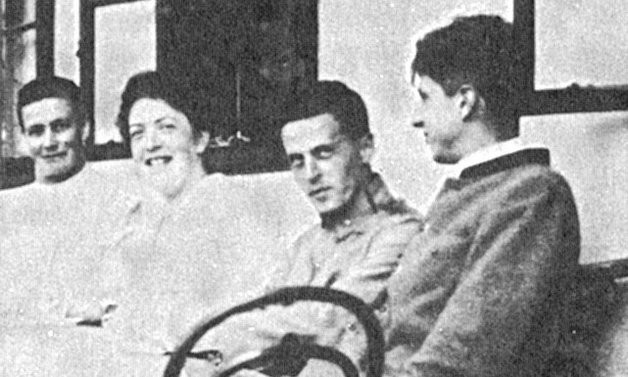
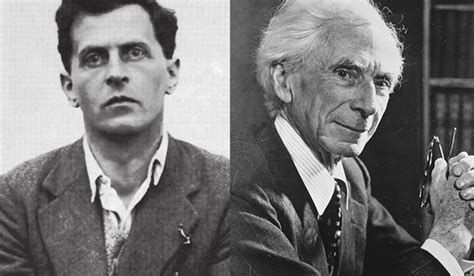
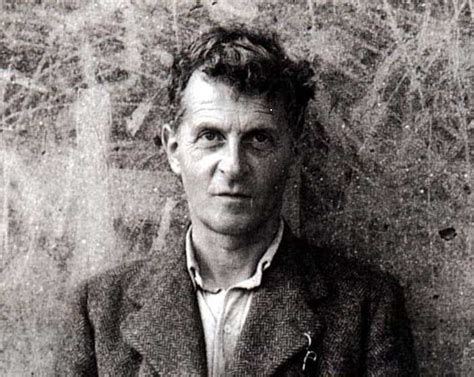
The philosopher Ludwig Wittgenstein, originally a student of the intractable rationalist, Bertrand Russell, was a baptized Catholic like his mother, though his father was Jewish. There was a time when the young Wittgenstein thought of becoming a monk; but, under the influence of Russell et al., and indeed the Zeitgeist, which in the realm of philosophy translated into mostly thorough materialism and empiricism, it was not meant to be. Not that one can say Wittgenstein was a pure rationalist in the way Russell more or less was. Wittgenstein admitted that he did feel the power of the mystery of being, even if he also felt it would be useless and even nonsensical to attempt to give any expression to that which was, in his opinion, outside human knowing.1
In his famous Tractatus Logico Philosophicus, the same Wittgenstein who held that all philosophy was of necessity bound to and by language, and thus incapable of saying anything truly transcendent (beyond language) about the nature of reality, also said, “That the world is, is the mystical!”(1)
In so saying, he was acknowledging what
Leibniz also recognized: that anything exists at all is the ultimate mystery! “There is something…and not nothing.”
Man (m/f) is confronted with being.
Vis a vis this realization Wittgenstein felt one could only remain silent. One could say nothing more at all. The positivist and the monk in him were irreconcilable. It is easy to see how such a position would lead to anxiety at best and despair at worst; for the thoughtful person, at least,
as Wittgenstein surely was.
“The unexamined life is not worth living,” said Socrates. For the Catholic, creation is pure miracle, truly if not technically.2 The supernatural is not irrational to one who has been awakened to the reality and wonder of being! Nor is it any greater “problem” that we should one day live “again” (in heaven) than that we ever lived at all!
But many, astonishingly, are apparently dulled by existence into a complacent attitude toward existence! Not so Wittgenstein, according to philosopher William Barrett.3
Barrett speaks of Wittgenstein’s “mysticism” of silence and awe in the face of sheer being.
But it is hard to see what good this silence amounts to in the face of man’s suffering, sin and death.
Enter the “Good News,” which is not “silence” as understood in all the pseudo-mysticisms, but the “Word” of God’s Self-revelation in Jesus Christ (Jn. 1:1-14). God has spoken everything in this revelation of Himself.
This Word is God, the Second Person of the Blessed Trinity come into the world (Jn 1:1-14; Col. 2:8-10), the “Gospel” of our Lord and Savior Jesus Christ, Who in time and space was “made flesh” (Jn. 1:1-14). This was no mythology, theologumenon, or “artificial fable.” (2 Pet. 1:16). Rather, this Word is interpretative spiritual Life and Light to a world lost in dark confusions.
“In him was life, and the life was the light of men. And the light shineth in darkness….” (Jn. 1:4-5)
It was through the Word that “all” things came into being (Jn. 1:1-14: Col.2, 8-10; Phil. 2:1-5).
Silence born of the contemplation of this Word is quite another thing altogether. It is not stupefaction, but wonder, love, invitation and gratitude!
Apart from the revelation of God in Christ, of God’s revealing Himself and the meaning of His creation to man, the whole world would truly lie in darkness. A darkness so deep as to make all beings tremble, despite the unconvincing laughter and raising of glasses we see all around us.
In those raised glasses are opiates and anesthetics, not without reason.
We find ourselves here. Here, in time and space. We cannot deny our existence, even if some philosophers and eastern religions have vainly tried. We can kick the leaves, feel the rain, look into the eyes of another. According to St. Thomas, being is a sign, and a doing, pointing to the One who is the Author, the First Cause and Creator of all contingent, dependent being. And for St. Thomas, the event of the created world leads us logically and directly to the certitude of God, who is Uncreated Being, Light of the world.
God Himself, as Creator, is the Terminus and Meaning of the universe. This truth, according to St. Paul, is manifest to all:
“For the invisible things of him, from the creation of the world, are clearly seen, being understood by the things that are made; his eternal power also, and divinity: so they are without excuse.” (Rom. 1:20)
The Apostle goes on to say that when man denies this truth, breaking the first commandment of the law and his own conscience, he inevitably falls “into uncleanness” (Rom. 1:24); becoming “filled with all iniquity, malice, fornication, avarice, wickedness, full of envy, murder, contention, deceit, malignity, whisperers, detractors,
hateful to God, contumelious, proud, haughty, inventors of evil things, disobedient to parents, foolish, dissolute, without affection, without fidelity, without mercy….” (Rom. 1:29-31)
For to deny the Creator is to show willful contempt for the first and “greatest” Commandment. The human conscience is aligned to that commandment, and only through a culpable defect of the will, that is to say, through a deliberate decision to refuse, or turn one’s gaze away from God, will he succeed in his reprehensible idolatry.
It is vain deceit for (post) modern man to suggest that God’s existence is a “problem” to be pondered; for to pose God’s existence as a “problem” is to make man the supreme arbiter, a “god,” fulfilling the diabolical promise the Serpent made to our first parents (Gen. 3). Moreover, since man is the contingent creation of His Maker, it also amounts to the death of man qua man.
There is, of course, a place in Catholic theology, to be sure, for an analysis of the “problems” posed by modern atheism and agnosticism; but Catholic theology addresses itself to men of good will, recognizing that the “problem” is not with God’s natural and supernatural revelation of Himself, but, rather, with man’s disordered thinking, which is a consequence of the Fall.
Nor is this to deny that some persons of undoubtedly goodwill may find themselves in the throes of uninvited and painful “doubt” at times. But that is far from the kind of cynical philosophical doubt we are considering here. The “doubt” that persons of good will may suffer from time to time is a purgation, allowed by God, Who wishes, according to St. John of the Cross, to enable us to feel His apparent absence that we may grow strong, seek Him more ardently, and that our longing for Him, may become more pure and less dependent on mere feelings and spiritual delights.
“Draw near to God and he will draw near to you.” –James 4:8
The “Dark Night” is, in the end, revealed not to be actual doubt at all, but a faithful participation in the Cross of Christ’s salvific abandonment and surrender to the Father’s will. It is a test, a whetstone of faith, a call to draw closer yet.
As much as modern man would like to reduce the universe to a fortuitous concourse of atoms, and thus cut away at the branch he himself is perched on, in a kind of metaphysical death-wish, it is a futility which will only win him hell’s darkness if he does not repent, I.e. cease the hubris and rebellion. For the very existence of the universe, including the existence of the mouth that would rail against God’s existence, confutes the contrary premise.
A grain of sand is sufficient, for him who has eyes to see. And only those who would put out their own eyes are blind in God’s kingdom.
Wittgenstein admitted the mystery and refused to pursue it. Others, like his master Russell, would admit nothing. Still others, especially today, would pretend to transcend the dualism of belief /non-belief. Collapsing truth into pure subjectivity, they will allow one person to have his or her truth and another to have a totally contradictory “truth.” “Truths” are customized according to the moment and the passing fads of a tragically schizoid culture. Thus the abundance of “gods” and “goddesses” we see returning every day…the “god(s) of my understanding” or preference.
Would that Wittgenstein had become the monk he once thought of becoming. To close one’s heart when God would dilate it with His grace can have eternal consequences. He was Catholic and we can pray for his soul and Hope for him. But what of the generations of disciples he left behind in a world so needlessly close to despair? We are told: “Today if you should hear His voice, harden not your hearts.” (Heb. 4:7).
If ever there was a time to point men to Jesus Christ, to His Eucharist and one, true, Apostolic, Roman and Catholic Church, it is today.
Our sometimes decrepit, sometimes kitschy modern-day Catholic churches and chapels look like 13th-century cathedrals to the thirsty and the hungry of heart. (Isa. 58)
Buddhism denies a personal Creator-God. Judaism and Islam demand that God not consummate His love and self-revelation and would lock Him in His high Heaven.
There is nothing that elicits the contempt of today’s progressives more than the real Incarnation of Jesus (Jn. 1:1-14). Modernist Catholics, having betrayed their birthright, think they can reinterpret it, transvalue it, Jesus the Lord, as if this thirty pieces of silver would ever be enough to appease the Church’s secular enemies who would feast on the corpse of Christendom.
Meanwhile our “teachers” and philosophers of “Science” in the academies, the agnostics and atheists, walk about as though existence were a thing to be taken for granted, an inexplicable stroke of good (?) “luck”.
But “a little error in the beginning,” St. Thomas said of false premises, “becomes a great error in the end“. St. Thomas was also among the very, very learned. But by grace he receptively added childlike humility to his brilliance.
The real, believing, Catholic knows that Tradition begins not with the Council of Trent, but with Creation. Not the “creation-theology” which men like Teilhard de Chardin and Matthew Fox and all the other foxes and wolves are always extolling. Their “creation” is a code word for pantheism and neo-paganism.
Rather, we speak of the true Creation of Holy Scripture, when God, through Christ, created “all” things ex nihilo ; and by Whom “all” things consist. (Col. 1: 16-17)
A serious Catholic knows that the God who created the universe ex nihilo knows how to bring order out of chaos, triumph out of betrayal and apostasy, Life Everlasting out of darkness, setbacks, vexations of every kind… even out of death itself; because He is thoroughly and forever Sovereign, the Creator of all things, “seen and unseen,” Who will have the final Word on all being. He leads the entire universe and every existent to that very end now. Every human life must stand before Him in judgment, the blessed in Him forgiven, and the willful apart from Him unforgiven. —SH.
___________
1 William Barrett, The Illusion Of Technique, Anchor Books, NY,
1978, p. 57f.
0 ) Ibid.
2 “Miracle” here is to be understood in the poetic-metaphorical sense,
reflecting the supernatural act of creation. An actual “miracle,” of
course, would presuppose the utterly unique supernatural act of
creation, the existing world with its laws established by the Creator.
3 Ibid. p.60f.

 Catholic Critique