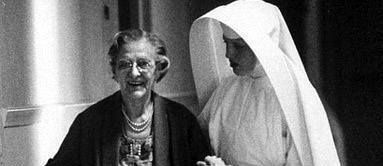
Or, how a modern psychologist had it out for the Catholic Church and joined forces with the so-called Progressives to wreck her sacred tradition.
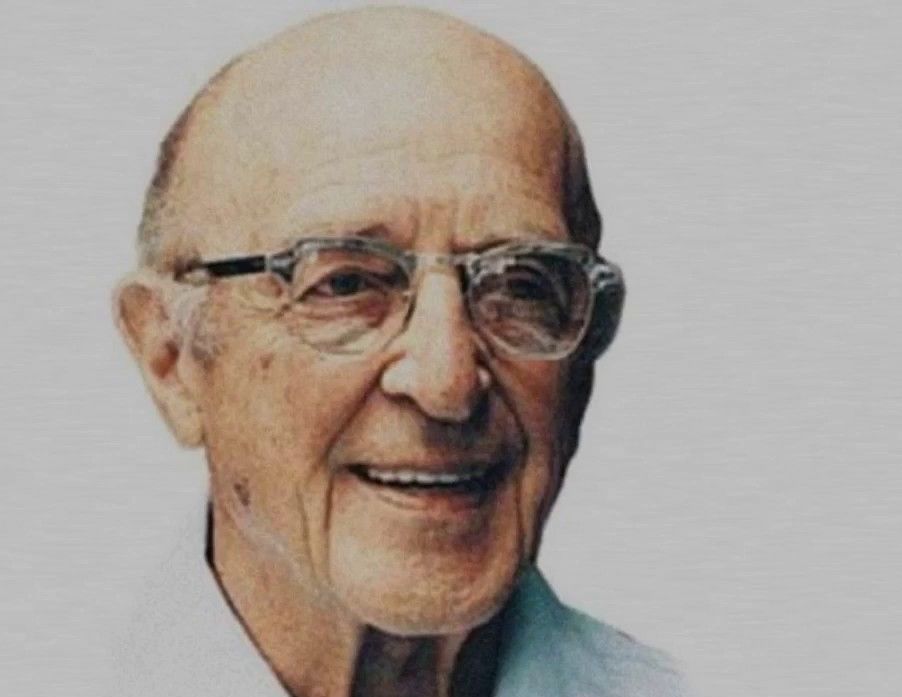
Carl Ransom Rogers (January 8, 1902 – February 4, 1987) was an American psychologist who was one of the founders of humanistic psychology and was known especially for his person-centered psychotherapy. Rogers was widely considered one of the founding fathers of psychotherapy research. He helped to devastate very large parts of the Church.
“We Overcame Their Traditions, We Overcame Their Faith“
EWTN: A contrite Catholic psychologist’s disturbing testimony about his central role (under Rogers) in the destruction of religious orders.
Dr. William Coulson was a disciple of the influential American psychologist Carl Rogers, and for many years a co-practitioner of the latter’s “nondirective” therapy. In 1964 he became chief of staff at Rogers’ Western Behavioral Sciences Institute in La Jolla, Ca., where, he says, as the resident Catholic it became his task to “gather a cadre of facilitators to invade the IHM community” of nuns-and later some two dozen other orders, among them the Sisters of Mercy, the Sisters of Providence, and the Jesuits. It was only in 1971 that he began to “back away” from his belief in psychotherapy, when its destructive effects on the religious orders-and on the Church and society in general- became apparent to him.
Having abandoned his once-lucrative practice, Dr. Coulson now devotes his life to lecturing to Catholic and Protestant groups on the dangers of psychotherapy. He is also founder and director of the Research Council on Ethnopsychology, where he can be reached (P.O. Box 134, Comptche, CA 95427). He and his wife Jeannie have seven children.
In the following interview with Dr. William Marra, Dr. Coulson discusses his role in the destruction of Catholic religious orders, and his subsequent change of mind… Continue…
+ See also Michael Davies on the Merciful Pre-conciliar Church Here +

Saint Thérèse of Lisieux’s Story
“I prefer the monotony of obscure sacrifice to all ecstasies. To pick up a pin for love can convert a soul.”
These are the words of Thérèse of Lisieux, a Carmelite nun called the “Little Flower,” who lived a cloistered life of obscurity in the convent of Lisieux, France. And her preference for hidden sacrifice did indeed convert souls. Few saints of God are more popular than this young nun. Her autobiography, The Story of a Soul, is read and loved throughout the world. Thérèse Martin entered the convent at the age of 15 and died in 1897 at the age of 24.
Life in a Carmelite convent is indeed uneventful and consists mainly of prayer and domestic work. But Thérèse possessed that holy insight that redeems the time, however dull that time may be. She saw in quiet suffering a redemptive suffering, suffering that was indeed her apostolate. Thérèse said she came to the Carmel convent “to save souls and pray for priests.” And shortly before she died, she wrote: “I want to spend my heaven doing good on earth.”
Thérèse was canonized in 1925. On October 19, 1997, Pope John Paul II proclaimed her a Doctor of the Church, the third woman to be so recognized in light of her holiness and the influence of her teaching on spirituality in the Church.
Her parents, Louis and Zélie, were beatified in 2008 and canonized in 2015. [Source]

+ The First Dissolution, very much earlier… Listen to the BBC’s Melvyn Bragg on the Dissolution of the English Monasteries

 Catholic Critique