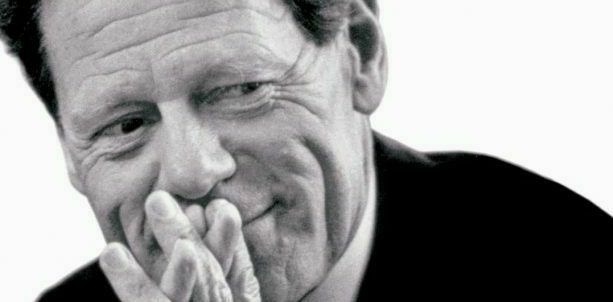
Roberto de Mattei.
“In the Gospels, Jesus makes use of many metaphors to describe the Church He founded. One of the most fitting is the image of the boat threatened by the tempest (Matt. 8:23–27; Mark 4:35–41; Luke 8:22–25). This image was often used by the Church Fathers and saints, who spoke of the Church as a little boat buffeted by the waves, which lives, one might say, amid tempests without ever allowing itself to be submerged by the waves.1
St. Catherine of Siena, for example, took a vow to visit St. Peter’s Basilica every morning while in Rome to pray before Giotto’s mosaic in the pediment of the old basilica, which portrayed the scene of the storm-tossed barque of Peter. One day, January 29, 1380, toward the hour of Vespers, Jesus emerged out of the mosaic, approached Catherine who was rapt in ecstasy, and placed on her weak shoulders the agitated little boat that was the Church. The saint, oppressed by the weight, fell to the ground in a faint. This would be Catherine’s last visit to St. Peter’s, she who had always exhorted the pope with these words: “Grab the barque of the holy Church.”
Benedict XVI, for his part, using the metaphor applied by St. Basil to the period after the Council of Nicaea, compared our time to a nocturnal naval battle in a storm-wracked sea, and in his homily for the feast of Sts. Peter and Paul, June 29, 2006, described the barque of the Church as “jolted by the winds of ideology,” though unsinkable and secure on her course.
Agitation and torment have accompanied the Church throughout her entire history and have assaulted the pontificate of Joseph Ratzinger in particular, against the backdrop of a twenty-first century thick with fears and unknowns for the Church.
What are the tempests that threaten the barque of Peter today, just as they did yesterday? There are fierce winds that blow from outside the Church, such as the massacre of Christians in the Middle East and secular persecutions in the West. But the worst storms are those that come from within the Church herself.
Under the pontificate of Benedict XVI, various crises have erupted, emphasized by mass media well beyond their actual scope, like the pedophilia scandal among the clergy and the internal struggles in the Roman Curia. But an even vaster hurricane looms on the horizon: the rebellion of the clergy in Central Europe, promoted by organizations such as We Are Church and theorized by the Swiss theologian Hans Küng, author of the pamphlet titled Let Us Save the Church, in which he directly opposes Benedict XVI, with whom he shared the experience of being the youngest theologian at the Second Vatican Council.
In this defamatory pamphlet, which recalls the incendiary booklets of Luther, Küng expands on the themes of a letter addressed to the bishops of the world in 2010, in which he incited them to an open rebellion against Benedict XVI, saying,
“He failed to adopt the spirit of the Second Vatican Council as the compass for orienting the Catholic Church, carrying out its reforms; he received into the Catholic Church, without any preconditions, the traditionalist bishops of the Fraternity of St. Pius X, ordained illegally outside of the Catholic Church, who rejected the Council in some of its essential points; he has promoted with every means at his disposal the medieval Tridentine Mass, and has occasionally celebrated the Eucharist in Latin, turning his back on the faithful; he has strengthened around the world the anti-conciliar forces within the Church through the nomination of anti-conciliar leaders in positions of responsibility and reactionary bishops.”
This appeal by Küng to the bishops was meant to encourage them to make their voice heard publicly and to promote and support “reform initiatives” (revolutionary actions, in other words), inviting them to act, using their episcopal authority, not only individually, but collegially, “in unison with other bishops, with priests, with women and men who form the people of the Church.”7 Disobedience, according to Küng, must be exercised on a “regional”… From The Church in the Storms by Roberto de Mattei
“The “true reform,” he writes elsewhere, “that the Church needed in the mid-twentieth century … was nothing other than the “law of restoration” enunciated by Pope Leo XIII, who maintained that “when an.organic being withers and declines, this results from the cessation of the influence of the causes that gave it form and continuance; and there is no doubt that in order to make it sound and flourishing again, it is necessary to restore to it the vital influences of those same causes.”
Pius X himself, who is presented as a “reactionary” and “anti-reformist” pope, had set out the plan for an authentic reform modeled on that of St. Charles Borromeo, in the encyclical Editae saepe dated May 26, 1910.
He pointed to the archbishop of Milan as “a model for both clergy and.people in these days. He was the unwearied advocate and defender of
the true Catholic reformation, opposing the innovators whose purpose was not restoration, but the effacement and destruction of faith and morals”.
“… Modernism proposed a universal apostasy even worse than the one that threatened the age of Charles; it is worse, We say, because it
stealthily creeps into the very veins of the Church”. St. Pius X contrasted it with an authentic reform that had its own point of reference in the preservation and transmission of Catholic truth.
The errors appear in many forms and the enticements of vice wear different dresses. Both cause many, even among our own ranks, to be
ensnared, seducing them by the appearance of novelty and doctrine, or the illusion that the Church will accept the maxims of the age.
“Venerable Brethren, you are well aware that we must vigorously resist and repel the enemy’s attacks with the very weapons Borromeo used in his day. Since they attack the very root of faith either by openly denying hypocritically undermining, or misrepresenting revealed doctrine, we should above all recall the truth Charles often taught.
“The primary and most important duty of pastors is to guard everything pertaining to the integral and inviolate maintenance of the Catholic faith, the faith which the Holy Roman Church professes and teaches, without which it is impossible to please God.”
…With Charles we must be mindful “of the supreme zeal and excelling diligence which the bishop must exercise in combating the
crime of heresy.” — from The Second Vatican Council by Roberto de Mattei
~~~
Prolific historian Roberto de Mattei unfurls the sail to help you navigate in tumultuous times through the stormy waters of worldly events, intellectual movements, apostasies, moral decay, divisions, and persecutions. In these reflections, de Mattei steers you on a voyage from the earliest centuries to the French Revolution, charting the course with fascinating historical details and true stories about key political figures and saints, masterfully relating them to our situation now.
In these stirring pages, you will learn:
- Who the real dissidents are — past and present
- The witness of the early Christians and ways we can learn from them today
- The twin pillars of victory according to the vision of St. John Bosco
- The path to authentic reform and the heroic example of the saints throughout the ages
- How the Church rose above the waves amid crises, including schisms and revolutions
Despite the changing tides and pounding waves, you will discover ways the Church weathered storms with Scripture and Tradition as her compasses. You will behold how, in moments of gloom, when all seemed lost, the valor of Catholic heroes restored calm and announced the morning dawn.
~“~~

 Catholic Critique