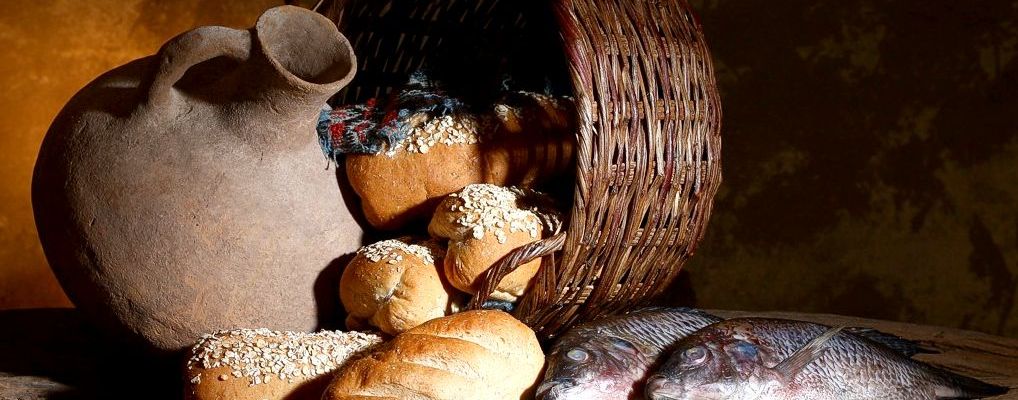
The short answer: a lot of bread. Bread was a staple in the typical daily diet in the first-century Greco-Roman world, supplemented with limited amounts of local fruits and vegetables, oil, and salt.
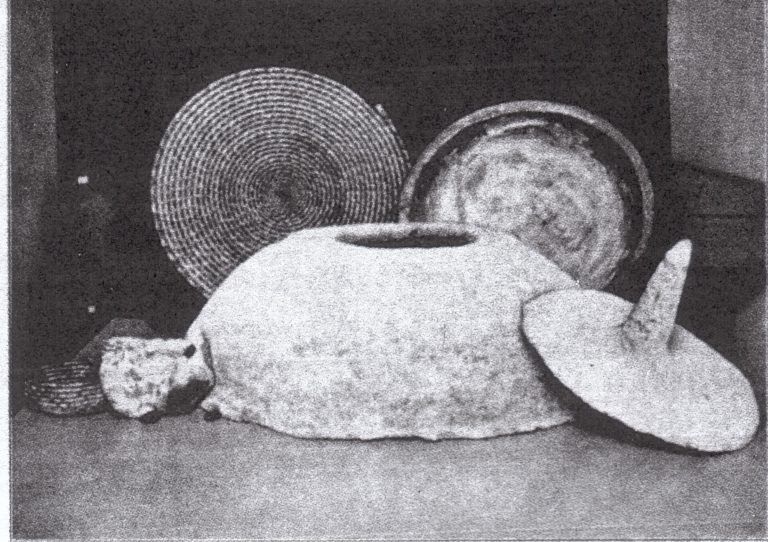
Bread in first-century Galilee would have been made with wheat or barley flour. Cooks had to grind grain into flour by hand using a tool called a quern. To leaven bread, bakers might use leftover dough from a previous batch of bread, which already had wild yeast growing in it, as a starter. Ingredients like olive oil, salt, and honey could have been included in some breads for flavor and texture. Bread was baked in small, domed clay ovens. Called tabun ovens, similar ovens are still in use across the Middle East today.
Bread might be dipped in olive oil and served with olives or legumes to make the meal more substantial. Cheese, dates, and honey were also fairly commonplace menu items in first-century Galilee.
There’s biblical reasons to think Jesus ate fish somewhat regularly as well. Fish was the food the disciples gave to a post-resurrection Jesus when he asked for something to eat so that he could show them he was really back from the dead. Fish was also on the menu when Jesus famously fed 5,000 people.
Several of Jesus’s disciples were even fishermen by trade. And Jesus’s ministry brought him to areas where fresh fish would have been plentiful, both for sale and to catch. There are several stories about Jesus and his disciples crossing the sea of Galilee in a boat. It’s not hard to imagine that the disciples tried to catch a few fish along the way. So there’s good reason to think fish might have been a regular entree for Jesus and his followers.
As a Jew, Jesus would have observed the Jewish dietary laws. (In other words, he would stick to the Kosher section of the grocery store today.) We know that ancient Israelites ate lamb and goat meat, but meat was probably more of a special treat for Jesus than a daily staple. Instead, he might have relied on legumes, like beans or lentils, and fish for protein. … Continue


