CNA. After the Pontifical Academy for Life (PAFL) last month issued a booklet summarizing the Church’s teaching on a number of bioethical issues, the section on “artificial nutrition and hydration” (ANH) has some observers concerned about what they see as a departure from previous Church teaching.
The Pontifical Academy for Life was founded in 1994 by St. John Paul II to study and provide formation on bioethical issues for the promotion and defense of life. Published only in Italian on July 2, the PAFL’s new booklet says it has “the aim of clearing up confusion” about the Church’s teaching on a number of bioethical issues.
In the English-speaking world, however, the booklet has garnered scrutiny for appearing to soften the Church’s stance on the importance of providing food and water to patients in a vegetative state.
The Church’s teaching on this issue was recently in the news in the United States because of the ongoing case of Margo Naranjo, a disabled Texas woman whose parents, who are Catholic, announced last month that they had decided to allow Margo to die by starvation in hospice. They were prevented from doing so after a judge intervened.
What has the Church taught about withdrawing food and water?
Over the years, Church leaders at the Vatican and in the U.S. have specifically addressed the question of denying food and water to a patient who is in a vegetative state.
In a 2004 address, St. John Paul II clarified the Church’s teaching that “the administration of water and food, even when provided by artificial means, always represents a natural means of preserving life, not a medical act.”
“Even our brothers and sisters who find themselves in the clinical condition of a ‘vegetative state’ retain their human dignity in all its fullness. The loving gaze of God the Father continues to fall upon them, acknowledging them as his sons and daughters especially in need of help,” the saint noted.
The pope explained that “waning hopes” that a person in a vegetative state will recover “cannot ethically justify the cessation or interruption of minimal care for the patient, including nutrition and hydration.”
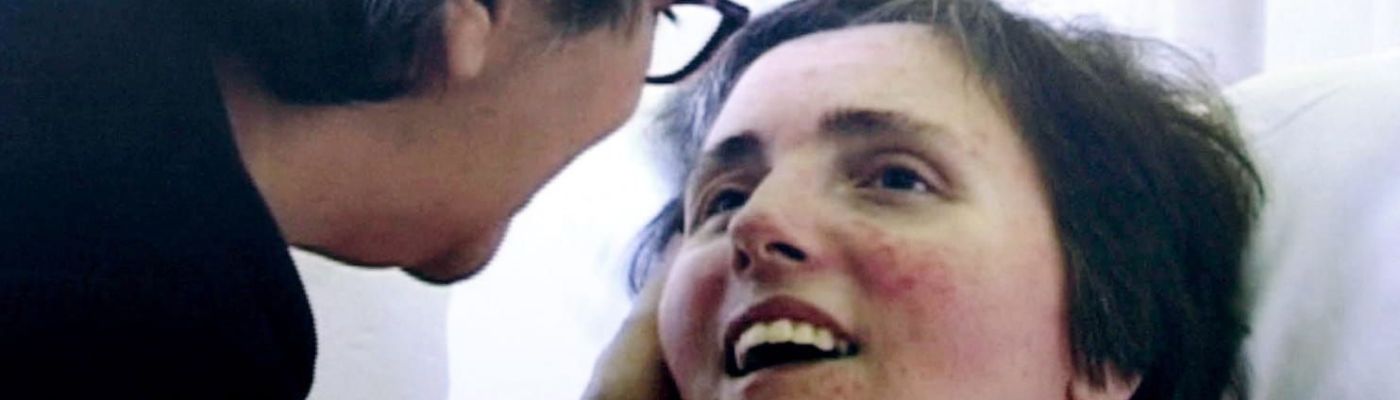
Photo: the Terri Schiavo case was a series of court and legislative actions in the United States from 1998 to 2005, regarding the care of Theresa Marie Schiavo (née Schindler) (/ˈʃaɪvoʊ/; December 3, 1963 – March 31, 2005), a woman in an irreversible persistent vegetative state. Schiavo’s husband and legal guardian argued that Schiavo would not have wanted prolonged artificial life support without the prospect of recovery, and in 1998, he elected to remove her feeding tube. Schiavo’s parents disputed her husband’s assertions and challenged Schiavo’s medical diagnosis, arguing in favor of continuing artificial nutrition and hydration.[1][2] The highly publicized and prolonged series of legal challenges presented by her parents, which ultimately involved state and federal politicians up to the level of George W. Bush, the then U.S. president, caused a seven-year (1998 to 2005) delay before Schiavo’s feeding tube was ultimately removed. — Wikipedia

