
“Although it clearly follows from the circumstances that the Pope can err at times, and command things which must not be done, that we are not to be simply obedient to him in all things, that does not show that he must not be obeyed by all when his commands are good.
“To know in what cases he is to be obeyed and in what not, it is said in the Acts of the Apostles: ‘One ought to obey God rather than man’; therefore, were the Pope to command anything against Holy Scripture, or the articles of faith, or the truth of the Sacraments, or the commands of the natural or divine law, he ought not to be obeyed, but in *such* commands, to be passed over.”
(Summa de Ecclesia, Juan Cardinal De Torquemada — 1388 – 26 September 1468, emphasis mine)
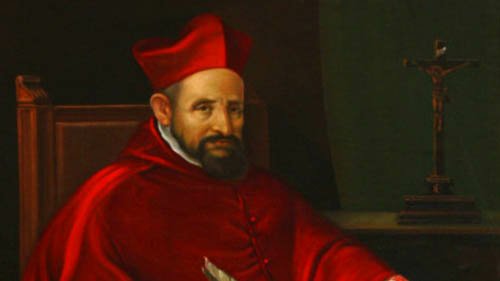
St. Robert Bellarmine, De Romano Pontifice, Book II, Chap. 29: “Just as it is licit to resist the Pontiff who attacks the body, so also is it licit to resist him who attacks souls or destroys the civil order or above all, tries to destroy the Church. I say that it is licit to resist him by not doing what he orders and by impeding the execution of his will. It is not licit, however, to judge him, to punish him, or to depose him.”
In good faith we laypersons try to acknowledge the limits of our knowledge and still show all due obedience in adhering to the doctrines taught at least implicitly by all of our Fathers always and everywhere as we await full restoration.
In the Event of the Most Serious Confusion: “The People Are Not Oblidged to Know…”
St. Antoninus, commenting on the Great Western Schism.
“The question was much discussed and much was written in defence of one side or the other. For as long as the schism lasted each obedience had in its favour men who were very learned in scripture and Canon Law, and even very pious people, including some who – what is much more – were illustrious by the gift of miracles.
“Nonetheless the question could never be settled without leaving the minds of many still in doubt. Doubtless we must believe that, just as there are not several Catholic Churches, but only one, so there is only one Vicar of Christ who is its pastor. But if it should occur that, by a schism, several popes are elected at the same time, it does not seem necessary for salvation to believe that this or that one in particular is the true pope, but just in general whichever of them was canonically elected.
“The people are not obliged to know who was canonically elected, just as they are not obliged to know canon law; in this matter they may follow the judgment of their superiors and prelates.” —- St. Antoninus, pars 3, tit. 22, cap. 2
“…no man ought to sever himself from the unity of the Church before the time of the final separation of the just and unjust, merely because of the admixture of evil men in the Church” —Saint Augustine, On Baptism, Against the Donatists, Bk. IV, The Complete Works of Saint Augustine. Ch.12.19, (1407). Emphasis added.

