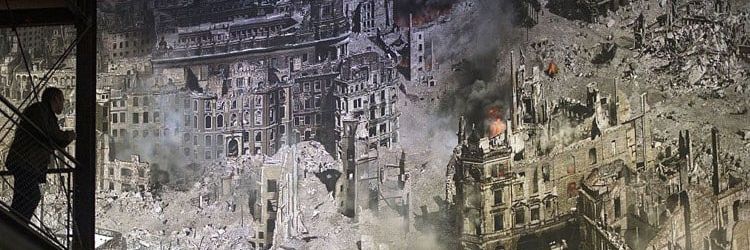
One object lesson: The term “Feuersturm” (which translates to “firestorm”) was used to describe the bombing of Dresden during World War II. The bombing, carried out by the British Royal Air Force and the United States Army Air Forces between February 13 and 15, 1945, created a massive firestorm that caused widespread destruction and significant loss of life.
The intense heat and fire generated by the bombing created a firestorm, which is a phenomenon where a fire becomes so intense that it creates and sustains its own wind system, leading to even more destruction.

“Before World War II, Dresden was called “Florence on the Elbe” and was considered one of the world’s most beautiful cities because of its architecture and art treasures. Having never previously been attacked in the war, the city offered increased value for terror bombing against an inexperienced population. On the night of February 13, the British Bomber Command hit Dresden with an 800-bomber air raid, dropping some 2,700 tons of bombs, including large numbers of incendiaries. Aided by weather conditions, a firestorm developed, incinerating tens of thousands of people.
The U.S. Eighth Air Force followed the next day with another 400 tons of bombs and carried out yet another raid by 210 bombers on February 15.It is thought that some 25,000–35,000 civilians died in Dresden in the air attacks, though some estimates are as high as 250,000, given the influx of undocumented refugees that had fled to Dresden from the Eastern Front. Most of the victims were women, children, and the elderly.”— Britannica.com


[…] + 20th Century Apocalypse: Feuersturm […]
[…] + 20th Century Apocalypse: Feuersturm […]
[…] + 20th Century Apocalypse: Feuersturm […]