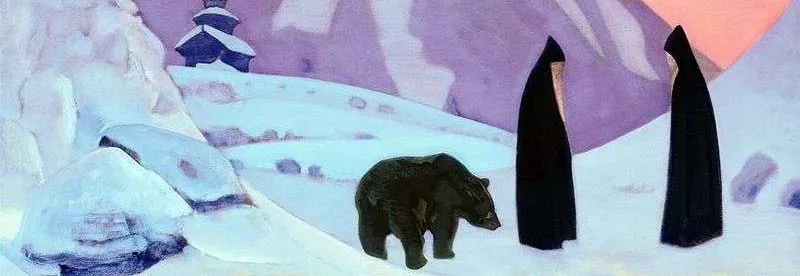
The Beginning of a Journey.
And We Are Not Afraid.
Paul Kingsnorth, Nicholas Roerich.
I have a hut in the wood, none knows it but my Lord; an ash tree this side, a hazel on the other, a great tree on a mound encloses it …
A little hidden lowly hut, which owns the paths that you may reach; you will not go with me to see it, but I shall tell of it.
The concealing tresses of a green-trunked yew which upholds the sky; fair is the place, the green wall of an oak against the storm …
An excellent spring, a cup of noble water to drink; watercresses sprout, yew berries, ivy bushes as big as a man.
Tame swine lie down around it, goats, boars, wild swine, grazing deer, a badger’s brood …
Swarms of bees, beetles, soft music of the world, a gentle humming; wild geese, ducks, shortly before All Hallows, music of the dark torrent …

A beautiful pine makes music to me, that is not hired; though I sing to Christ, I fare no worse than you do. — From ‘The Hermit’s Hut’, anonymous tenth-century Irish poem.
Paul Kingsnorth continues:
I have felt for a long time that Christianity needs to go back to the woods.
Or maybe I mean to say ‘Christians.’
I don’t know. I don’t know a great deal, except that I loved the woods before I loved God. Actually, when I look into my heart, which I am required to do daily though I often try to find an excuse not to, I see that I don’t really ‘love God’ at all. I see that ‘loving God’ is just something I feel I have to say I do if I am going to ‘be a Christian’ in public. When I look inside that dirty, squirrelly little heart of mine, I see that I am very far indeed from ‘loving God’, or from really loving anything at all, with the possible exception of myself.
Do I even know what ‘God’ is? Does anybody? I don’t know that either. But I do know what the woods are. I can’t see God, but I can see the trees, the mountains, the bogs, the fells, the moors of these islands. I have slept on them, walked over them, camped on them, taken my children to them, for so many years. We have woken beneath the rising sun, sat on beaches under crashing stars, roamed the wind-blasted fells and bens. I have gone all Wordsworthian countless times over the sublime nature of it all.
There is an exchange out there. You take yourself out and you receive something back. The land will speak to you. You only have to listen.
I know the land. But what could I ever say that I know about God?
Nothing.(1)
I write all that down, I read it back to myself, and then I realise that, at a fundamental level, it is not true at all.
Source: Paul Kingsnorth, Substack
(We can “know” the truths of revelation, but these tell us about God. As for knowing God, no mere created human person has ever seen God, but we know in part:
1 Cor. 13:9 For our knowledge is imperfect and our prophecy is imperfect; 10 but when the perfect comes, the imperfect will pass away. 11 When I was a child, I spoke like a child, I thought like a child, I reasoned like a child; when I became a man, I gave up childish ways. 12 For now we see in a mirror dimly, but then face to face. Now I know in part; then I shall know fully, even as I have been fully known. — 1 Corinthians 13:9-12
__________
— Israeli man attempts to sacrifice sheep on Temple Mount
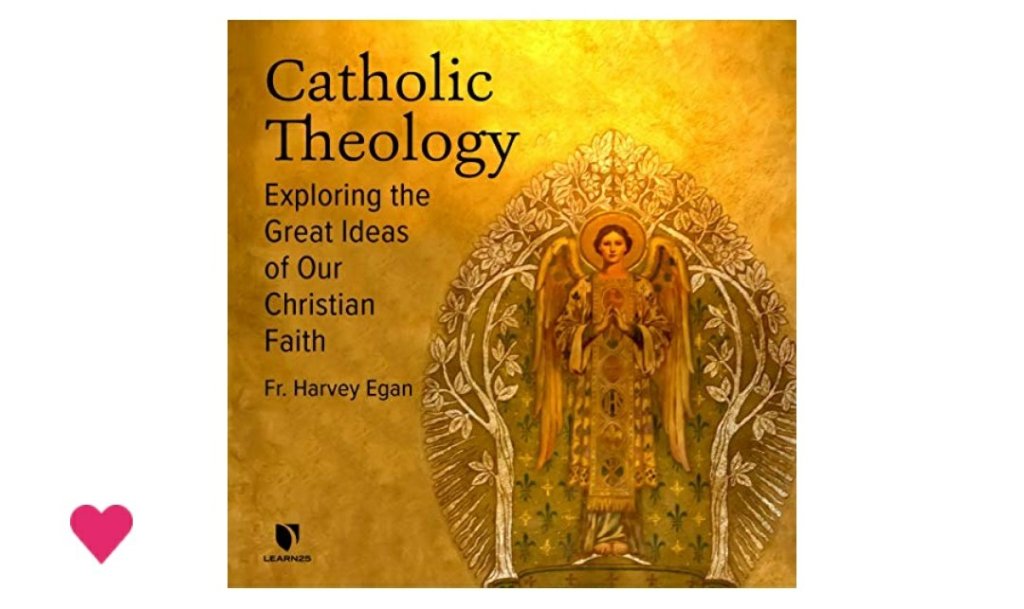
Catholic Theology: Exploring the Great Ideas of Our Christian Faith
One of the world’s most acclaimed theologians, award-winning professor Fr. Harvey D. Egan, S.J. You will grapple with life’s ultimate questions and explore our rich Christian heritage. Here, you will discover powerful insights into the meaning and salvific value of the truths of Christianity. These illuminating audio lectures will explore the Christian faith as a powerful whole, allowing you to discover the full range of life’s greatest mysteries.
In 24 accessible lectures, you will focus on Christian truths both great and small, tackling essential exegetical, dogmatic, historical, systematic, and ecumenical questions. You will also gain new insights into Jesus’ life and times using the scriptural interpretations of scholars like N. T. Wright and, Chesterton and C.S.Lewis.
Throughout the lectures, you will encounter other approaches from various traditions: religious figures like the Buddha, scientists like Holocaust survivor Viktor Frankl, secular artists like Ingmar Bergman, existential philosophers like Sartre, and many more… These different perspectives will reveal the universality of our quest to comprehend life’s purpose.
As you take a closer look at our one humanity, our one world, and our one cosmos, you will gain a deeper awareness of the great truths of the Christian tradition.
Find Fr. Egan’s very interesting Audible lectures here…. (Chapter 4 on evil is especially important).

 Catholic Critique