
What, exactly, is a just and moral taxation going to look like? — The Distributism Review
See also, What is Distributism? By Thomas Storck
Neither Capitalism or Socialism
Distributism and Taxation
By Andrew McInnes
“To defraud any one of wages that are his due is a great crime which cries to the avenging anger of Heaven.” – Pope Leo XIII
The greatest task of restructuring a society—using the term in an anthropological sense—is doing so successfully. Mikhail Gorbachev, the last Premier of the Soviet Union, has perhaps the best understanding of this out of all people [recently] living.
Mikail is unfairly accused of destroying the Soviet Union, when his true failure was merely not having restructured that country successfully. His desired ends were remarkable, as his book Perestroika makes clear. Those ends would have resulted in a Soviet Union not dissimilar to the Distributist ideal: widespread worker ownership of human-scaled productive assets, such as small manufactories, farms, and the like; a thriving craft worker class; a strengthening of community bonds; and so on.
Although from a Communist perspective, Perestroika is a modest touchstone for the Distributist. It represents an attempt to ameliorate the problems of both Capitalism and Communism. It is also a failed attempt, and not simply because it was Communist, or a top-down programme. Perestroika failed because the means, not the ends, were flawed. This deserves special attention, to avoid falling into the same pitfall which ended the Soviet Union.
Simply put, the distributist’s interest is on restructuring economies in accordance with natural laws, both of the world, and humanity’s hard-wired predisposition to cooperative self-organisation. An individual who makes his living through just and moral means has a chance to be a just and moral person; this is in keeping with aforementioned natural laws. An individual who makes his living through unjust and immoral means has not a chance of being a just and moral person. At best they are a hypocrite; at worst, a monster.

So too is it with States: A State, justly and morally funded, stands a legitimate chance to be itself just and moral. The flaw in Perestroika was not that it tried to do too little, or too much, but simply that it used the wrong tool as its vehicle.Perestroika attempted to engineer and legislate a vast social change, when that change needed to be a spontaneous organic development. Perhaps this is to be expected from Marxist-Leninist scientific materialism. Regardless, a rational and complex programme of restructuring failed, due to the simple problem of attempting to generate a just and moral State, without the State having just and moral funding of its activities.
Distributist taxation policy
Mohandas Gandhi’s immortal phrase “Be the change you wish to see in the world” applies to the State as much as it does to the individual.To clarify: Without just and moral taxation, a State can itself never be just and moral. No State may lecture upon right and wrong when its finances result from heinous travesties against the labouring masses. On the other hand, a State which funds itself through just means will not only itself improve its institutional morality, but also passively and organically encourage its subjects toward right livelihood simply by default. Taxation policy is the source of a State’s funding, and is therefore the single greatest tool for the purposes of restructuring.
Indeed, a Distributist restructuring effort need look little further than to implement a Distributist taxation policy. The rest of society, by and large, will simply take care of itself in due course. In the fullness of time, society will organically restructure itself, in ways far more elaborate, honest, lasting, and ultimately life-affirming than any rationally engineered programme could ever aspire to create.
Subsidiarity
A very important question here arises: What, exactly, is just and moral taxation going to look like? This is predicated upon knowing what is just and moral; a knowledge which is least likely to be held by those who both profess to know and also desire to possess political power. What is moral and just can only be approached by knowing what is unjust and immoral. Taxation policy can be designed in a very simple manner to favour the just, by not favouring, and indeed strongly penalising, the unjust.
A core point of Distributism is that there is no better way to ensure one is not supporting injustice than by the law of subsidiarity: Nothing should be more complex than it needs to be in order to function. There is no good reason why any city which has wide computer usage couldn’t have its own computer manufactory. Under this example, no one would buy Apple products if the slave-staffed manufactory were just down the block. People leaping from windows would tend to raise questions about work conditions. What protects Apple (and other slave-labour-using businesses) is their complexity.
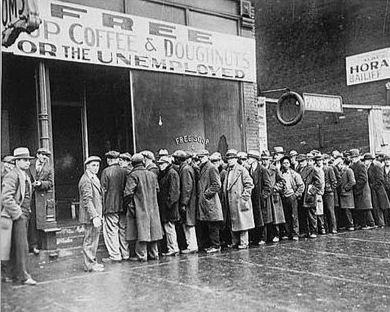
When so many people are involved with so large a business, exploitation of workers invariably creeps in. Perversely, as the propensity to exploitation increases, it does so in tandem with the numbers of people employed; concurrently so too does the difficulty of discovering this exploitation. The bigger a business becomes, the more attractive profit-saving exploitation becomes; the exploitation becomes easier to conceal thanks to this increased size, and the unknowning customer encourages this behaviour by purchasing products. In increased complexity, therefore, it becomes increasingly easier to defraud from workers a just wage for their labour. Slave wages are, indeed, slave wages, and have an irresistible allure to businesses sufficiently large and complex to access this gruesome and inhuman labour pool.
A general rule of business here arises: As the size and complexity of a business rises, so does its propensity to exploit its workers (either its directly hired workers, or workers in its supply chain). The law of subsidiarity cures this ill in a philosophic manner; how, therefore, to enforce subsidiarity through taxation policy is the crux of the matter. In a very horizontal economic transaction between individual customers and craft workers, sole proprietors, and independent small farmers, there is almost no room for exploitation. The interaction is too close and social for any except the most stone-hearted opportunists to try to subvert to unjust ends. This is the model to which the world should aspire: A world of craft workers, sole proprietors, and small farmers buying from and selling to each other. It is therefore this model which should be the most strongly favoured by taxation. There are few favours better than having to pay no taxes whatsoever. Let no tax burden fall upon a craft worker, sole proprietor, or small farmer, and their presence in an economy will flourish.

No one can exploit themselves; in a world built by craft labour, the bonds of community would be too strong to allow for rampant exploitation. To recast: A business where there is one owner-operator is a business free from all exploitation. So long as that business is one of honest work, that individual has a just and moral livelihood, and to defraud him of his due wages would indeed be a crime. It is when employees are brought into the situation that such clear certainty breaks down. The business is no longer one where exploitation cannot exist; it is here where taxation begins. However, even at this low-level of complexity, it can still be easily and quickly ensured a particular business is not exploiting its workers. Taxation should be nominal for such a small, community-sized business.
It is up to the community, not the State (outside extreme cases, of course), to ensure these small ventures are just to their workers. A business larger than a community can police itself where the State may step in firmly. That is both its right and duty: Protect communities which cannot protect themselves.
Taxation on larger businesses would grow exponentially in relation to the size of the business, to the point where businesses which are simply too large will devolve themselves into multiple smaller businesses, to avoid being taxed out of existence. Anti-trust laws would be largely redundant: Pocketbooks would keep monopolies from being formed, as every monopoly requires vast workforces.
To put very basic numbers upon what I have written above. Businesses which are sole proprietors, crafts, or small independent farms would, as mentioned, not be taxed at all. Businesses from, say, two to ten employees would pay 5%; ten to fifty employees, 10%; fifty to one hundred, 20%; one hundred to five hundred, 40%; five hundred on up, 80%; and so on, and so forth. It would be very much in the State’s pecuniary interests to ensure a proliferation of smaller, lower-taxed businesses than a handful of huge monopolies or duopolies.

Hypothetically speaking, the tax returns of a handful of huge businesses paying an 80% tax rate would be much less than hundreds of thousands, if not millions, of small businesses paying around 5% or 10%.
As a brief aside, cooperative businesses already enjoy tax concessions. It is a model designed to allow for larger businesses to exist whilst avoiding, or at least attempting to avoid, exploitative situations. Clearly these concessions should be kept, as the cooperative model is one which should be encouraged to flourish. This year, (2012), is the year of the cooperative, after all.
A Distributist taxation policy such as I crudely outlined above would serve quite powerfully to facilitate a Distributist restructuring of an economy, and thereby a society. Rather than by rationally engineered legislation, as in Perestroika, it would be itself a creative process. It would evolve and grow organically; passively and automatically facilitating a smooth transition from the old economic model to the new.
In time, to be sure, a fully social and economic restructuring along Distributist lines (be they secular, Catholic, Buddhist, et cetera) will require more than taxation policy. However, it represents a dynamic first step. The social climate across the world is one of clamour for a new economic, social, and political settlement. Through taxation policy, Distributism stands alone as offering the best solution to the ills of the modern settlement.
— Thomas Stock on Social Justice According to Pius XI
https://distributistreview.com/archive/social-justice-pius-xi

