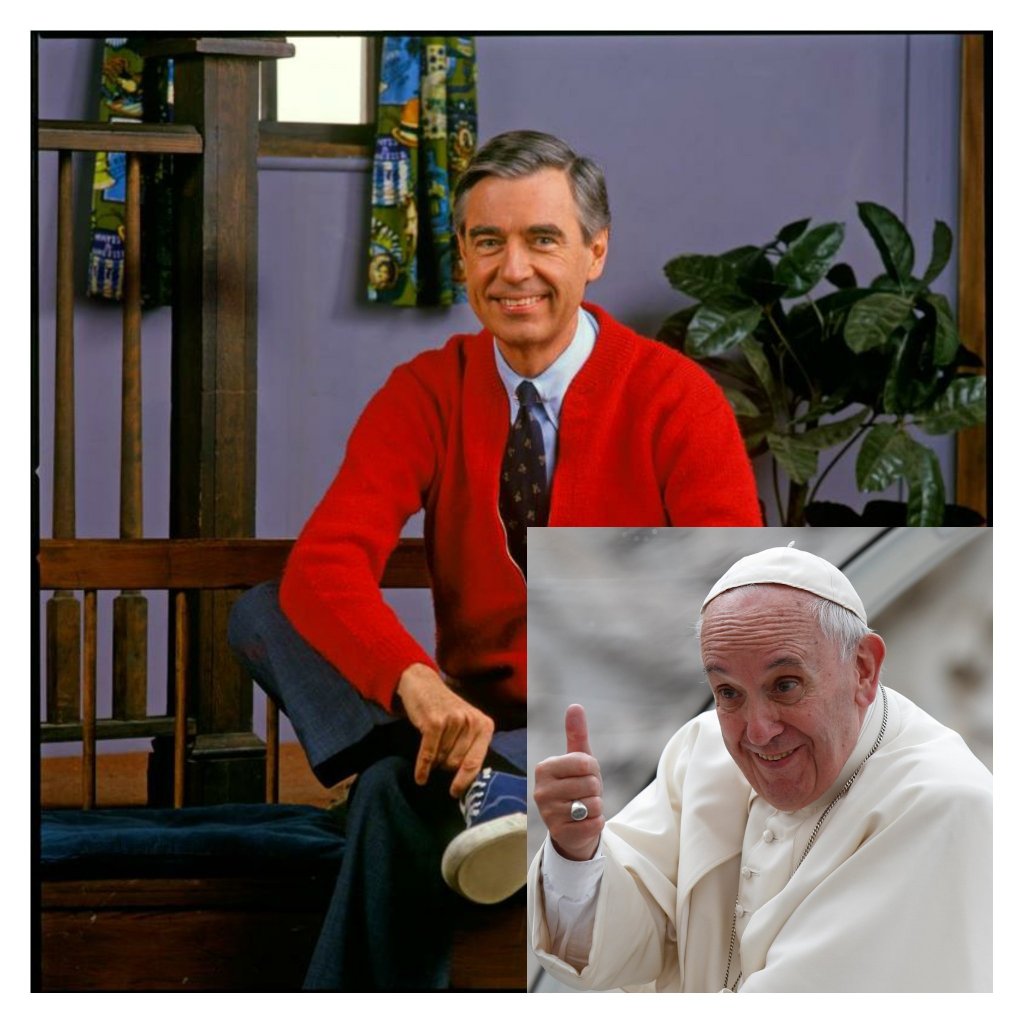
NYT: Pope Francis Is Tearing the Catholic Church Apart (Revisited).
By Michael Brendan Dougherty.
The New York Times.
August 13, 2021.
In the summer of 2001, I drove up to Poughkeepsie, N.Y., to find what we called “the traditional Latin Mass,” the form of Roman Catholic worship that stretched back centuries and was last authorized in 1962, before the Second Vatican Council changed everything. Back then, conservative Catholics called people who sought it out “schismatics” and “Rad Trads.”
The Mass-goers there weren’t exactly a community; we were a clandestine network of romantics, haters of Pope John Paul II, people who had been jilted by the mainstream church and — I believe — some saints.
There I learned that the Latin language was not the only distinguishing feature of this form of worship. The entire ritual was different from the post-Vatican II Mass. It wasn’t a mere translation into the modern vernacular; less than 20 percent of the Latin Mass survived into the new.
It took me a month to adapt to its rhythm. But in that thick August air, the long silence before the consecration of the host fell upon my heart, like sunshine landing on the bud of prayer for the very first time.
Years later, Pope Benedict allowed devotees of this Mass to flourish in the mainstream of Catholic life, a gesture that began to drain away the traditional movement’s radicalism and reconcile us with our bishops. Today, it is celebrated in thriving parishes, full of young families.
Yet this Mass and the modestly growing contingent of Catholics who attend it are seen by Pope Francis as a grave problem. He recently released a document, Traditionis Custodes, accusing Catholics like us of being subversives. To protect the “unity” of the church, he abolished the permissions Pope Benedict XVI gave us in 2007 to celebrate a liturgy, the heart of which remains unchanged since the seventh century.
For those of us who travel long distances to participate in it, its perseverance is a religious duty. For the pope, its suppression is a religious priority. The ferocity of his campaign will push these young families and communities toward the radicalism I imbibed years ago in Poughkeepsie, before Benedict. It will push them toward the belief that the new Mass represents a new religion, one dedicated to the unity of man on earth rather than the love of Christ.
In the Latin Mass, the priest faces the altar with the people. It never had oddities, as you sometimes encounter in a modern Mass, like balloons, guitar music or applause. The gabby religious talk-show host style of priest is gone. In his place, a priest who does his business quietly, a workmanlike sculptor. By directing the priest toward the drama at the altar, the old Mass opens up space for our own prayer and contemplation.
In the years after Pope Benedict liberalized the old rite, parishes began to bring back the mystical tones of Gregorian chant, the sacred polyphony written by long-dead composers like Orlando Lassus and Thomas Tallis as well as contemporary composers like Nicholas Wilton and David Hughes.
These cultural offshoots of the Latin Mass are why, after Vatican II, the English novelists Agatha Christie and Nancy Mitford and other British cultural luminaries sent a letter to Pope Paul VI asking that it continue. Their letter doesn’t even pretend to be from believing Christians. “The rite in question, in its magnificent Latin text, has also inspired a host of priceless achievements in the arts — not only mystical works, but works by poets, philosophers, musicians, architects, painters and sculptors in all countries and epochs. Thus, it belongs to universal culture as well as to churchmen and formal Christians.”
But the Vatican Council had called for a revision of every aspect of the central act of worship, so the altar rails, tabernacles and baldachins were torn up in countless parishes. This ferment was accompanied by radical new theologies around the Mass. A freshman religious studies major would know that revising all the vocal and physical aspects of a ceremony and changing the rationale for it constitutes a true change of religion. Only overconfident Catholic bishops could imagine otherwise.
The most candid progressives agreed with the radical traditionalists that the council constituted a break with the past. They called Vatican II “a new Pentecost” — an “Event”— that had given the church a new self-understanding. They believed their revolution had been stalled in 1968 when Pope Paul VI issued “Humanae Vitae,” affirming the church’s opposition to artificial contraception, and then put it on ice in 1978 with the election of Pope John Paul II.
To stamp out the old Latin Mass, Pope Francis is using the papacy in precisely the way that progressives once claimed to deplore: He centralizes power in Rome, usurps the local bishop’s prerogatives and institutes a micromanaging style that is motivated by paranoia of disloyalty and heresy. Perhaps it’s to protect his deepest beliefs.

 Catholic Critique